Vulcanized vs Molded Timing Belts: Which Manufacturing Process Delivers More Strength?
Vulcanized vs Molded Timing Belts: Which Manufacturing Process Delivers More Strength?
How curing builds strength, what molded construction limits, and which process fits your drive
Ask three suppliers for a high strength timing belt and you will get three different constructions behind the same catalogue photo. The real difference usually comes down to one manufacturing decision: whether the belt was cured as a seamless ring under heat and pressure, or assembled and shaped by other means. A vulcanized rubber timing belt is a single cured loop with no splice in the cord line; molded and joined constructions trade some of that integrity for tooling flexibility and price. This guide compares vulcanized timing belt and molded timing belt manufacturing process by process — strength, flex life, load capacity, dimensional limits — and ends with a checklist for specifying the right construction for your machine.
Vulcanized Rubber Timing Belt Production: How Curing Builds Strength
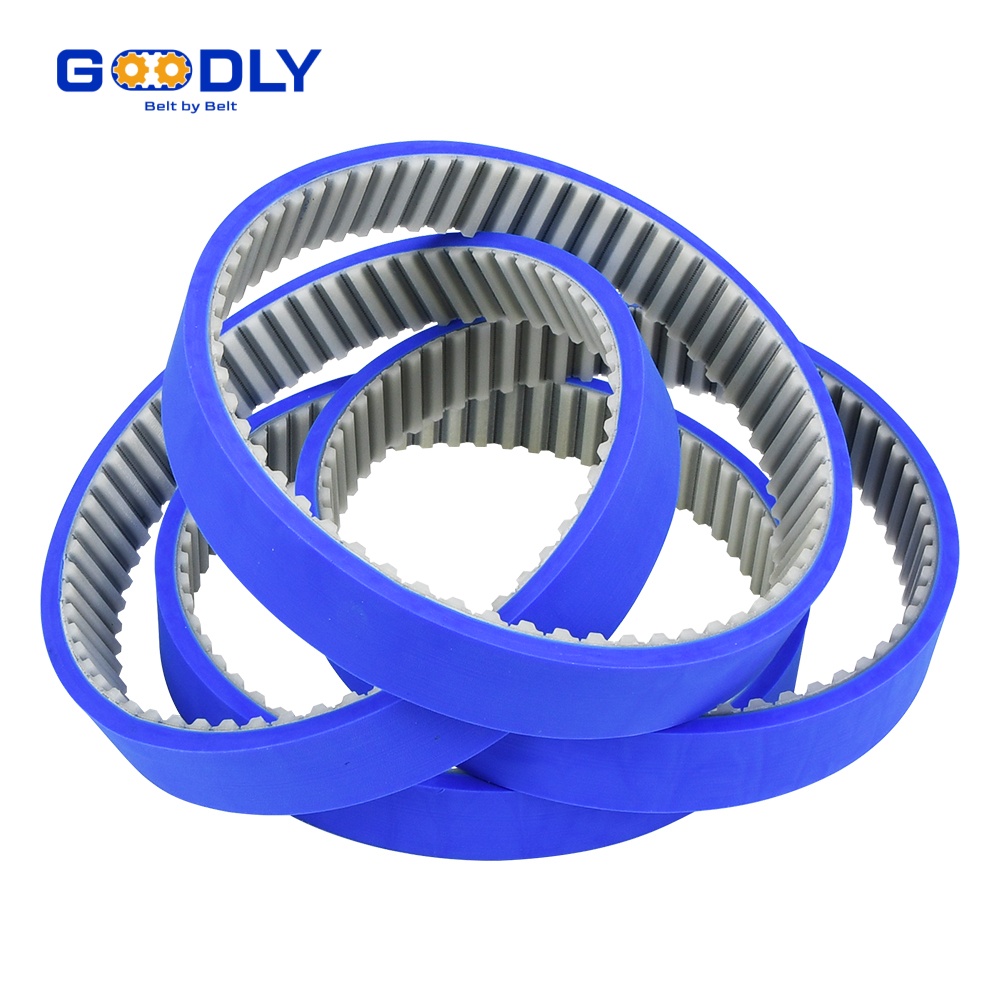
Vulcanization is a chemical process, not a shaping process. The belt sleeve — cord, tooth compound and backing — is placed in a ring mold and heated under pressure, cross-linking the polymer chains into a single elastomer network. Three things happen during a proper cure that no cold process can replicate:
- The cord line stays continuous. The sleeve is built around the cord and cured as one piece, so there is no joint for tension to concentrate on. This is the single largest strength difference between constructions.
- Rubber bonds chemically to the cord. Curative systems are designed so the compound adhesions to brass-coated or dipped cord during the cure; a glued joint relies on an adhesive layer that creeps under heat.
- Tooth geometry is formed under pressure. The compound flows into the mold's tooth cavities, giving dense, void-free teeth with a sharp, repeatable profile.
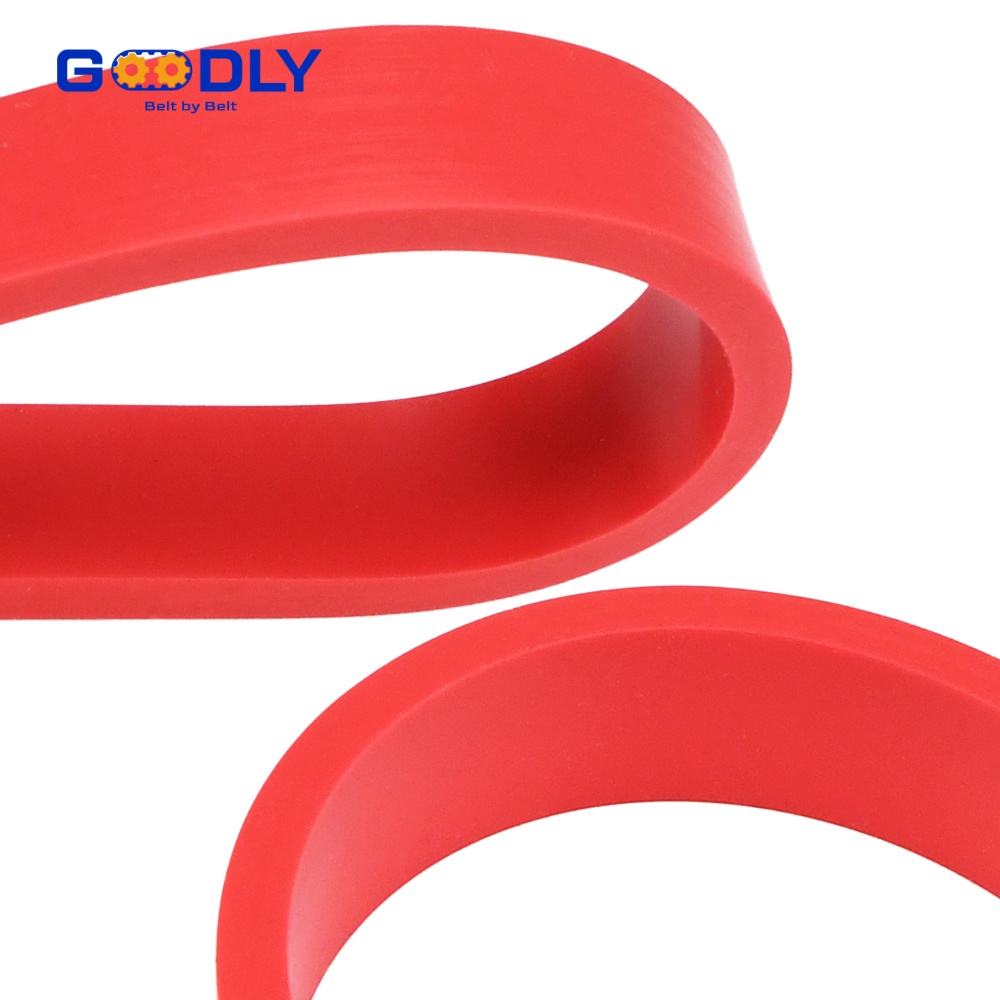
The result is a belt whose weakest point is the same elastomer as everywhere else. For continuous production machinery, that is exactly the property you are buying: the belt fails by gradual wear, not by a joint letting go at 3 a.m.
Molded Timing Belt Manufacturing: Tooth Formation and Dimensional Limits
“Molded” covers several constructions, and it is worth knowing which one a supplier means. True molded-to-length belts are cured in long strip molds or individual ring molds and cut; open-ended stock is molded continuously and joined by the user or the distributor. Each variant has genuine advantages — and hard limits:
| Construction | How it is made | Strengths | Limits |
|---|---|---|---|
| Ring-vulcanized (endless) | Sleeve cured as one loop in a ring mold | No splice, highest tensile and flex life, smooth running | Needs a mold per pitch length; very short runs cost more |
| Molded strip, cut and joined | Cured in strip form, cut to length, spliced | Any length without a dedicated mold | Splice reduces tensile strength and adds noise |
| Open-ended stock | Continuous molding, sold by the metre | Immediate availability, weldable on site | Not endless; welded joints limit load and speed |
| Truly molded-to-length | Cured in a length-specific mold | Seamless like vulcanized, good for specials | Tooling cost and lead time for each new length |
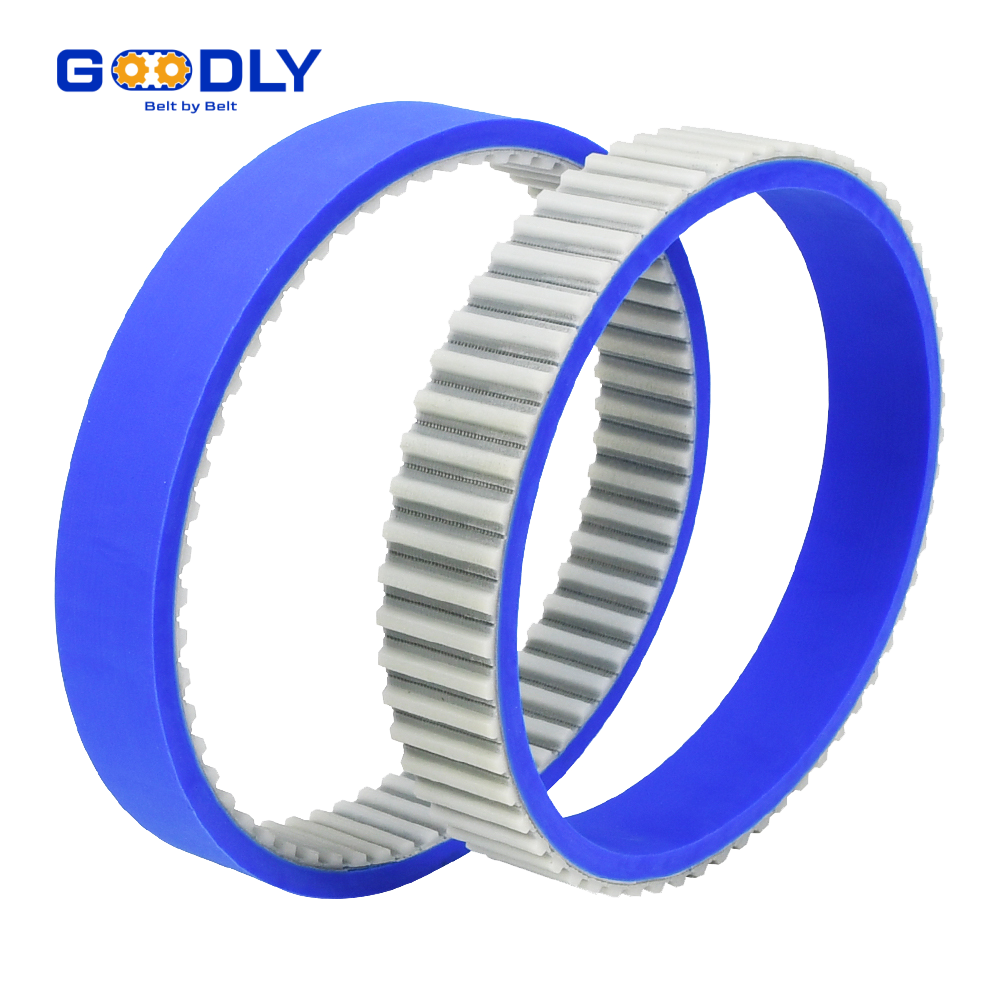
Dimensional limits follow from the process. Ring molds fix pitch length to the tooling that exists, which is why a custom timing belt in an unusual length is quoted as a tooling job by some factories and a 3-5 day sample by others. Molded strip cannot hold the same pitch accuracy as a cured ring, because the cut-and-join step introduces its own tolerance — and on register-critical machinery, that tolerance shows up as timing drift.
Comparing Vulcanized Timing Belt Durability, Flex Life and Load Capacity
Side by side on the same machine, the constructions separate in three measurable ways:
| Property | Vulcanized endless belt | Molded/joined belt |
|---|---|---|
| Tensile strength | Full cord strength, no joint loss | 30-50% lower at the splice |
| Flex life | Longest — no stress concentration | Joint area fatigues first |
| Running smoothness | Uniform around the whole loop | Audible pulse as the splice passes |
| Length flexibility | Needs tooling for new lengths | Cut to any length from stock |
| Best fit | Continuous production, register-critical drives | Maintenance spares, prototypes, temporary drives |
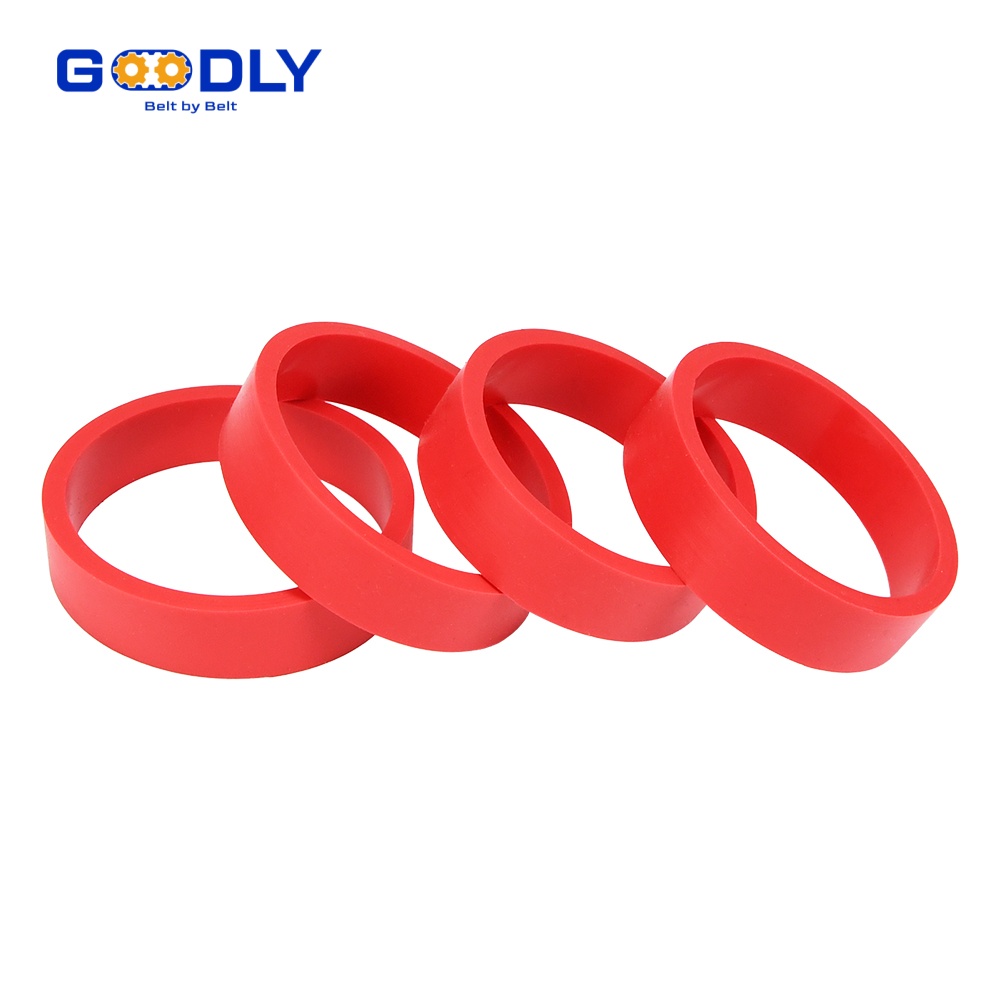
The durability gap widens with speed and temperature. A splice that survives a slow conveyor becomes the failure point on a high-frequency indexer, because every belt revolution flexes the joint once. Heat accelerates the same mechanism: adhesive layers soften, elastomer at the joint hardens faster than the body, and the vulcanized timing belt simply outlasts the alternative on hot or fast drives.
Which Timing Belt Manufacturing Process Suits Your Application
The honest answer is that both processes exist because both are needed. Choose by duty, not by habit:
- Choose vulcanized endless for three-shift production machinery, register-critical stations (printing, converting, packaging), high-speed indexers, and any drive where unplanned stoppage costs more than the tooling difference. Our vulcanized timing belt product line covers the standard range, and the full production route is walked through stage by stage in our timing belt factory guide.
- Choose silicone-vulcanized where the same seamless strength is needed above 200 °C or around food and pharma products — the construction is detailed on the Silicone Vulcanized Timing Belt page.
- Choose molded or open-ended constructions for prototypes, one-off machines under light duty, maintenance-critical drives where site welding is the only option, and temporary installations.
- Choose by lifecycle cost, not unit price. On a line running 6,000 hours a year, one avoided stoppage pays the tooling difference several times over.
- Ask what “molded” means in the quote. Suppliers use the word for everything from truly molded rings to cut-and-joined strip; the construction behind the word decides the strength.
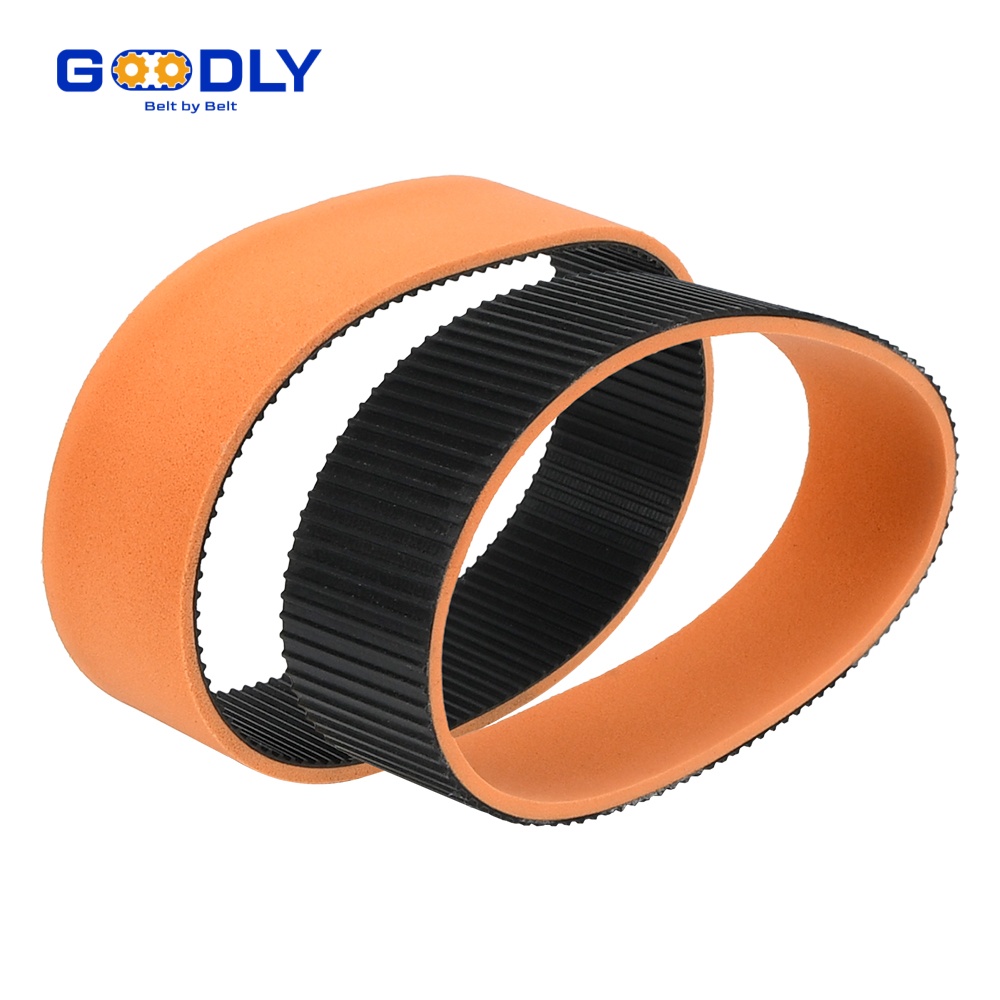
Specifying a Vulcanized Timing Belt: Materials, Shore Hardness and Tolerance
A rubber timing belt specification that reads like a stock order will get you a stock belt. To actually get the strength the process promises, put the construction parameters in writing:
- Body compound. Neoprene for general industrial drives; EPDM where ozone and ageing dominate; silicone for high temperature; PU for clean, dry precision drives.
- Cord type and pre-tension. Fiberglass, aramid or steel, stated with the expected load; the cord is the load path and the vulcanized joint is only as strong as the cord line.
- Shore hardness. Typically 75-85 Shore A for tooth rubber, chosen against tooth shear load and pulley diameter; softer compounds flex better, harder compounds carry more.
- Tooth profile and pitch. HTD, AT, T or imperial profiles per the machine's pulleys — our tooth profiles and pitches guide maps the options.
- Pitch length and width tolerance. Ring-vulcanized belts hold tight pitch tolerance; state the tolerance you need rather than accepting the quotation default.
- Backing and machining. Fabric, rubber, foam or bare backing, plus any punching, slotting or grinding the application needs.
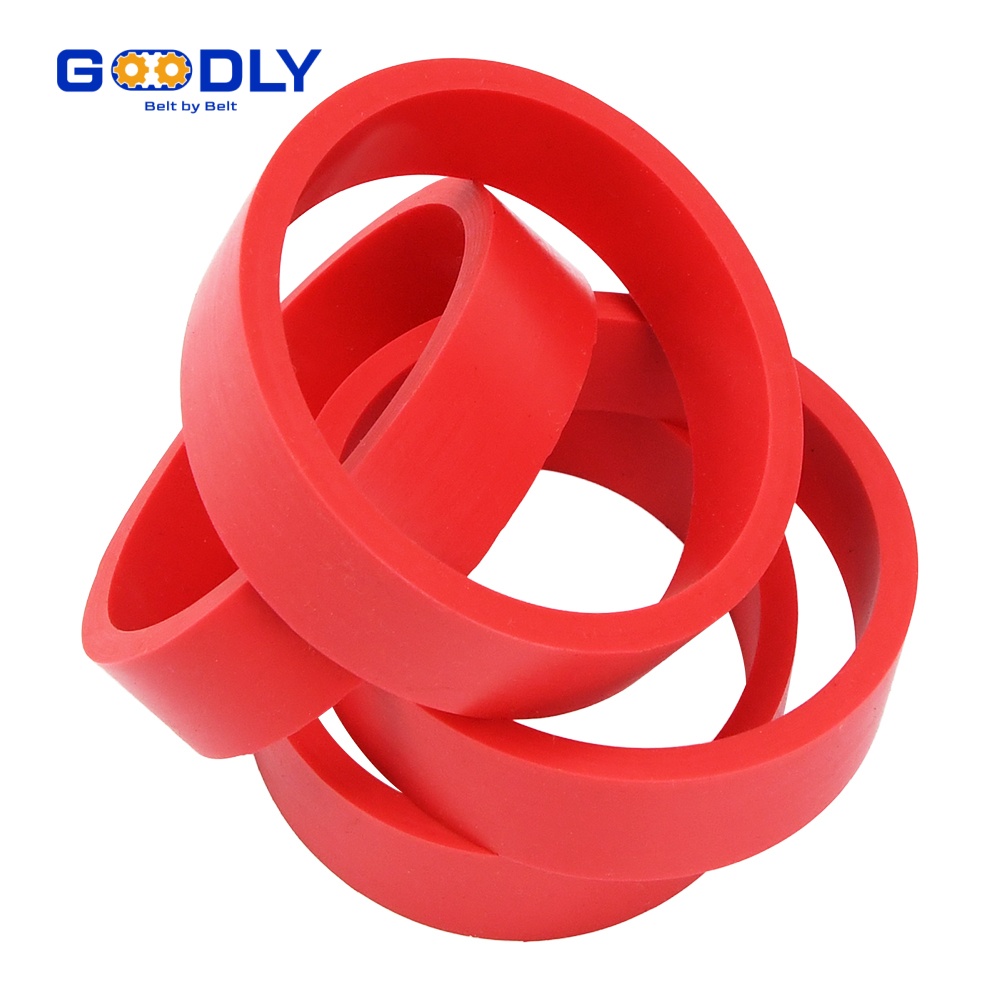
For sizing codes and how to read them, the sizes and dimensions guide covers the marking systems most manufacturers use.
Is a vulcanized timing belt always stronger than a molded one?
For endless constructions, yes in the ways that matter: no splice means no joint in the cord line, so tensile strength and flex life are higher and running is smoother. But a well-made molded-to-length ring belt approaches the same performance, while a cut-and-joined belt is the weakest variant. Always ask which construction sits behind the word “molded” in a quotation.
Why do vulcanized belts need a mold for each length?
A ring-vulcanized sleeve is cured in a mold whose circumference fixes the pitch length. That tooling is the cost of a seamless belt: the first belt in a new length pays for mold preparation, and every belt after that repeats cheaply and identically. This is why custom prototypes from a vertically integrated factory take days, not weeks.
Can open-ended timing belts be joined on site?
Yes. PU open-ended stock can be welded with a portable jointing press, and some rubber constructions are laced or spliced. On-site joining is invaluable for maintenance, but the joint is still the weak point — expect 30-50% less tensile capacity there and reserve endless vulcanized belts for the drives that cannot stop.
How do I know which construction my current machine uses?
Look for the joint. Rotate the belt slowly: a splice shows as a visible seam, a tone change or a marked section passing a fixed point. No seam anywhere on the loop means the belt is endless — almost certainly ring-vulcanized. Send GOODLY a photo of the belt marking or the joint area and we will identify the construction and quote a like-for-like replacement.
Talk to GOODLY about Vulcanized Timing Belt Manufacturing for Your Machine
Send GOODLY your torque, speed and duty data, or the marking from the belt you are replacing. Our engineers confirm whether a vulcanized endless construction is the right investment for your drive, quote the exact specification, and sample custom lengths in 3-5 working days — manufactured, cured and inspected in our own plant.
Request a Vulcanized Belt Quotation