Timing Belt Conveyors: Drive Design, Selection and Engineering Basics
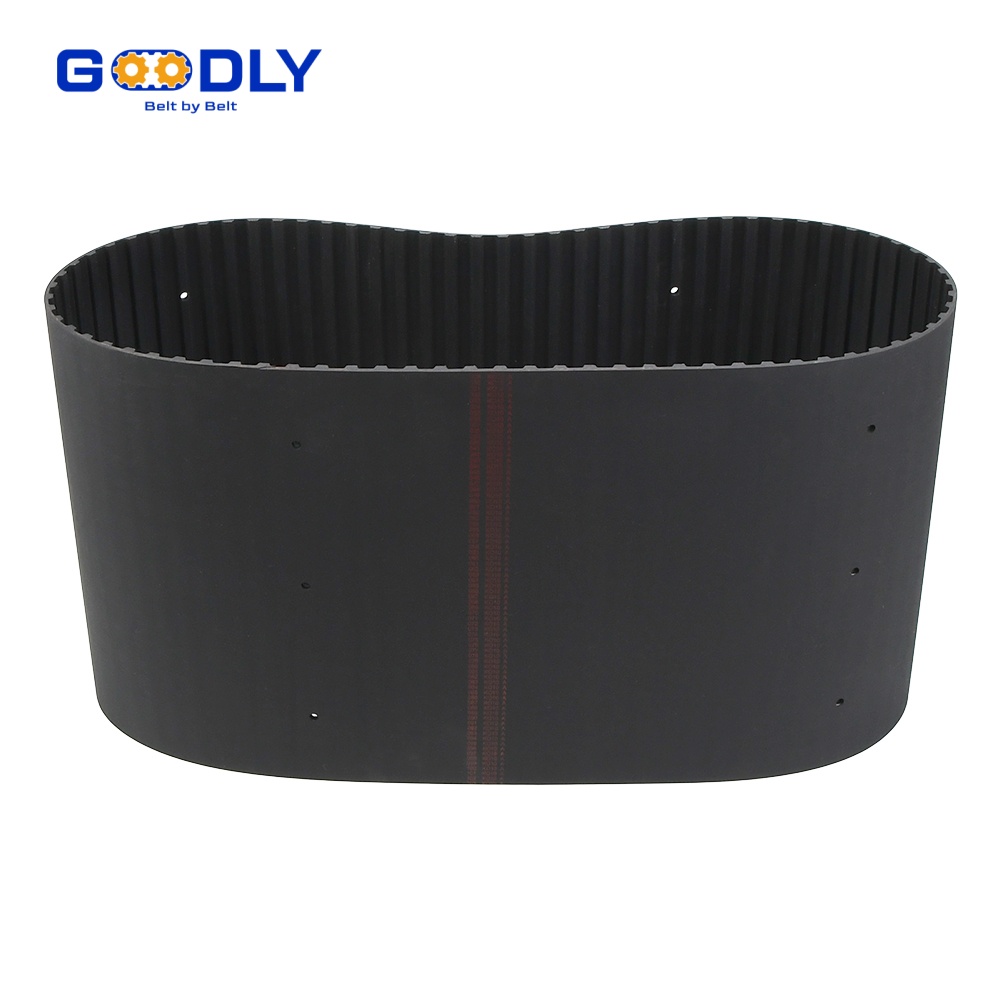
Timing Belt Conveyors: Drive Design, Selection and Engineering Basics
Positive drive, exact indexing and clean transport: how timing belt conveyors work and how to specify the drive
Most conveyors move product by friction. A timing belt conveyor moves it by gear ratio: the belt's teeth mesh with the drive pulley, so the carrying surface is mechanically locked to the motor shaft. That single difference changes what the conveyor can do — product positions repeat to within fractions of a millimetre, speed is exactly proportional to motor speed with no slip, and the belt never creeps or drifts under varying load. This guide covers the engineering basics of timing belt conveyor systems: where positive drive wins against rollers and friction belts, how to lay out and tension the drive, how to size the belt, and which components and backings suit food, pharma and parcel duty.
Timing Belt Conveyor vs Roller Conveyor: When Positive Drive Wins
Roller conveyors dominate bulk carton transport because they are cheap and tolerant, but their physics set hard limits: product must be rigid enough to bridge rollers, motion depends on friction between product and roller, and nothing about the product's position is deterministic. A timing belt conveyor solves all three limits by carrying the product on a synchronous surface. The trade-offs run the other way too — timing belt conveyors cost more per metre and prefer lighter, more uniform products. Choosing correctly means matching the mechanism to the job:
| Decision factor | Timing belt conveyor | Roller / friction conveyor |
|---|---|---|
| Product position | Deterministic: teeth lock belt to shaft, indexing repeatable to ±0.1 mm | Slip-dependent: position varies with load and wear |
| Speed control | Exact; speed is a pure ratio of motor speed | Approximate; slip increases with load |
| Light or flexible product | Excellent: belts present a continuous, gap-free surface | Poor: small items fall between rollers |
| Load per metre | Moderate: sized by cord strength and pulley tooth shear | High: rollers share point loads well |
| Cleanroom and washdown fit | Excellent: few moving parts, no lubricated bearing chains | Moderate: many roller bearings to seal and clean |
| Cost per metre | Higher drive precision cost | Lowest for plain transport |
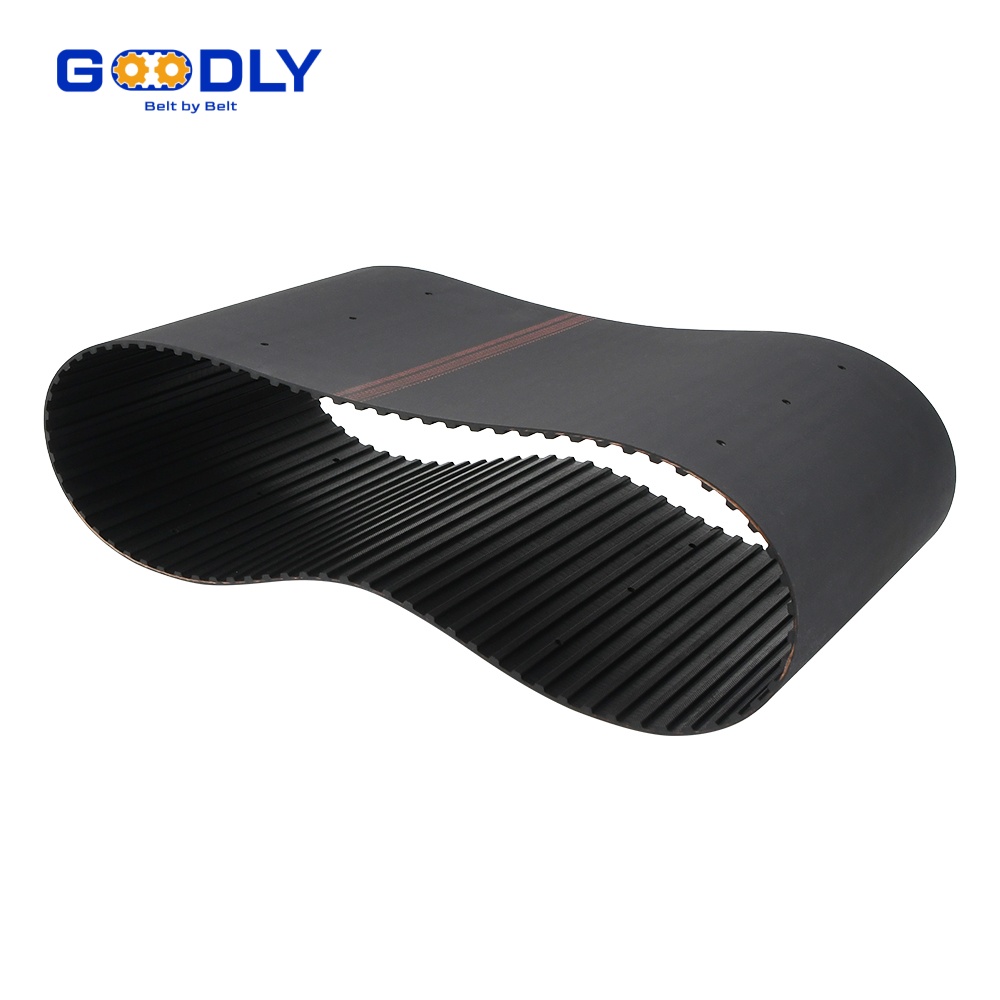
The pattern that emerges across real lines: use rollers where cases simply ride along, and switch to a conveyor timing belt the moment the machine needs to know where the product is — printing a date code, vision-checking a label, stopping at a nest, or transferring into a robot cell. Our logistics and sorting belt solution page shows these drive patterns applied to cross-belt sorters and parcel systems.
Timing Belt Conveyor Systems: Layout, Tensioning and Tracking
A timing belt conveyor is mechanically simple — drive pulley, idle pulley, belt, frame — but three layout decisions determine whether it runs true for years or fights the maintenance team from week one.
- Span and pulley diameter. Keep single-belt spans within roughly 6 m and respect the pulley's minimum-tooth count for the cord type; undersized pulleys bend the cords sharply on every revolution and shorten belt life dramatically. For long transports, use several shorter belt sections in sequence rather than one overstretched loop.
- Tensioning. Every timing belt conveyor needs a timing belt tensioner: an adjustable idler or a slotted motor mount that sets correct cord tension and absorbs length changes with temperature and wear. Tension too low lets teeth ride up and jump; too high overloads shafts and bearings. A spring-loaded or excentric idler on the slack side, pressing outward, is the standard answer.
- Tracking. Timing belts track on their pulley flanges, so flanged pulleys at one pulley (usually the drive) plus a crowned or flanged idle keep the belt centred. Belt width tolerance and square frame construction do the rest — a frame out of square by one millimetre over the span is enough to walk a belt against its flange continuously.
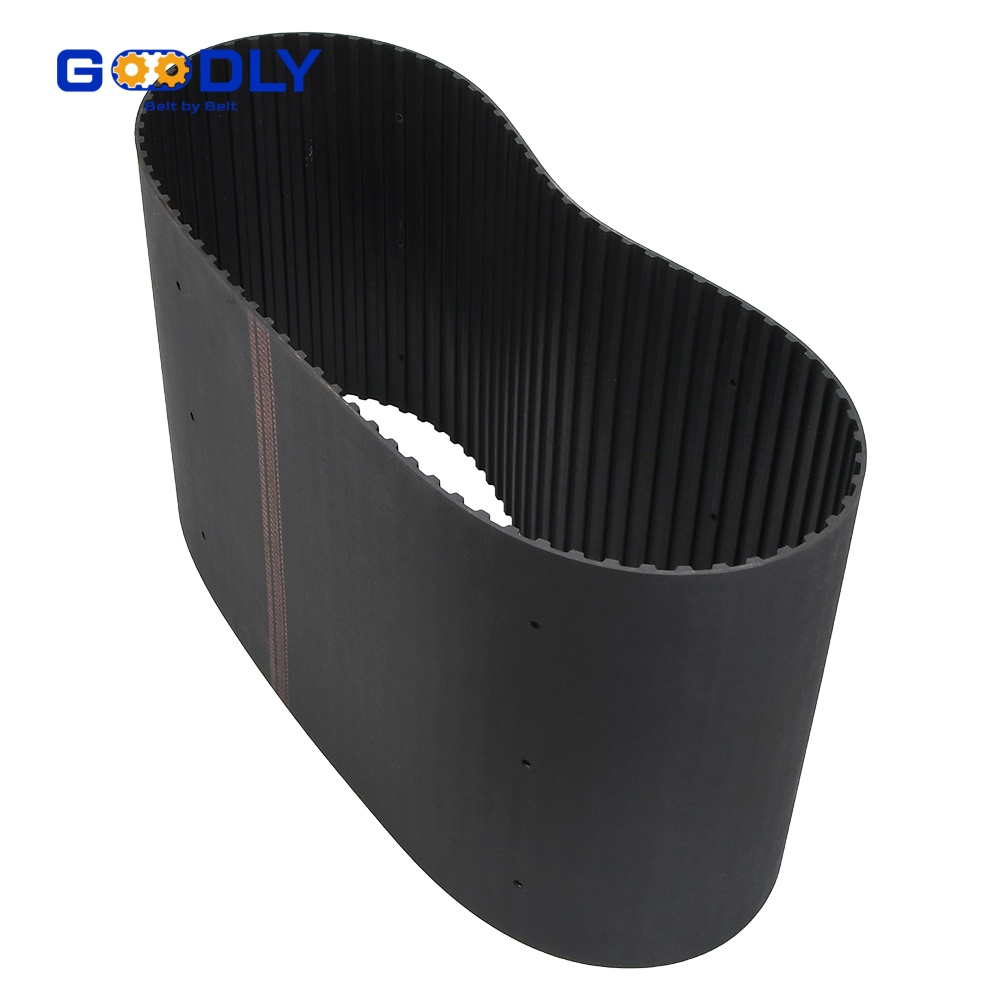
One more layout habit pays for itself: design the drive pulley shaft and bearing arrangement so the belt can be slipped over without dismantling the frame. Conveyor timing belts are moulded endless loops, and a serviceable layout turns a belt change from a half-day job into a ten-minute one.
Timing Belt Conveyor Design: Calculating Load, Speed and Belt Width
Sizing a timing belt conveyor design comes down to three chained calculations — load, speed, width — each of which constrains the next:
- Transport load. Multiply product mass per metre by span, add the belt's own mass, and multiply by the friction coefficient of the carrying surface (0.15-0.35 for most product-on-coating combinations). This gives the tangential force the teeth must transmit.
- Speed and duty. Transport speed sets pulley RPM from pulley diameter. Multiply nominal force by a service factor — 1.3-1.5 for uniform duty, up to 2.0 for frequent starts, indexing stops and reverse runs.
- Belt width and pitch. Pick a pitch from the speed and precision needs (finer pitches such as T5 or AT5 for light, fast, precise transport; HTD 8M-class for heavier loads), then select the standard width whose rated force exceeds the corrected load. The timing belt sizes and dimensions guide explains how to read the resulting codes.
Two practical corrections close the loop: if the corrected width lands between standards, round up — cord fatigue, not tooth shear, is the usual failure mode on conveyors; and always restate the pulley tooth count once width is chosen, because wide belts on few teeth load the outer cords unevenly.
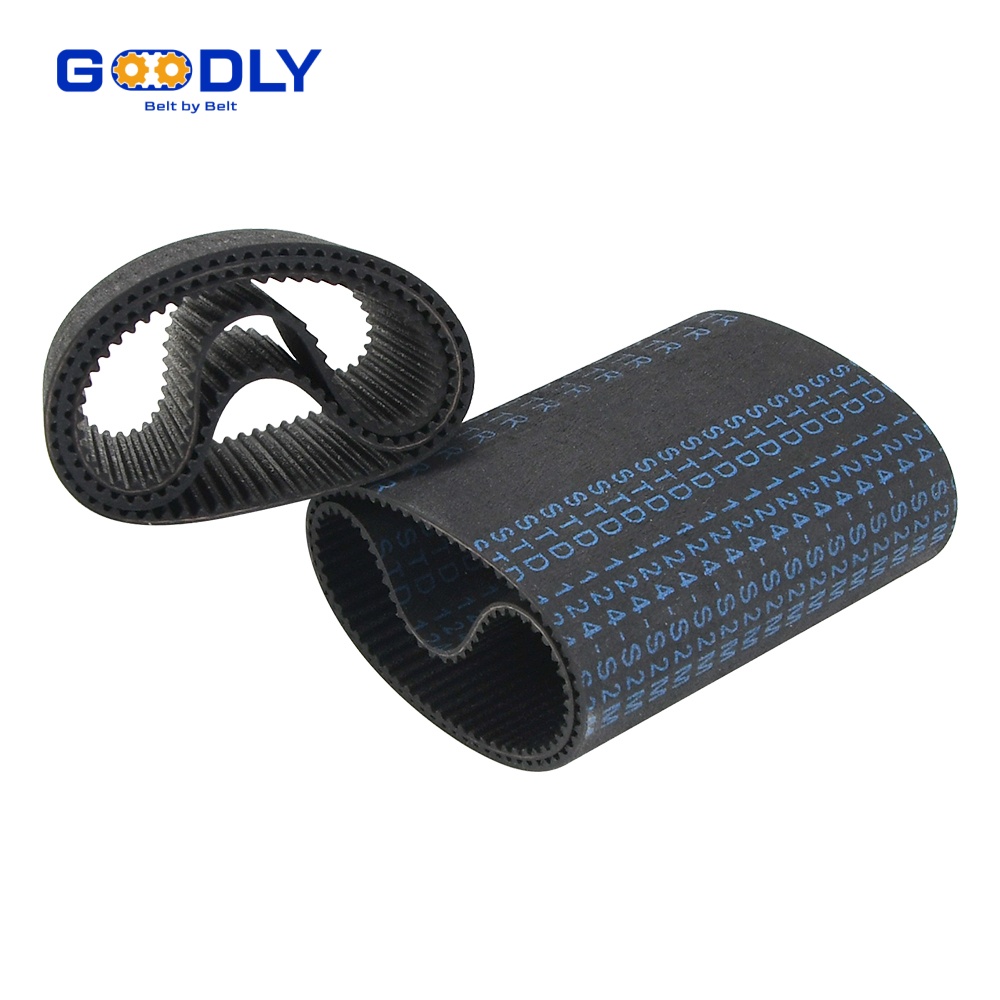
Choosing Timing Belt Conveyor Components: Pulleys, Idlers and Backings
The belt is the star, but the supporting cast decides how long the show runs. Three component groups deserve explicit engineering attention in every timing belt conveyor system:
| Component | Selection rule | Common failure when wrong |
|---|---|---|
| Drive pulley | Flanged, minimum tooth count respected for pitch, hardened teeth for high-cycle lines | Tooth wear and cord fatigue from undersized pulleys |
| Idle / tensioner | Flange on one side, mounted on the belt's slack side, adjustable travel ≥2% of span | Belt walk-off, noise and tooth jumping |
| Backings | Rubber friction, sponge or PU coating matched to product sensitivity and speed | Product slipping, marking or scuffing |
| Cleats and guides | Bonded profiles positioned against the tooth system for indexing stations | Mis-indexed product at gates and nests |
| Frame and shafts | Square within 1 mm over span; shaft deflection under load below pulley misalignment limit | Belt flange wear and edge fray |
Backings deserve the most product-specific thought, because the carrying surface is where the conveyor meets the customer's product. Plain PU or rubber faces suit robust totes and cartons; ground rubber coatings raise friction for inclines; sponge layers protect glass and electronics; and bonded cleats convert the belt into an indexing ladder. Our rubber-coated timing belt applications guide walks through that selection in detail, and the standard timing belt range lists the base constructions every coating bonds to.
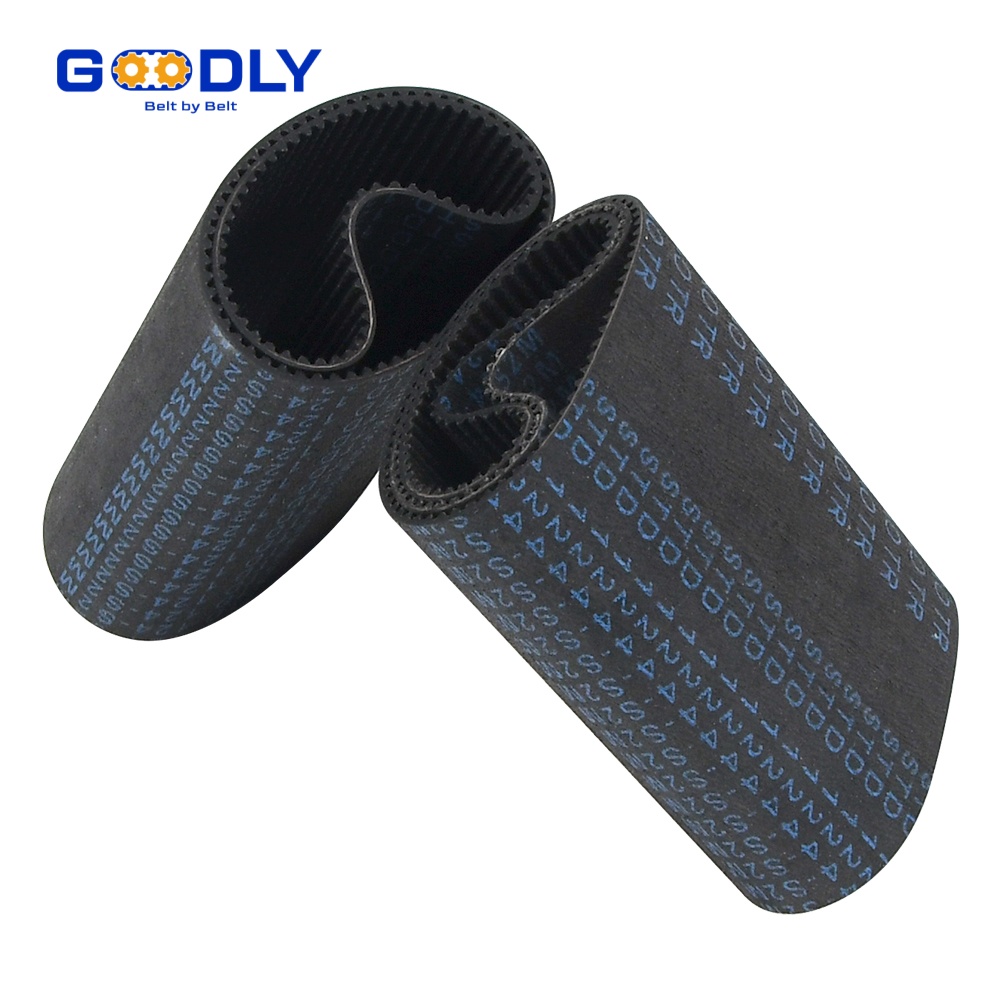
Conveyor Timing Belt Drive Options for Food, Pharma and Parcel Lines
Three industries keep pulling timing belt conveyors into their lines for reasons beyond precision, and each adds one specification layer:
- Food processing. Belts run wet, cold and washed down daily, so the specification adds food-contact documentation for the coating and a closed, non-absorbent belt body. The construction logic matches our food-grade timing belt compliance guide — timing belts add portioning and indexing capability that friction belts cannot offer on the same line.
- Pharmaceutical handling. Blister and carton transport needs cleanroom-compatible, low-particulate belts with anti-static options, plus deterministic indexing for checkweigher and inspection stations. The compliance-driven selection process is the same one our pharmaceutical belt guide documents.
- Parcel and e-commerce logistics. Sorters need grip, quiet operation and millions of precise stop-and-go cycles; timing-belt-driven carrier and transfer modules deliver the repeatability that friction accumulation conveyor cannot hold. See the drive arrangements on our logistics and sorting solution page.
Engineering Support: Design Your Timing Belt Conveyor Drive with GOODLY
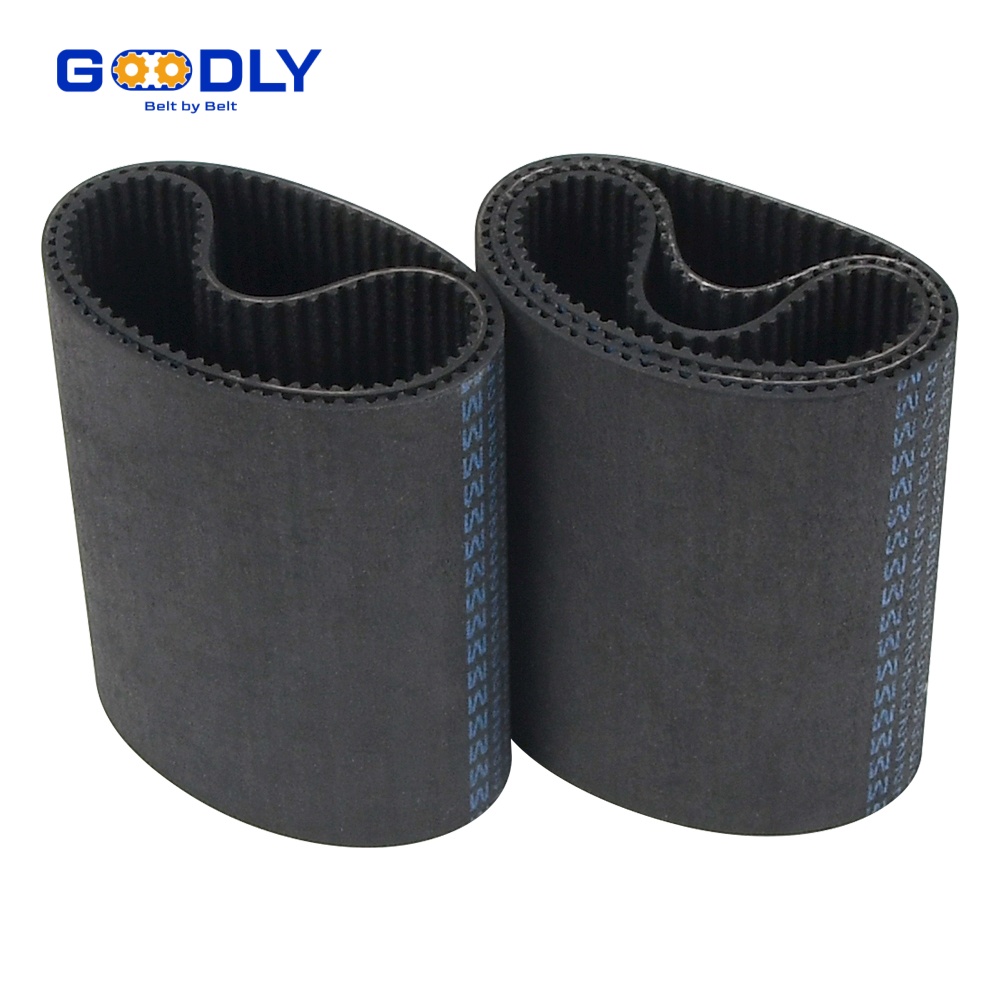
GOODLY supplies timing belt conveyor drives as an engineered package rather than a catalogue item: base belt moulding, coating bonding, cleat attachment and pulley matching all happen in one plant, so a custom conveyor belt moves from layout drawing to sample in 3-5 working days and repeats identically for production batches. Send us your span, load, speed and product description — or a worn belt — and our engineers will return a confirmed pitch, width, backing and tensioning proposal within 48 hours. You can review our factory and quality system first, and browse the timing belt product range for standard constructions.
Drive design support
Load, speed and width calculations checked by application engineers before you order.
Backings for the product
Friction, sponge and cleated surfaces matched to what the belt actually carries.
Deterministic indexing
Cleats and features positioned against the tooth system for repeatable stations.
3-5 day prototypes
Custom conveyor timing belts sampled fast and frozen for repeat orders.
What is a timing belt conveyor used for?
It transports product on a synchronously driven belt wherever position matters: indexing into nests, stopping at print or inspection stations, synchronised transfers into robot cells, and gentle handling of small or flexible items that rollers cannot carry. Where product only needs to ride from A to B, a roller conveyor is usually cheaper.
How tight should a conveyor timing belt be tensioned?
Tight enough that the teeth stay fully engaged at the rated load without riding up, which for most conveyor drives means a slack-side deflection in the range specified by the belt manufacturer — typically checked with a force-deflection gauge. Use an adjustable idler or slotted motor mount rather than stretching the frame, and re-check tension after the first days of running.
How do I calculate the right belt width for a timing belt conveyor?
Compute the tangential force from product mass, span, friction and a service factor, choose a pitch suited to speed and precision, then pick the standard width whose rated force exceeds the corrected load. Round up when between standards, since cord fatigue rather than tooth shear limits conveyor belts, and re-check the pulley minimum tooth count after any width change.
Can timing belt conveyors run at food-grade and anti-static levels?
Yes. Coatings and belt bodies are specified with food-contact or anti-static documentation on request, and the tooth system itself is unaffected by the coating. Tell us the contact regime (incidental or prolonged), washdown chemicals and any ESD surface-resistance target, and we match the construction and its paperwork.
Planning a Timing Belt Conveyor Drive?
Send GOODLY your span, load, speed and product data — or a worn belt from the existing line. Our engineers confirm pitch, width, backing and tensioning layout within 48 hours and ship a custom conveyor timing belt prototype in 3-5 working days.
Request a Conveyor Drive Design