Rubber-Coated Timing Belt Solutions for Conveying and Feeding Applications
Rubber-Coated Timing Belt Solutions for Conveying and Feeding Applications
Grip, tracking and transfer accuracy from a bonded backing: how to specify a rubber coated timing belt for conveyors and feeding stations
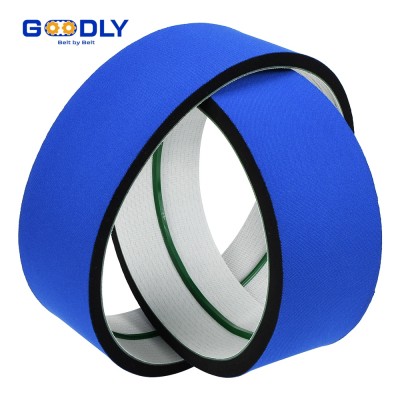
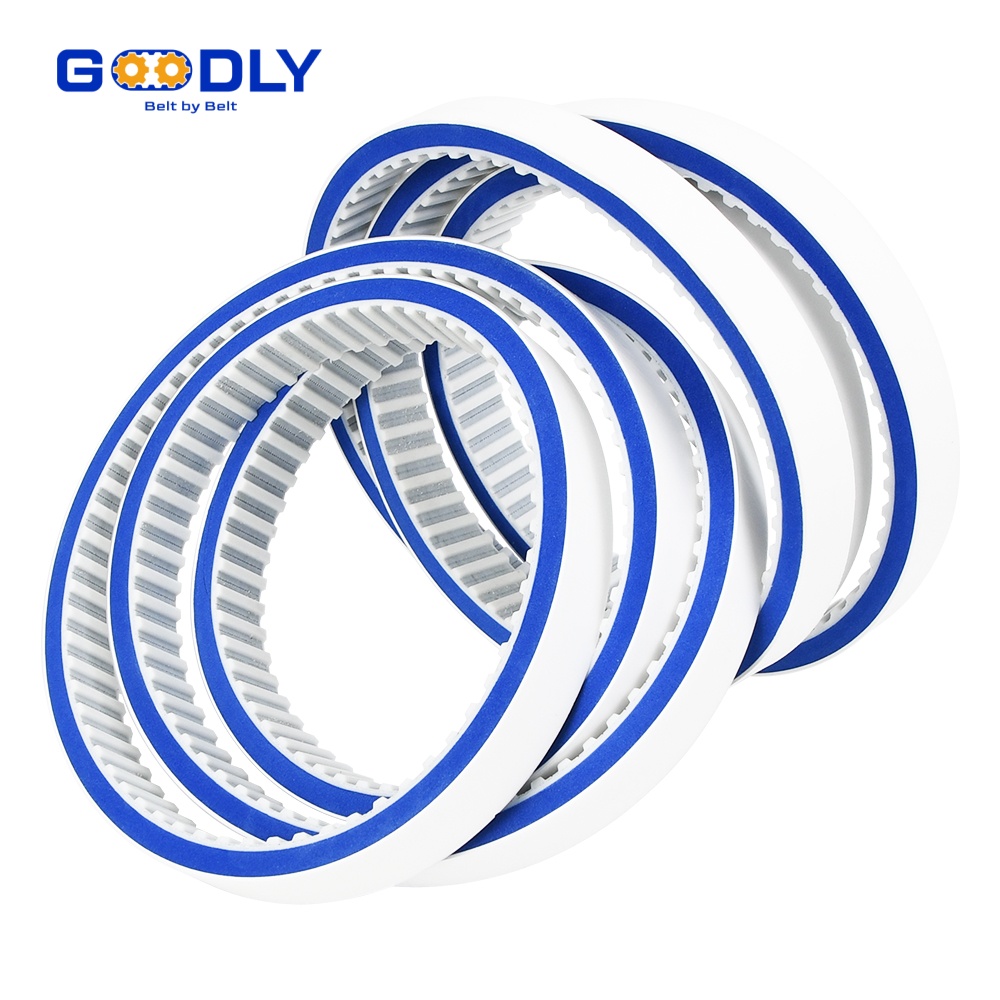
A bare timing belt transmits power beautifully and handles product terribly. The tooth side keeps perfect register with the pulley, but the smooth back face offers almost no friction, so cartons slip, glass jars skate and printed webs mistrack. A rubber coated timing belt fixes exactly that: the synchronous teeth underneath keep the position, while the bonded rubber surface on top provides the grip, cushioning and controlled friction that a timing belt conveyor or feeding station actually needs. This guide walks through the conveying duties where coated belts earn their place, how backing hardness matches product weight and speed, when a cleated timing belt beats a flat one, and what OEM conveyor builders should put in an enquiry.
Rubber Coated Belts for Conveying: Grip, Tracking and Transfer Accuracy
Every conveying problem a coating can solve falls into one of three buckets: the product needs more grip, the belt needs to run truer, or the transfer between stations needs to happen at a precise moment. A rubber coated timing belt addresses all three because the coating and the teeth do different jobs — the rubber layer touches the product, the tooth system touches the machine.
| Conveying duty | What goes wrong with a bare belt | Backing solution |
|---|---|---|
| Flat transfer of cartons or trays | Slip at product contact, scuffed undersides | Friction rubber backing, Shore 60-75 A, ground finish |
| Accumulation zones | Products dragged, labels damaged | Low-hardness sponge or soft rubber layer that cushions stops |
| Incline or decline conveying | Product slides back under gravity | High-friction backing plus bonded cleats |
| Feeding and indexing stations | Uncontrolled product release timing | Ground coating surface for repeatable release point |
| Vacuum and hold-down decks | Leakage at the belt surface | Dense smooth backing sealing the deck perforations |
The tracking benefit is just as real as the grip benefit. Because the teeth stay engaged with the drive pulleys, a coated conveyor timing belt does not creep or drift the way a friction conveyor belt does when load changes — registration marks printed on the belt stay aligned with the machine frame for years, which is why packaging OEMs use them for label-to-product registration. For a plain-language tour of backing materials and surface finishes, start with our rubber coated timing belt fundamentals guide.
Rubber-Coated Timing Belt Solutions for Carton Feeding and Print Transfer
Two stations show up again and again in coating enquiries, because both punish an ordinary belt within weeks of installation.
- Carton feeding. A carton feeder pulls blanks or erected boxes from a magazine with friction rollers. The drive belt under those rollers needs a high-grip ground rubber face so the leading box moves every cycle — a single slip causes a double-feed jam that stops the whole line. Medium-hardness backings around Shore 65-75 A give the strongest, longest-wearing grip.
- Print transfer. In printing and converting machines, a rubber coated timing belt carries sheets or film between print units with zero slip, because registration is everything. The tooth side holds mechanical timing while the coating grips the media — the same construction logic our printing industry timing belt guide covers from the press side.
- Feeding fragile or coated product. Where the conveyed surface itself must not be marked — laminates, blister packs, filled pouches — a softer sponge-type backing replaces the hard friction rubber, trading some grip for full surface protection.
Cleated Timing Belt Options for Inclined Conveying with Rubber Backings
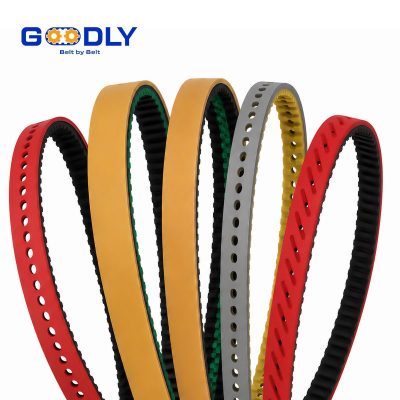
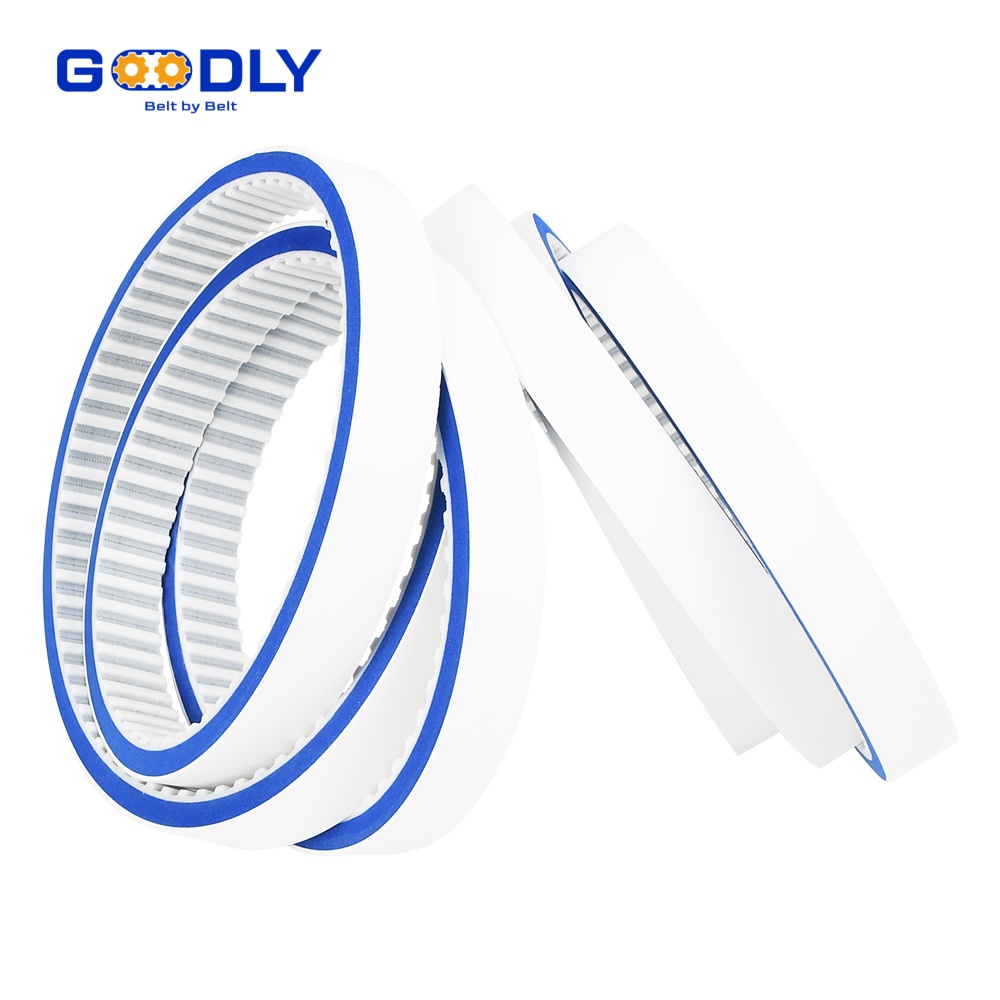
Once the product has to climb, grip alone stops being enough. A timing belt with cleats — rubber or PU cleats bonded crosswise to the coated back face — turns the belt into a bucket ladder: each cleat pushes its row of product up the incline, and the synchronous teeth underneath keep every cleat arriving at the transfer point at exactly the same phase of the machine cycle. That phase certainty is the difference between a cleated timing belt and a cleated friction belt: on a timing belt, the cleat positions can be machined to match a gate, a pusher or a chute, so the machine builder knows precisely where every cleat is at every moment.
Cleat height, pitch and profile are all custom parameters. Low cleats (5-10 mm) suit trays on shallow grades; tall cleats (20 mm and above) handle steep inclines or loose product. The standard timing belt range takes the cleats as a secondary bonding operation, so pitch accuracy of the tooth system is unaffected.
Matching Rubber Backing Hardness to Product Weight and Speed
Backing hardness is the single most consequential specification on a coated belt, and it is chosen against two variables: how heavy and delicate the product is, and how fast the line runs. The logic is simple — hard rubber grips and wears; soft rubber cushions and conforms — but the interactions deserve a table:
| Backing hardness | Character | Best suited to | Watch out for |
|---|---|---|---|
| Shore 40-55 A | Soft, conforming, cushioning | Fragile product, glass, lighter loads at moderate speed | Faster surface wear at high line speeds |
| Shore 60-75 A | Balanced friction and wear life | Carton feeding, general box conveying, print transfer | The default for a reason — start here |
| Shore 80-90 A | Dense, hard-wearing, grippy | Abrasive duty, heavy cartons, high-speed transport | Less cushioning; marks soft or coated surfaces |
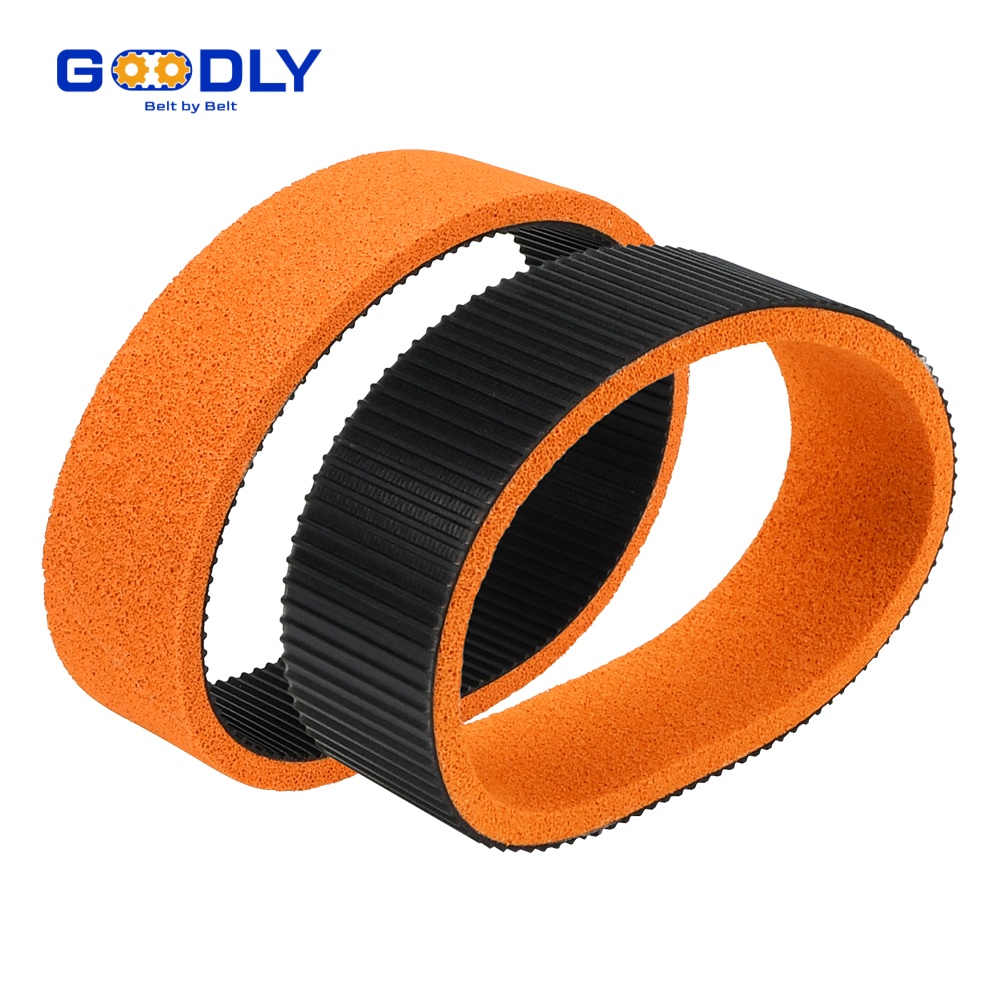
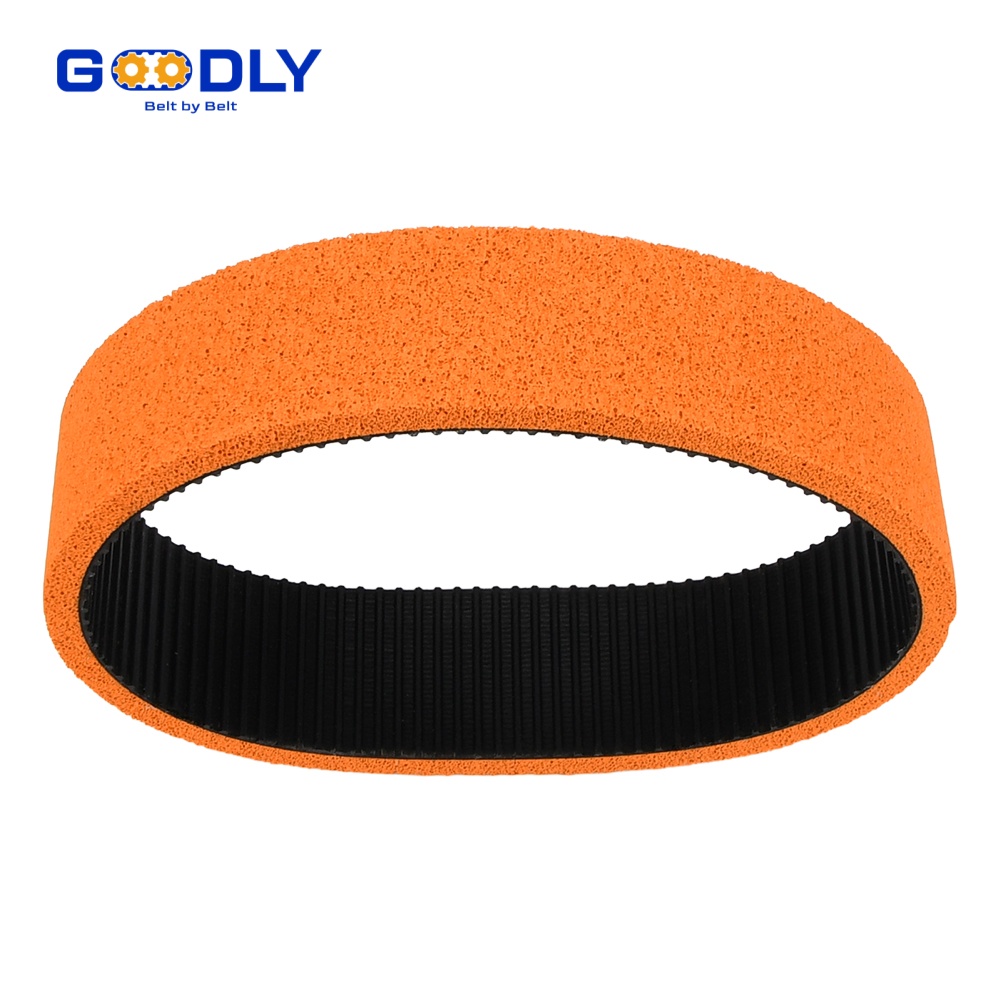
| Sponge / foam type | Compressible, non-marking | Eggs, confectionery, electronics, delicate surfaces | Lower cut resistance; verify compression set |
Line speed changes the picture too. At high speed the contact patch is brief, so a slightly softer or more aggressive surface may be needed to capture the product in the milliseconds available; at low speed, wear life dominates and a harder compound lasts far longer. Surface finish is the second lever: a ground finish gives a consistent, measurable coefficient of friction across the whole loop, while a polished finish suits product that must slide deliberately — for instance on release-into-chute stations.
Custom Rubber-Coated Timing Belts for OEM Conveyor Builders
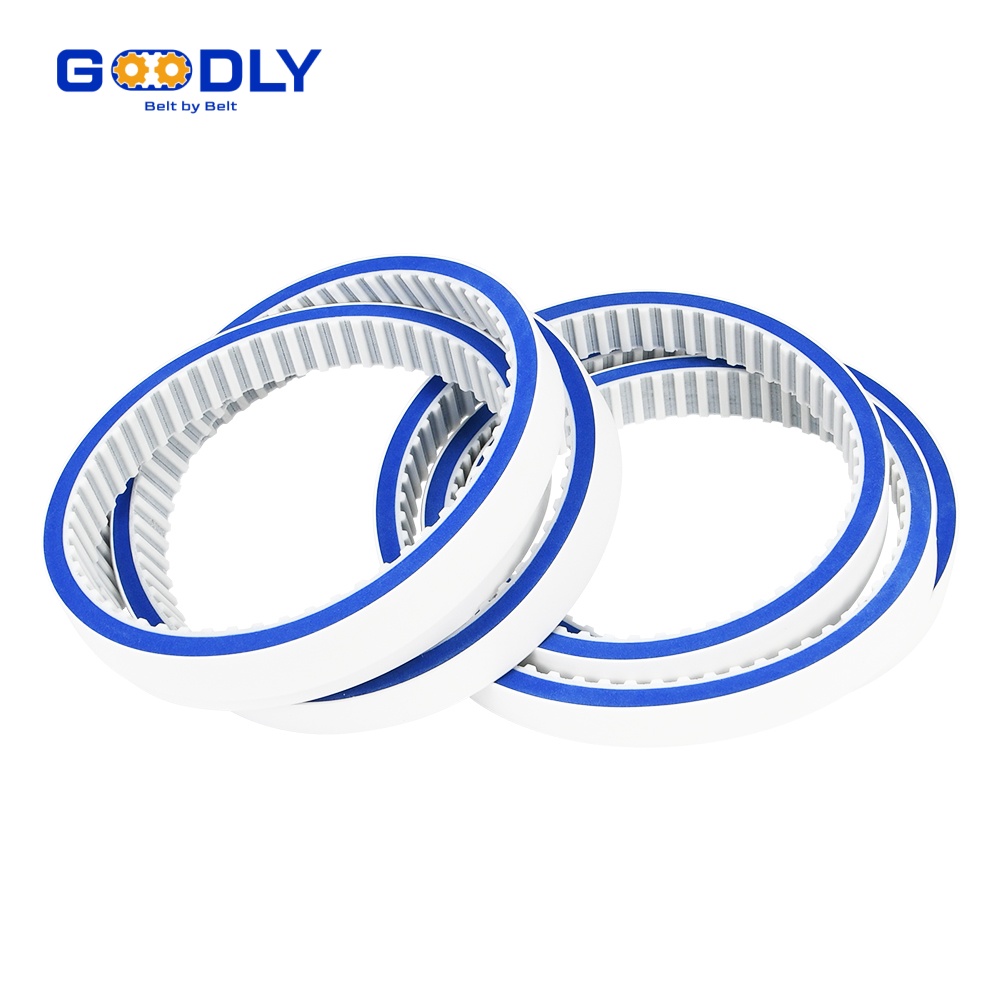
Conveyor and machine builders rarely need a catalogue belt — they need the belt that their frame, pulley set and product were designed around. Custom timing belts are GOODLY's core business, and coated constructions are where the custom options multiply, because belt geometry and coating specification vary independently:
- Belt geometry. Any pitch (T, AT, HTD, GT profiles), width and length, as moulded endless loops or open lengths jointed to length — matching the layout our packaging machinery application guide describes for OEM drives.
- Backing material. Natural rubber, SBR, nitrile for oily environments, or sponge foam — selected against product contact and cleaning regime.
- Backing thickness and finish. From 0.5 mm friction skins to 8 mm cushioning layers, ground or polished to a target friction value.
- Features. Cleats, guides, v-profiles and drilled or notched zones bonded in the same plant, so the finished belt arrives as one qualified part.
Specification Checklist for Rubber-Coated Belt Enquiries
The fastest quotations come from enquiries that answer six questions:
- Pitch, profile and tooth width of the existing belt (or pulley data if the belt is lost).
- Belt length or the exact centre distance between pulleys.
- What the coated face touches — product type, weight, temperature and surface sensitivity.
- Required friction character: maximum grip, controlled release, or non-marking cushioning.
- Any cleats or profiles: height, pitch, position tolerance.
- Line speed and duty cycle, so backing hardness and wear life can be matched properly.
Prototype Your Rubber-Coated Belt Solution with GOODLY
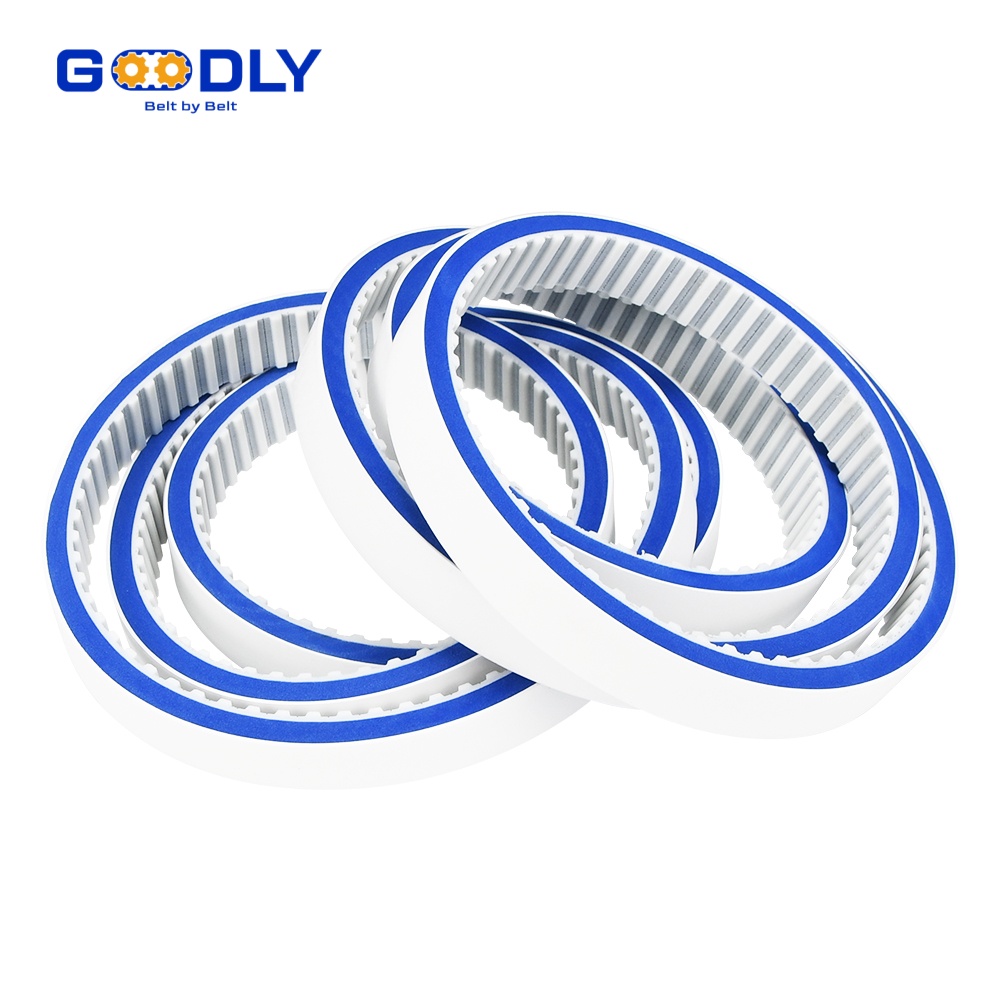
GOODLY manufactures rubber coated timing belts as one in-house process: tooth moulding, cord tensioning, coating bonding and cleat attachment all happen in a single plant, so a custom rubber coated belt solution moves from drawing to sample in 3-5 working days — and the same process chain reproduces the approved construction batch after batch. See our factory and quality system, or compare coated-belt behaviour in sorting and parcel systems with our logistics timing belt application guide.
Grip engineered in
Backing compounds and ground finishes selected to a target friction, not whatever is in stock.
Cleats bonded in-house
Custom cleat height, pitch and profile on any timing belt construction.
Hardness matched to duty
Shore 40-90 A window plus sponge options, matched to product weight and line speed.
Fast prototypes
Samples in 3-5 working days, then frozen constructions for repeat orders.
What does a rubber coating actually add to a timing belt?
Three things: friction on the back face so the belt can grip, feed or cushion product; protection for delicate surfaces; and wear mass that can be ground and renewed in service. The teeth underneath still handle all of the synchronous drive, so coating does not affect timing accuracy.
Can you bond cleats onto a rubber-coated timing belt?
Yes. Cleats are bonded as a secondary operation on the coated back face, in custom heights from 5 mm up, at any pitch and with positional tolerance against the tooth system. Because the belt is synchronous, cleat position at any machine station is deterministic.
Which backing hardness should I choose for carton feeding?
Start at Shore 65-75 A with a ground finish: it gives the strongest, longest-wearing grip for corrugated surfaces at typical feeder speeds. Move softer for coated or printed cartons that must not be marked, harder for heavy boxes or abrasive dust environments.
What information do you need to quote a custom rubber coated belt?
The belt geometry (pitch, profile, width, length or centre distance), what the coating touches, the friction character you need, any cleat requirements, and the line speed. With those six items we confirm a specification within 48 hours and can ship a prototype in 3-5 working days.
Need a Rubber-Coated Timing Belt for Your Conveyor?
Send GOODLY your belt drawing or a worn sample plus your product and speed data. We confirm pitch, backing compound and hardness within 48 hours and ship coated prototype belts — cleated or plain — in 3-5 working days, with the construction frozen for repeat orders.
Request a Coated Belt Specification