Timing Belts for the Printing Industry: Precision Drives for High-Speed Presses
Timing Belts for the Printing Industry: Precision Drives for High-Speed Presses
Registration drives, feed systems and finishing layouts: which belt construction keeps every colour on top of the last one
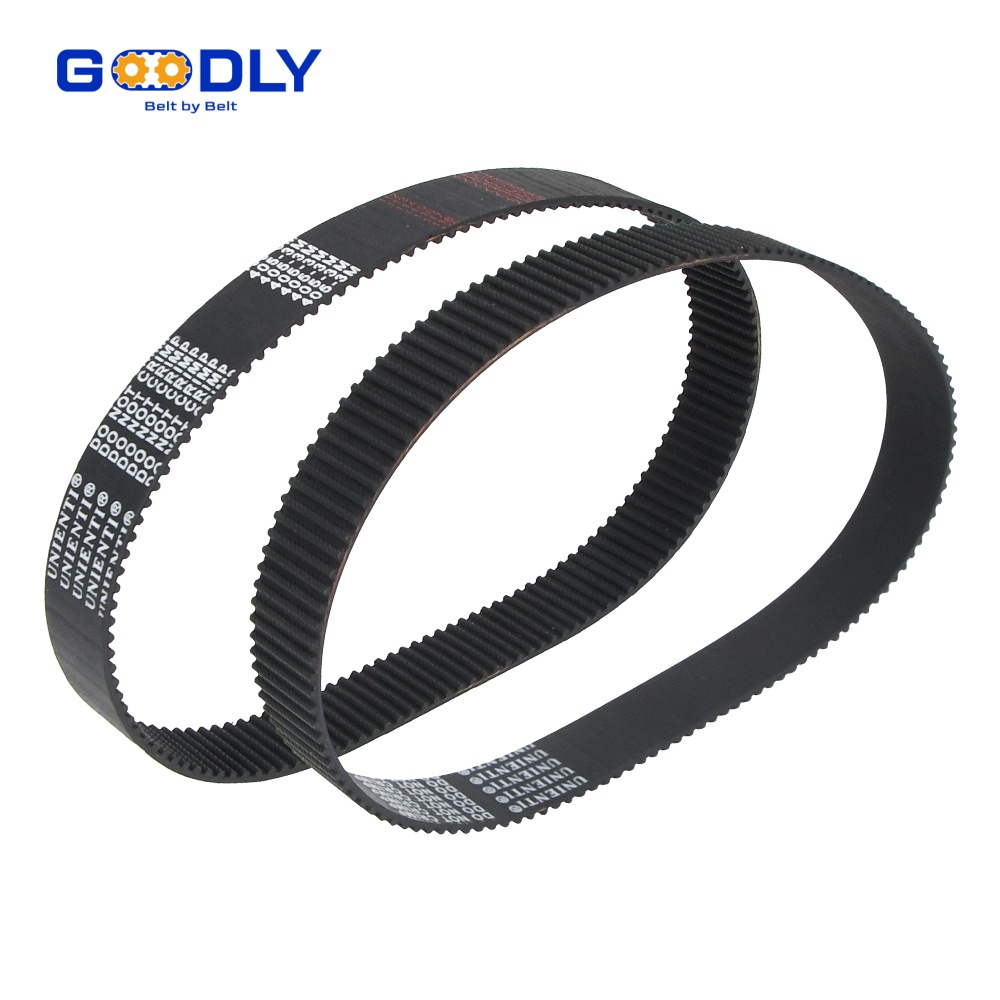
A printing press does not forgive a slipping belt. When a printing machine timing belt stretches by half a millimetre, the error does not show up as noise or vibration — it shows up as colour out of register across an entire print run, and every sheet after the drift is waste. Presses and finishing equipment therefore treat timing belts as precision components, not consumables: the cord must not creep, the teeth must mesh identically on both runs of the belt, and the surface must survive ink, heat and solvent wash-up. This guide walks through where belts run on print equipment, which constructions hold registration at speed, and how to specify them.
Where Timing Belts Run in Printing Machines: Registration and Feed Drives
Print equipment uses timing belts in three distinct duties, and each one fails for a different reason. Specifying one belt type for the whole machine is the fastest way to buy a registration problem.
| Station | Belt duty | Dominant failure mode | Right construction |
|---|---|---|---|
| Registration / cylinder drive | Synchronise plate and blanket cylinders so colours land exactly | Pitch elongation, tooth wear, colour drift | Rubber timing belt, glass or aramid cord, HTD or AT profile |
| Sheet feed and transfer | Carry each sheet between feed board and impression | Backing glaze, surface slip, sheet marks | Coated timing belt with high-friction, non-marking cover |
| Timing belt conveyor sections | Move sheets and piles through dryer and delivery | Heat ageing near dryers, edge fraying | Heat resistant timing belt with sealed edges |
| Finishing: cutters, folders, binders | Index knives and rollers in fixed phase | Tooth shear under shock loads, splice creep | Vulcanized endless belt, high-shear-strength teeth |
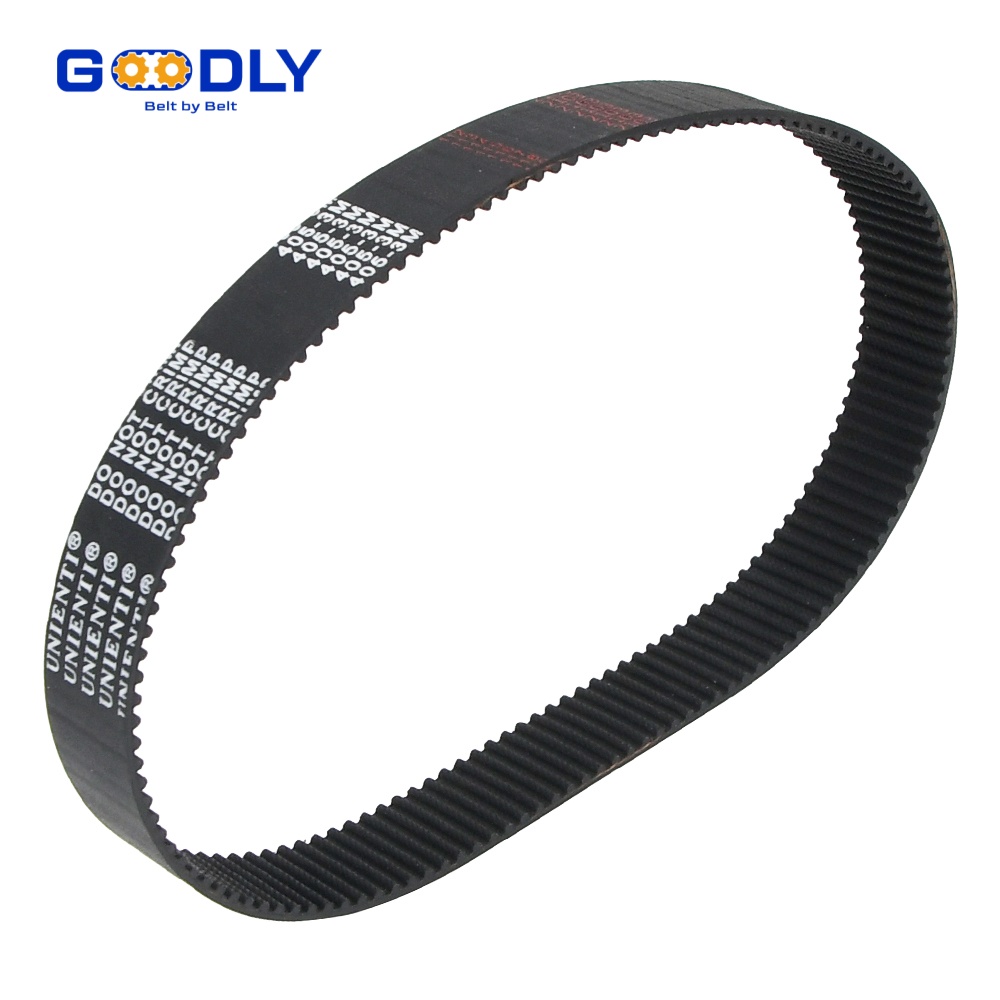
The critical station is the cylinder drive. Here the belt is a position sensor in disguise: every tooth engagement moves the cylinder by a fixed angle, so any tooth wear or cord stretch becomes a colour error. That is why press OEMs specify low-elongation cords and why a replacement belt should always be pitch-verified, not just length-matched. If you are converting between profiles when sourcing a second supply, our tooth profile and pitch guide explains the compatibility rules.
Anti-Slip, Heat-Resistant Timing Belts for Continuous High-Speed Printing
Speed multiplies every small belt defect. A belt that slips one tooth engagement in ten thousand is invisible at 50 sheets per minute and ruinous at 500. Anti-slip performance in a print drive comes from three construction choices rather than from tensioning the belt harder:
- Low-creep cords. Glass and aramid cords stretch far less than polyester under continuous load, so tooth phase stays fixed hour after hour.
- Full tooth engagement. A HTD timing belt profile carries load on the tooth flanks with a rounded root that resists ratcheting under shock, which matters on impression and die-cutting drives.
- Stable friction surfaces. Where the belt back runs against rollers or sheets, a coated cover keeps its coefficient of friction constant as ink mist and paper dust accumulate.
Heat is the quiet partner of speed. Dryer sections, UV curing lamps and hot foil stations all radiate into nearby drives, and a standard chloroprene belt hardens and cracks in that zone within weeks. A heat resistant timing belt in silicone keeps its elasticity at continuous temperatures standard rubber cannot survive, which is why silicone-backed belts are the default choice wherever the belt passes within a few centimetres of a dryer. The trade-off is tensile strength: silicone drives need a stronger cord and a slightly larger pulley than the rubber belt they replace.
Double-Sided Timing Belts in Complex Print and Finishing Drive Layouts
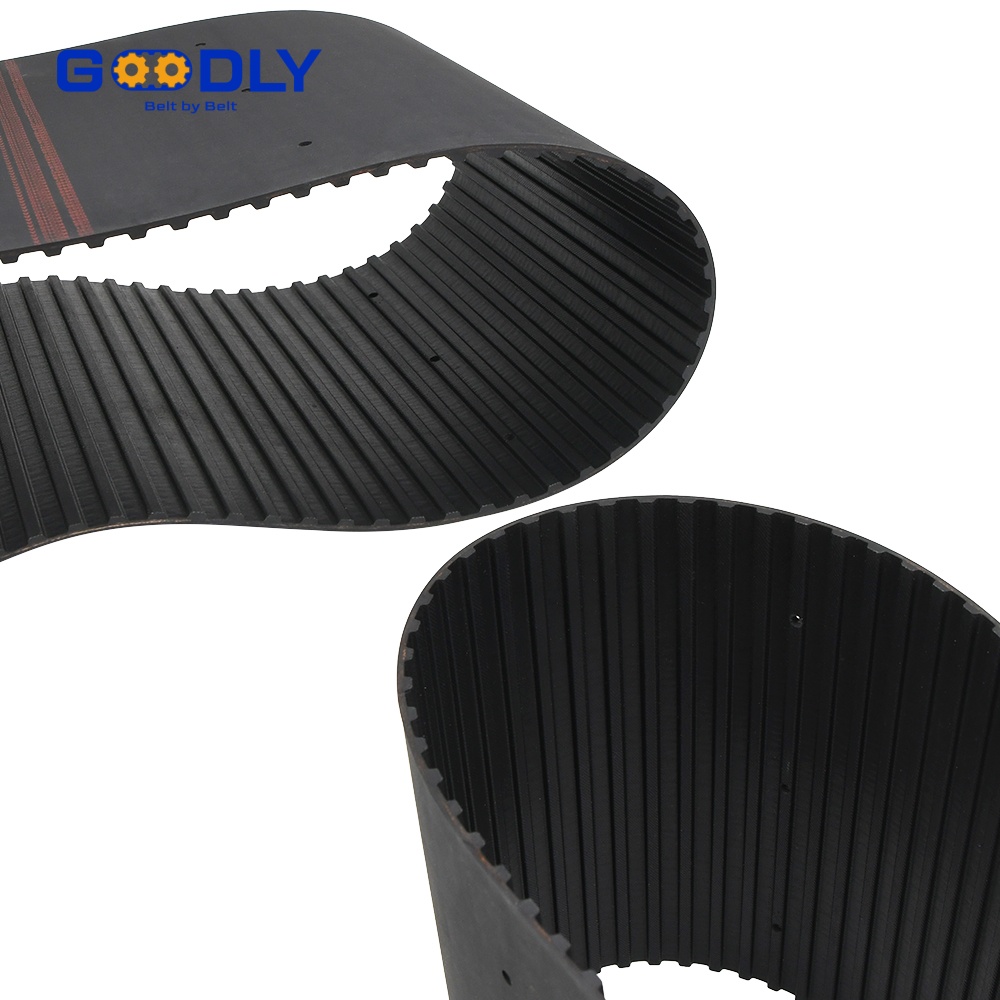
Modern print and finishing lines are short on space and long on pulleys. When a drive layout places toothed pulleys on both sides of the belt loop — a folder and a cutter driven from one motor, or a serpentine path through a binding line — a single-sided belt cannot do the job without idler complications. A double sided timing belt carries teeth on both faces, meshing with two sets of pulleys and keeping every station in fixed phase from one shaft. For a full explanation of when teeth on both sides are worth it, see our double-sided timing belt guide.
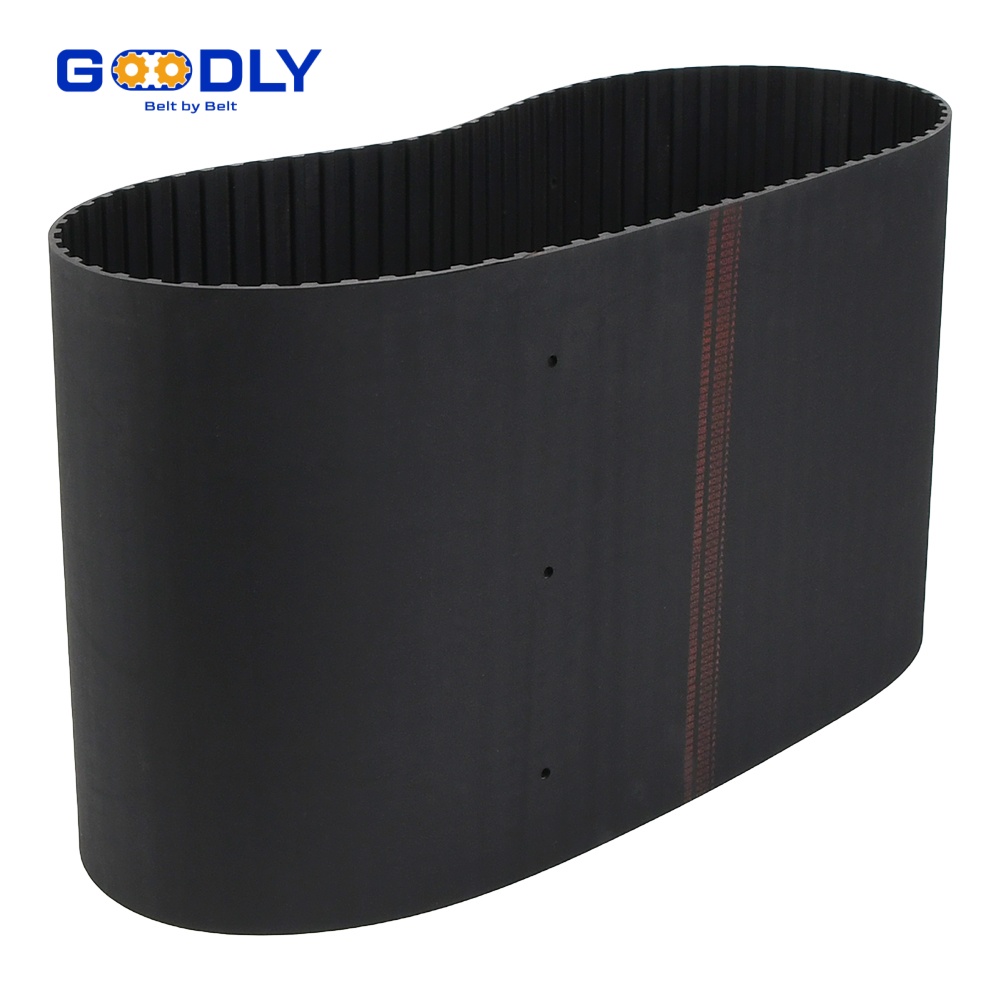
The specification detail that matters most on double-sided belts is phase relationship: the teeth on both faces must align within a fraction of a pitch, or the two driven stations drift against each other. This is a manufacturing tolerance, not an adjustment, so it belongs in the purchase specification alongside pitch length and cord type.
Timing Belt Maintenance That Keeps Print Registration Accurate
Registration problems are usually blamed on the press, but a disciplined belt maintenance routine eliminates most of them. Print plants that track belt condition against registration quality follow the same five checks:
- Inspect tooth flanges quarterly. Hook-shaped or rounded tooth tops mean the belt is ratcheting under shock — check pulley alignment and tension before replacing the belt.
- Measure belt span tension with a gauge, not by hand feel. Over-tensioning is the leading cause of cord failure and bearing wear in print drives.
- Watch for glazing on coated backs. A shiny, hard surface on a feed or conveyor belt has lost its friction stability and will start slipping at speed.
- Replace belts in sets. On multi-belt cylinder drives, mixed old and new belts share load unevenly and reintroduce the drift you just fixed.
- Keep dryer-zone belts on a shorter cycle. Heat ageing is cumulative; a belt near a UV lamp ages whether or not it is running under load.
For the general routines — storage, cleaning agents, tension windows — our wider belt care guidance applies unchanged to print drives, and the packaging machinery application guide covers the same feed-and-conveyor belt duties from the packaging side, which shares most of its physics with print finishing.
Custom Timing Belts for Print Equipment Manufacturers and Print Shops
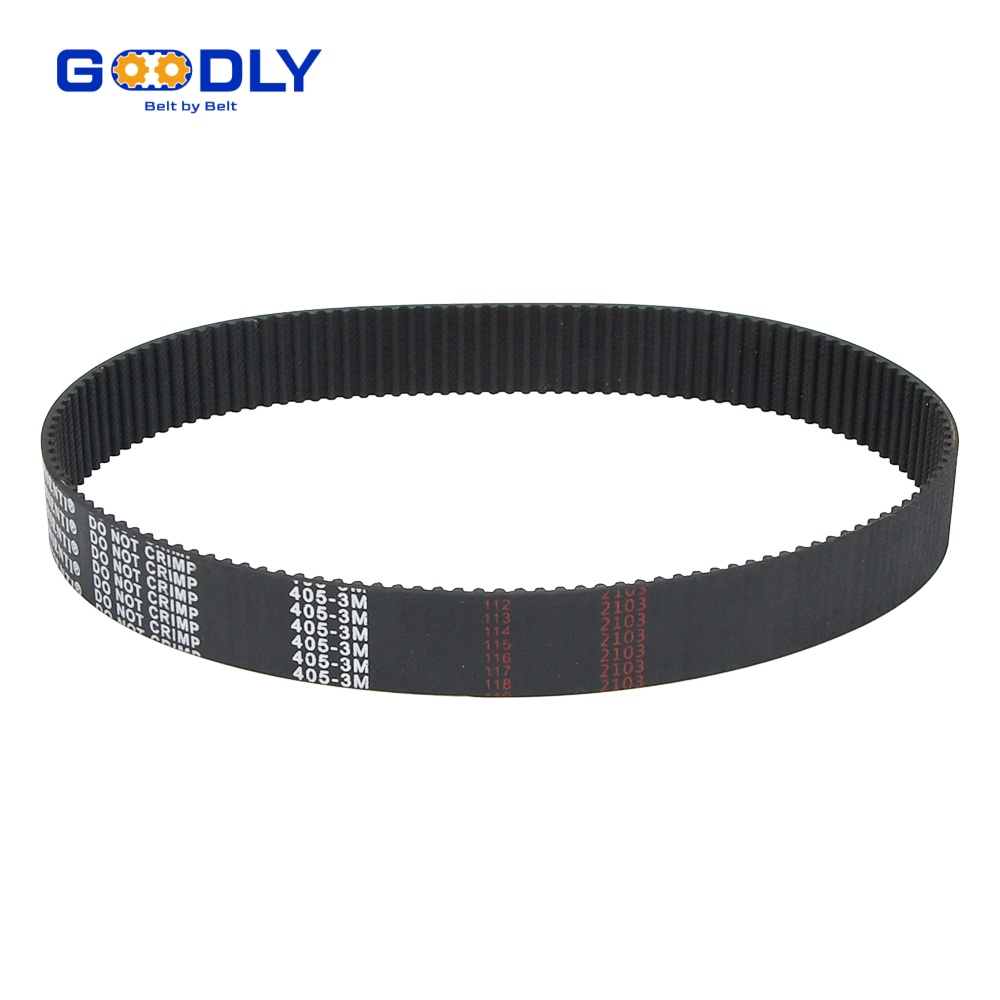
Print equipment is a custom-belt industry by nature. Press frames fix the centre distances, finishing modules add serpentine paths, and legacy machines in service for decades need replacements for pulleys and belts that no catalogue lists. For machine builders and print shops alike, four custom dimensions define the order:
- Pitch length and profile. Cut from moulded sleeves, so non-standard lengths carry no tooling penalty; T, AT and HTD profiles are all produced in-house. See our custom timing belt ordering guide for what to send with an enquiry.
- Width. Wide belts spread load on conveyor sections; narrow belts drive cylinder registers. Any width within the sleeve range is available.
- Backings. Silicone for heat, rubber for grip, PU foam for delicate finished surfaces such as laminated or varnished stock.
- Cord selection. Glass for dimensional stability, aramid for shock loads in cutting and die-cutting drives, and low-noise constructions for folding units.
For print shops running legacy equipment, reverse-engineering a worn belt is routine work: the profile is measured, the pitch length counted, and the cord identified from a cut section. Send the old belt and the machine model, and a confirmed specification comes back with the quotation.
GOODLY Printing Industry Transmission Belt Solutions
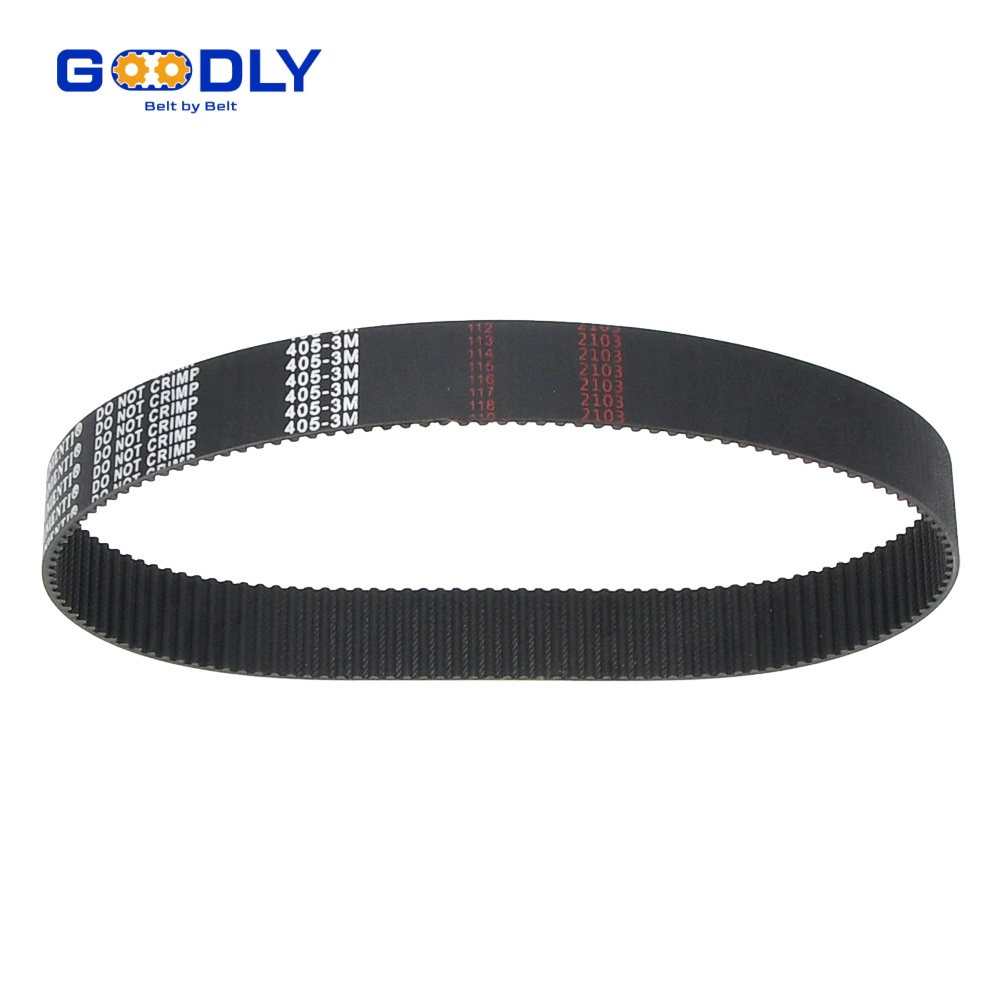
GOODLY supplies drive and conveyor belts to printing machinery OEMs and to print plants maintaining mixed fleets of presses and finishing equipment. Every printing machine timing belt we ship — whether a cylinder drive loop, a conveyor section belt or a serpentine finishing belt — is pitch-verified before packing, so the accuracy you qualify on the sample is the accuracy you get in production. Moulding, coating and vulcanizing happen in one plant, so a custom print belt — silicone-backed, double-sided, or cut to a legacy length — moves from drawing to sample in 3-5 working days, and the construction stays frozen for the production life of the machine. The printing industry transmission belt solution page lists the station-by-station options, and the core timing belt range covers the profiles, widths and cords behind them.
Registration-grade accuracy
Pitch-verified loops with low-creep glass and aramid cords for cylinder and feed drives.
Dryer-zone rated
Silicone and heat resistant constructions that keep elasticity beside UV and IR curing units.
Double-sided layouts
Both-face tooth engagement with controlled phase alignment for serpentine finishing drives.
3-5 day samples
Custom lengths, backings and cords shipped for line trials without tooling cost.
Why does my press lose colour registration even with new timing belts?
Check three things in order: pulley alignment, span tension, and whether the belts were replaced as a set. Mixed belt ages share load unevenly, and over-tensioning stretches cords so tooth phase drifts. If all three are correct, the issue may be tooth wear on the pulleys rather than the belt.
Can a silicone timing belt drive a print cylinder?
Silicone suits hot zones and coated duties, but its tensile strength is lower than rubber. For a high-torque cylinder drive, use a rubber timing belt with an aramid or glass cord, and reserve silicone for dryer-side conveyor and feed belts.
When is a double sided timing belt necessary in finishing equipment?
Whenever toothed pulleys engage the belt from both sides — typically serpentine drives feeding folders, cutters or binders from one motor. Single-sided belts plus idlers add compliance and phase error, so the double-sided construction is the accurate solution.
Can you reproduce a timing belt for a legacy press no longer in production?
Yes. Send the worn belt or the machine model: we measure profile and pitch length, identify the cord, and confirm a specification for approval before moulding. Custom lengths are cut from moulded sleeves without tooling cost.
Specifying Timing Belts for a Press or Finishing Line?
Send GOODLY the machine drawing, the belt part number or a worn sample. We confirm profile, cord and backing within 48 hours and ship trial belts in 3-5 days — pitch-checked, registration-grade, and repeatable across batches.
Send Your Print Belt Specification