Double-Sided Timing Belts: When Do You Need Teeth on Both Sides?
Double-Sided Timing Belts: When Do You Need Teeth on Both Sides?
Design, applications and specification of double sided teeth timing belts for printing, packaging and reversing drives
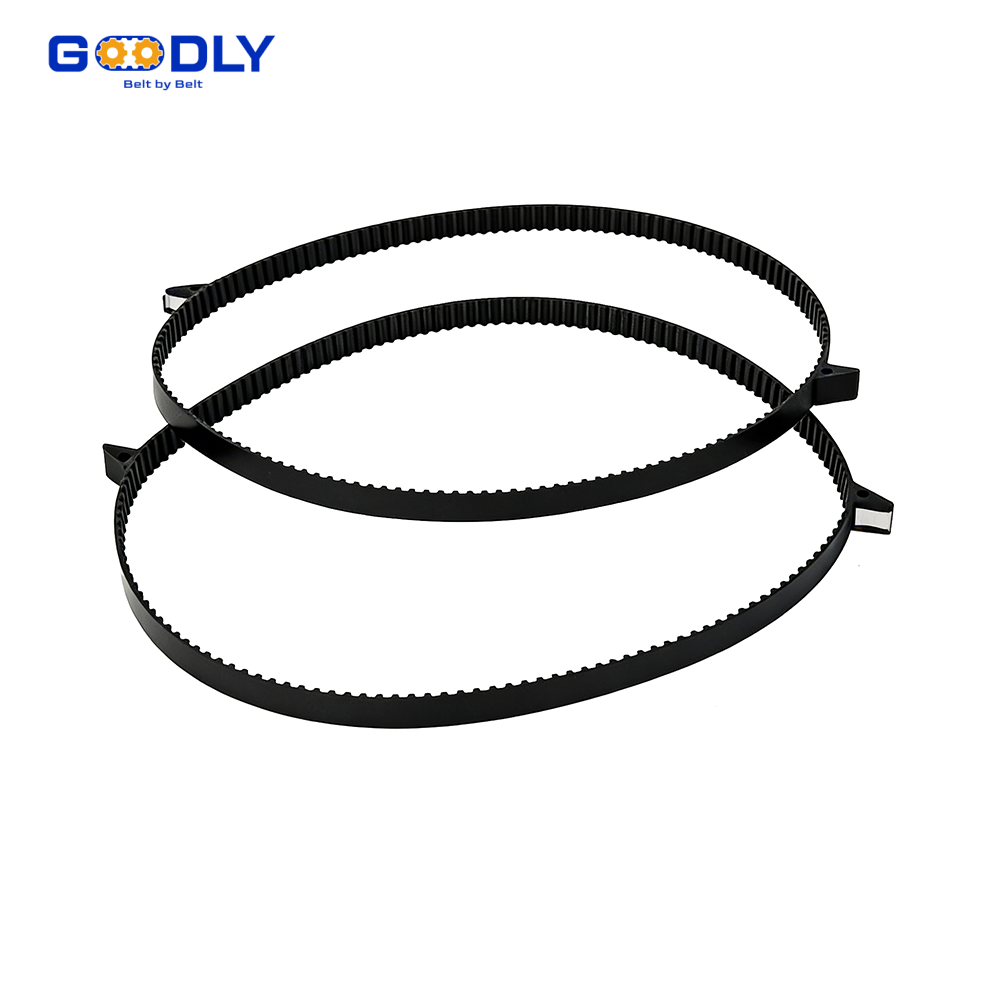
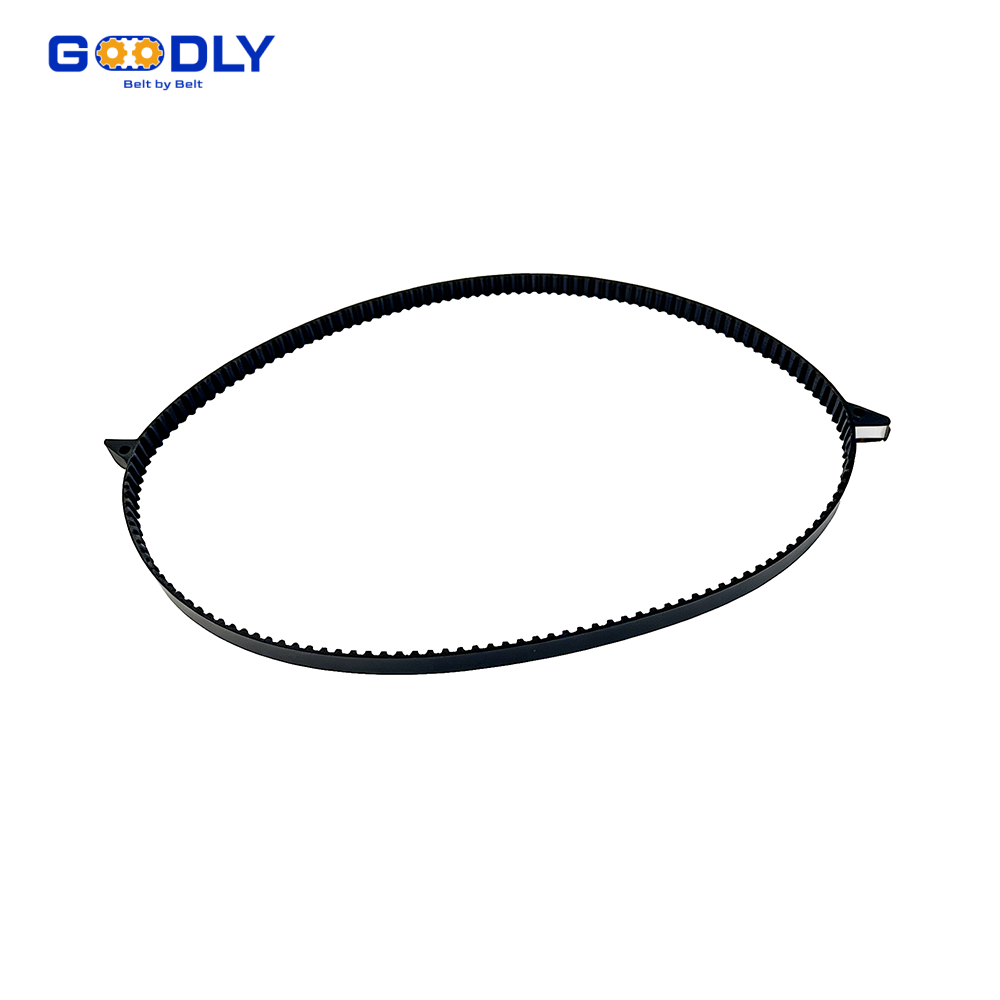
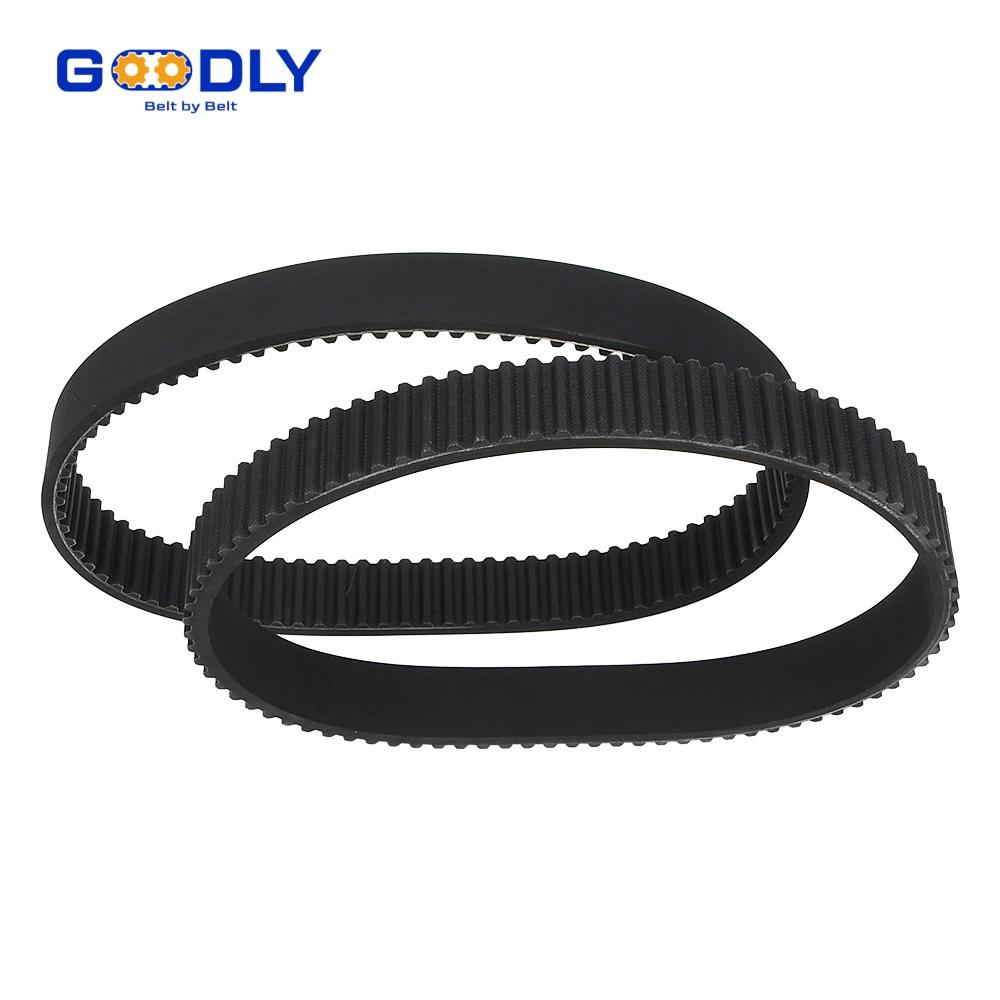
A double sided timing belt is exactly what the name says: a synchronous belt with a full row of teeth moulded on both faces, so the same belt can drive a second pulley row on its backside. One belt, two synchronised shaft rows — no idler mirroring, no second tensioner, no duplicated drive layout. Machine designers reach for a double sided toothed timing belt whenever shafts rotate in opposite directions along the belt path or space is too tight for two separate drives. This guide covers the design, the applications where it earns its cost, the specification details that matter, and how to decide between single- and double-sided layouts.
Double-Sided Timing Belt Design: Synchronizing Two Pulley Rows at Once
Construction-wise, a double-sided timing belt is a symmetric sandwich: the tension cord layer sits at mid-height instead of just under the top teeth, with tooth rows moulded above and below it. The back-face teeth are cut to the same pitch as the front-face teeth, and the two rows are either registered or deliberately offset depending on the machine layout. Because the cords are centred, the belt is stiffer in bending than a single-sided belt of the same pitch, and it must run on slightly larger pulleys to respect the minimum pulley diameter.
- Registered (aligned) teeth: back teeth land between front teeth positions for compact reversing layouts.
- Offset teeth: rows phased so both driven shafts index to the same angular position — common in print cylinder pairs.
- Back idler-friendly: the toothed back runs smoothly over flanged idlers, replacing the flat back of a standard belt.
Double-Sided Teeth Timing Belt Applications in Printing and Packaging
The classic double sided teeth timing belt applications cluster in machines where one belt path touches product or drives shafts from both faces:
Printing & converting
Opposing rollers on both faces keep web tension and register without a second belt.
Packaging & cartoning
Back teeth index folders and flap tuckers while the front carries the product.
Reversing drives
Alternating-direction shafts along one belt path, driven without idler mirroring.
Crossfeed & shuttle
Carriages driven alternately from top and bottom rows in tight frames.
Cutting & registration
Back-side registration pulleys hold cut-length accuracy on rotary knives.
Lifting columns
Serial lift and inclined guides use both faces in vertical mechanisms.
In packaging lines the double-sided belt often replaces a pair of single-sided belts plus idlers, cutting parts count and — because one tensioner serves both rows — removing a whole maintenance loop. If your line instead needs a soft grippy face, compare coated options in our rubber coated timing belt guide.
Single-Sided vs Double-Sided: Calculating the Right Drive Layout
The economics are simple to check. Count the driven shafts and their directions: if more than one shaft sits on opposite faces of the belt path, a double-sided layout usually wins on parts, space and tension stability. If all driven shafts face one way, a standard single-sided belt plus one backside idler remains cheaper.
| Factor | Single-sided belt | Double-sided belt |
|---|---|---|
| Driven shaft rows | One face only | Both faces |
| Parts count (2-row drive) | 2 belts + 2 tensioners | 1 belt + 1 tensioner |
| Min pulley diameter | Standard | Slightly larger (stiffer body) |
| Cost per belt | Lower | 20-40% higher, offsets 2nd belt |
| Design fit | Power transmission | Reversing / two-side indexing |
One caution: a double-sided drive needs its idlers and pulleys aligned to tighter axial tolerance, because the back teeth will find any misalignment. Our timing belt fundamentals guide covers layout basics if you are starting from scratch.
Double-Sided Timing Belt Specification: Pitch, Width and Tooth Offset
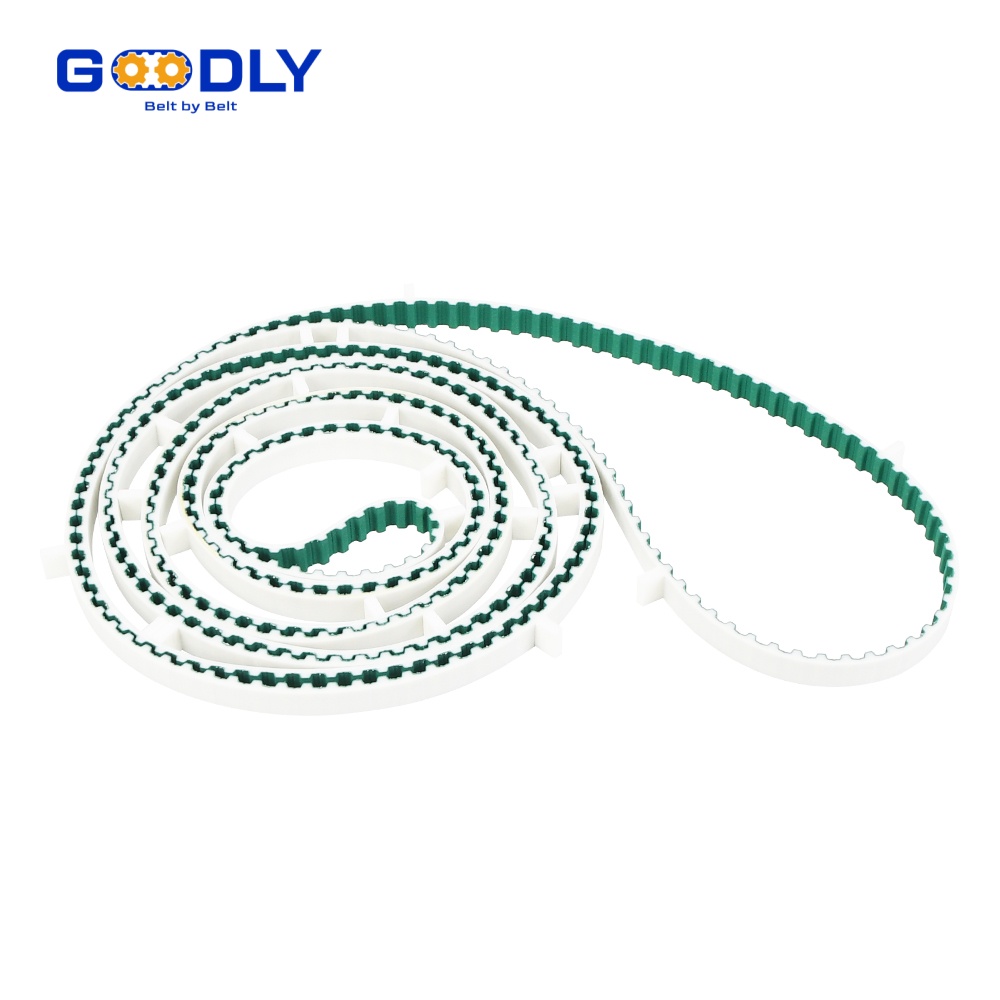
A complete double sided timing belt specification has four fields: tooth profile and pitch (T5/T10, AT5/AT10, HTD 3M-14M, or imperial XL/L/H), width, total length or number of teeth, and the phase relationship between front and back teeth. State the tooth offset explicitly — “registered”, “offset by N teeth”, or a drawing dimension from a marked tooth — because the two rows are cut in the same mould pass and the phase is fixed at manufacture. Add cord type (glass standard, aramid for shock, steel for highest torque) and any coating or machining requirement, which our special machining line handles from your drawing.
Double Sided Timing Belt Suppliers: Quality and Tolerance Requirements
When vetting double sided timing belt suppliers, the two-sided construction raises the quality bar in three places. First, cord centring: the tension layer must sit at mid-height within tight tolerance, or one tooth row loses support and wears early. Second, pitch phase: front and back rows must hold their specified registration along the whole loop, not just at the marked tooth. Third, tooth geometry on both faces: profile and height must match spec on each side, since a back tooth that is 0.1 mm shallow still mis-indexes a print cylinder.
- Ask for phase inspection data on the delivered loop, not just a first-article.
- Confirm 100% cord centring checks on the production batch, ideally with sectioned samples.
- Require material certificates for cord and elastomer, especially for food or pharma-adjacent lines.
- Check minimum pulley guidance — a supplier who ignores back-bend diameter sells early failures.
GOODLY manufactures double-sided belts in rubber and polyurethane grades, checks phase and tooth height on every loop, and supports OEM drawings through our timing belt product family — see also our material comparison of rubber vs PU timing belts.
Get GOODLY Engineering Support for Double-Sided Belt Drives
Double-sided drives reward careful specification and punish guesswork. Send us your shaft layout — positions, directions, torque and environment — and our engineers will confirm whether a double sided timing belt saves you a second drive, propose pitch, width and tooth phase, and return a drawing within 48 hours. Samples ship in 3-5 days, production in 10-15 days.
Are double sided timing belts available in all pitches?
Common pitches T2.5-T20, AT5-AT20 and HTD 3M-14M are available in both rubber and PU; very wide or exotic pitches are quoted from drawing.
Can the back teeth drive the same torque as the front teeth?
Yes. Both rows are cut to the same profile and share the same cord layer, so either face transmits the full rated torque.
What is tooth phase and why does it matter?
Phase is the registration between front and back tooth rows. Your driven shafts stay in sync only if the phase matches the layout, and it is fixed at moulding — so it must be specified when ordering.
Do double-sided belts need special pulleys?
Standard profile pulleys work on both faces; only the minimum diameter guidance is stricter because the belt is stiffer.
Planning a Two-Side Drive? Talk to GOODLY First.
Send your layout sketch to our engineers. We review the double-sided option against your current drive, quote within 48 hours and ship samples in 3-5 days — backed by GOODLY’s phase and tolerance inspection on every belt.
Get Engineering Support