Pharmaceutical Timing Belts: Anti-Static and Cleanroom-Ready Belt Solutions
Pharmaceutical Timing Belts: Anti-Static and Cleanroom-Ready Belt Solutions
Why pharma drives need anti-static, low-shedding belts — and how to specify them for blister, tablet and filling lines
A pharmaceutical line controls everything that can enter the product: air, people, lubricants, packaging materials — and belts. A standard industrial timing belt sheds rubber dust, builds static charge across every pulley revolution, and carries compound ingredients nobody has declared to a QA department. On a tablet press or a blister line, those three defaults are audit findings waiting to happen. This guide explains what makes pharmaceutical timing belts different, where each belt duty sits on pharma machinery, and how to write a specification that passes both engineering review and regulatory inspection.
Why Pharma Lines Need Anti-Static and Dust-Free Timing Belts
Two physical problems make an ordinary belt unsuitable for pharmaceutical machinery, and both are invisible until they cause a batch event.
| Pharma-line risk | How a standard belt causes it | What an anti-static, low-shedding belt does |
|---|---|---|
| Static discharge near solvents and coated tablets | Insulating compounds accumulate charge across pulleys; discharge can ignite solvent vapour or make powder cling unpredictably | Carbon-loaded or antistatic PU compound bleeds charge continuously, keeping surface resistance in the dissipative band |
| Powder attraction and coating contamination | Charged belts attract airborne API powder, which cakes into teeth and sheds into the environment | Antistatic surface stops powder build-up; smooth, low-abrasion cover sheds minimal particulate |
| Particulate contamination of the room | Rubber dust from a wearing belt becomes airborne product-adjacent particulate | Low-shedding compounds and fully vulcanized joints produce minimal debris over the belt life |
| Undeclared material contact | Compound ingredients never documented for regulatory review | Material declaration names compound, cord and adhesive for the finished belt |
The static problem deserves emphasis because it is counter-intuitive: a belt can run perfectly for months and still be the reason powder clings to a dosing station or a coated tablet sticks at transfer. An anti-static timing belt is specified by surface resistance, not by the word antistatic on a quotation — ask the supplier to state the measured band, typically between 10&sup6; and 10&sup9; ohms, where charge dissipates fast enough to prevent discharge yet slow enough to avoid earthing hazards.
Timing Belts in Blister Packing, Tablet Pressing and Bottle Filling Equipment
Pharma machinery concentrates its most demanding belt duties in three machines, and each duty selects its own construction:
- Blister packing machines. The forming, filling and sealing stations index film through heated tooling. A timing belt conveyor duty here needs accurate phase for the sealing cycle plus a cover that tolerates radiant heat near the sealing plates — silicone-backed constructions dominate the hot stations.
- Tablet presses and dedusting units. Compression is mechanical, but the product transfer around the press is where antistatic compounds earn their place, keeping powder from clinging to belts between press and coater.
- Bottle filling and capping lines. High-speed transport and index stops demand low-elongation cords so container pitch stays exact; detectable white or blue covers support foreign-object programmes.
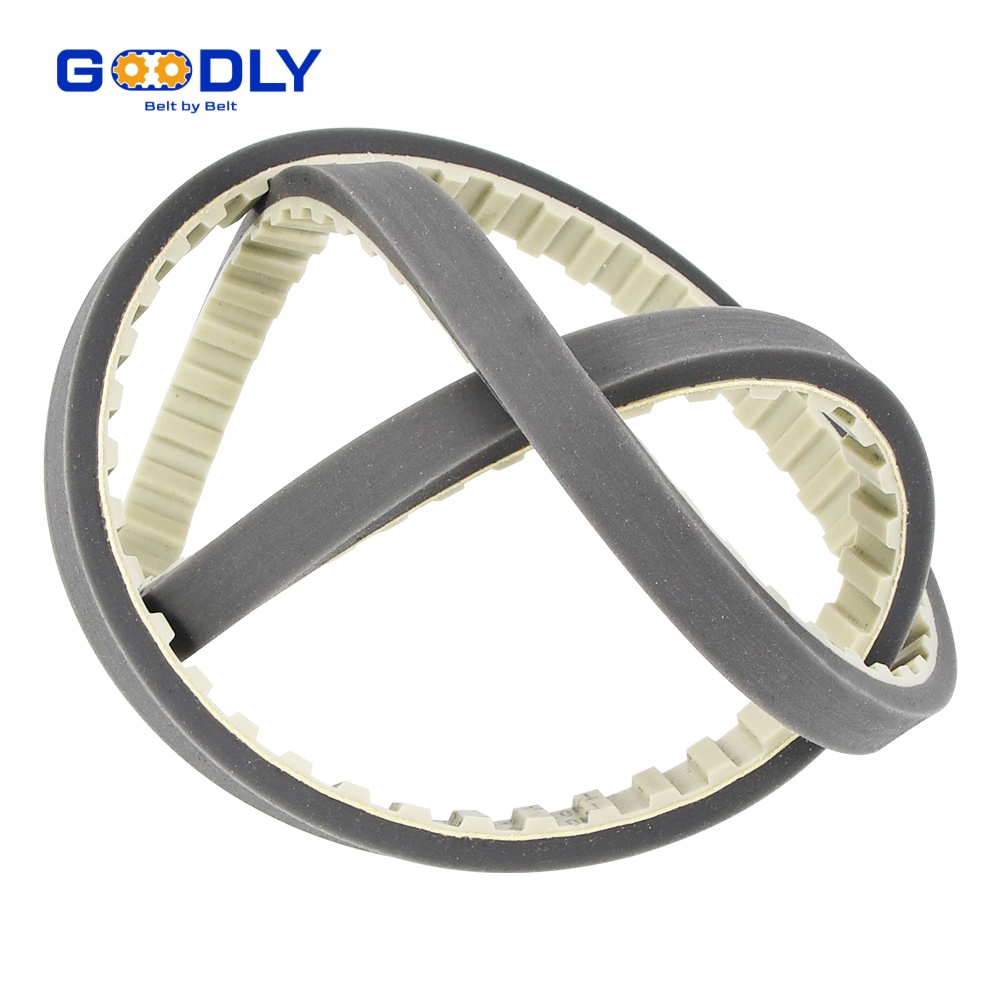
For gentle handling of coated tablets and blister packs, foam-coated constructions are common: a sponge timing belt replaces hard friction with compliant contact, protecting decorated surfaces the same way it protects food products — the physics is identical, and our food-grade belt guide covers the coating selection in detail.
Cleanroom Timing Belt Materials: Low Shedding and Chemical Resistance
Material choice decides whether a belt belongs in a graded cleanroom zone. Three families cover nearly every pharma belt application:
Polyurethane leads for clean conveying duties: a PU timing belt antistatic construction combines low particulate shedding, resistance to cleaning agents, and true antistatic performance from carbon-loaded compounds, with thermoplastic welded or vulcanized joints that leave no mechanical fastener in the product environment. Silicone takes the hot and directly contacting stations — a silicone timing belt survives sterilising temperatures and repeated washdown without embrittling, which is why it is the default near sealing and sterilising equipment. Rubber compounds remain correct for high-torque drives away from product zones, where their strength and damping outperform both alternatives.
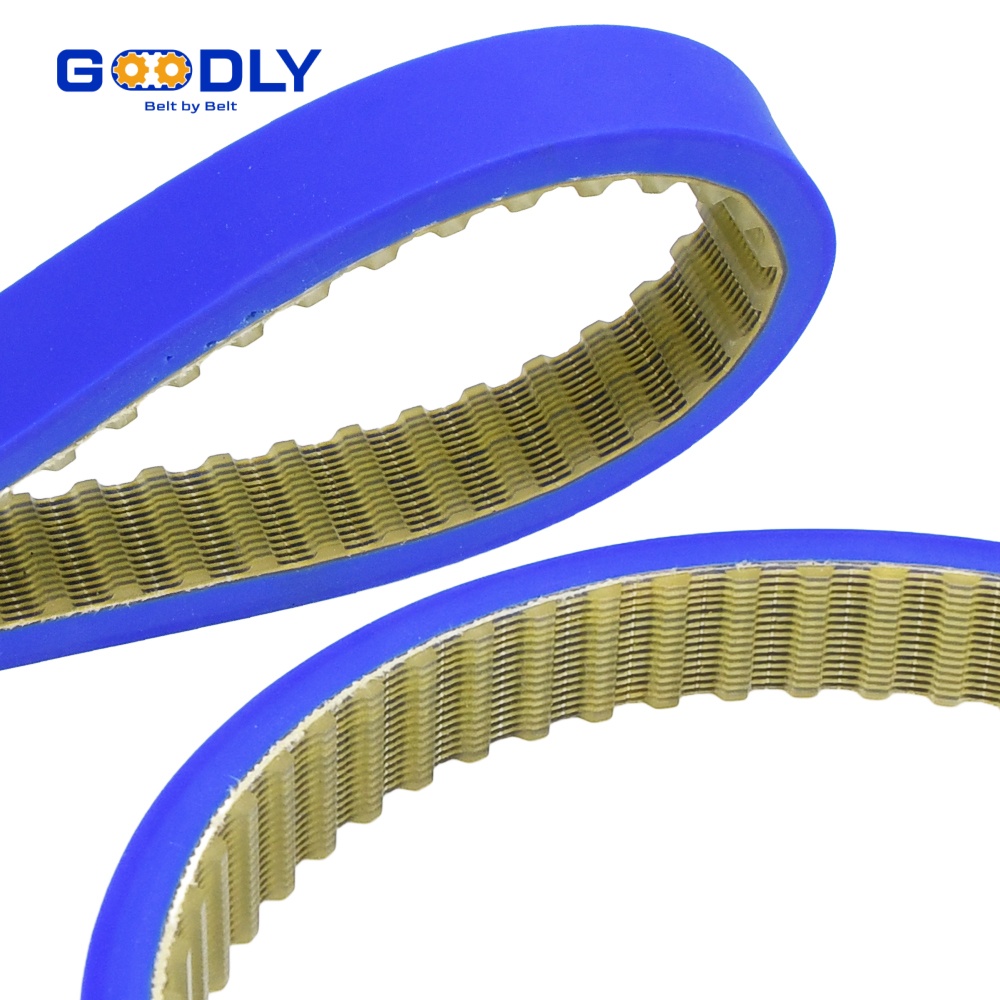
Two construction details matter as much as the compound. The joint: a vulcanized or thermoplastic-welded endless loop leaves no crevice and no fastener to harbour cleaning-fluid residue, and our silicone vulcanized timing belt range combines both properties for hot zones. The edges: cut edges expose fabric that wicks moisture, so sealed or fully coated edges belong in any wet-cleaned pharma zone.
Compliance Matters: FDA, EU 10/2011 and Antistatic Requirements Explained
Pharma belt documentation has two separate tracks, and a specification that confuses them fails audit even when the belt is perfectly good. Track one is food-contact style compliance: FDA 21 CFR listings and the EU 10/2011 framework govern compounds that may touch product or migrate into it, and our food-grade compliance guide explains what a declaration for the finished belt must name — compound, cord and adhesive, not just the raw polymer. Track two is the antistatic requirement, which comes not from food law but from electrostatic safety standards governing equipment in flammable and explosive atmospheres.
Practically, a pharma belt file should contain three documents: a material declaration naming every component of the finished belt, a surface-resistance measurement for any antistatic claim, and a temperature or chemical-resistance statement for the specific compound. A supplier who can produce all three from stock documentation is a supplier whose belts survive inspections. For lines serving both food and pharma markets, the same documented construction often serves both, which is how many OEMs consolidate their belt suppliers.
Custom Timing Belts for Pharmaceutical Machinery OEMs
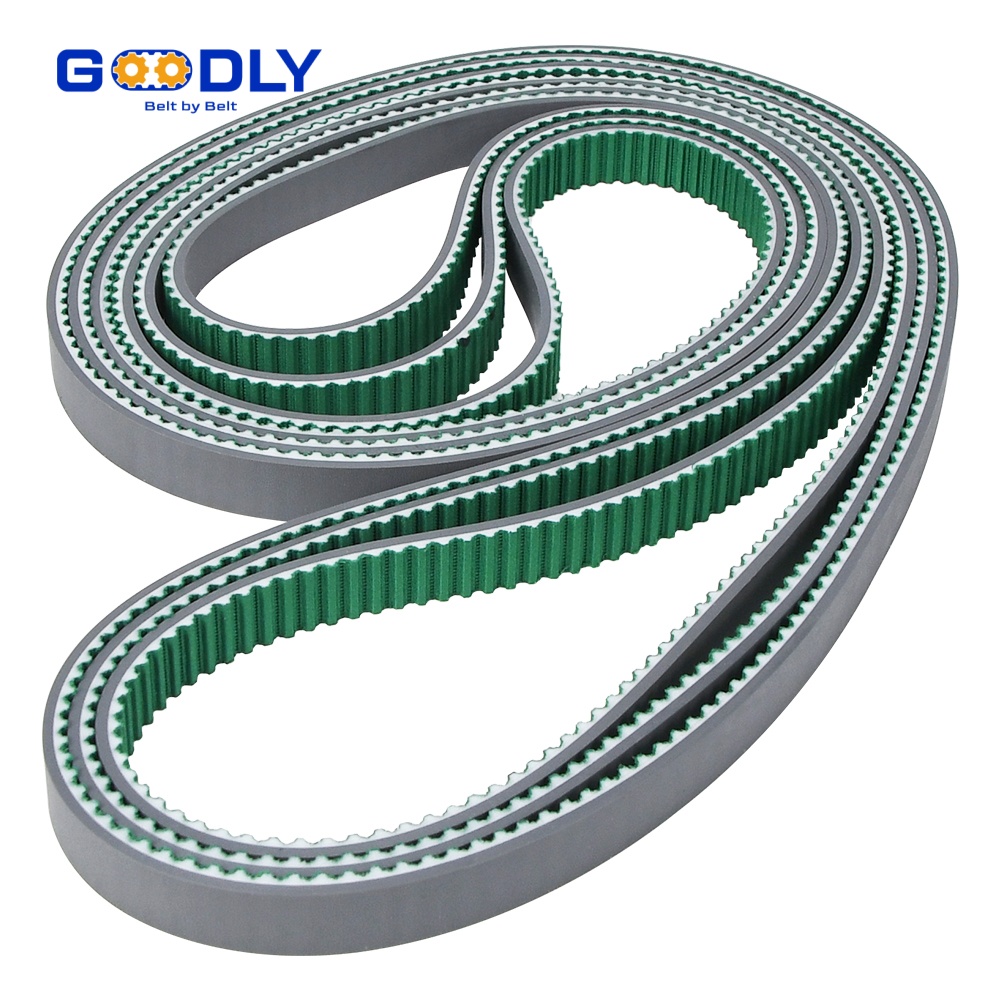
Pharma machines are built around regulatory process validation, which makes belt replacements a controlled event: the replacement must match the qualified construction exactly, or the change goes through a requalification cycle. That is why custom timing belts for pharma OEMs are less about novelty and more about reproducibility — the same compound, the same cord, the same measured antistatic band, batch after batch.
- Frozen constructions. After first article approval, process parameters stay fixed, so belt 500 is measurably identical to the belt that qualified the machine.
- Documented batches. Each order can reference its compound and test data, supporting the machine builder's own traceability obligations.
- Legacy machines. Reverse-engineering from a worn belt or drawing is routine, with a confirmed specification returned inside 48 hours.
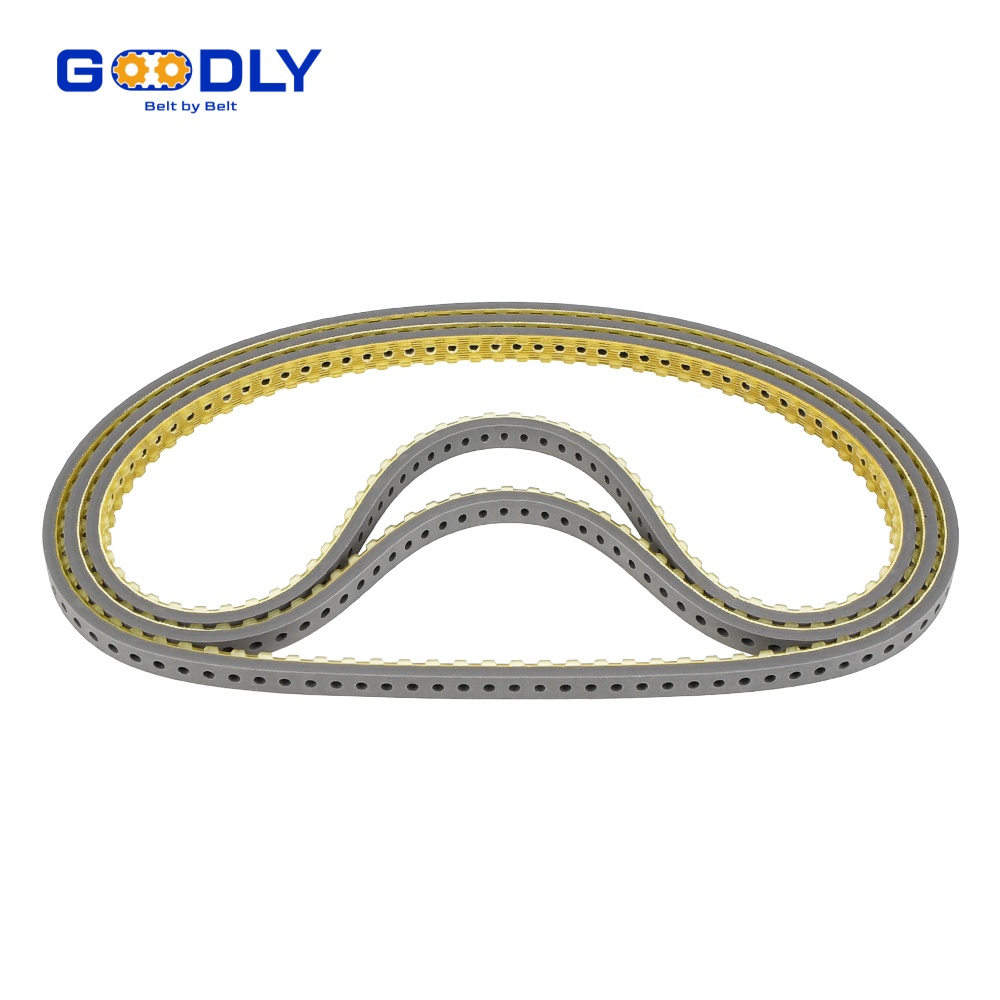
- Feature integration. Cleats, guides, foam pads and punched holes are bonded in-house, so one supplier owns the whole construction — and its declaration.
GOODLY Anti-Static Timing Belt Solutions for Pharmaceutical Lines
GOODLY manufactures antistatic and cleanroom-ready belts as a documented product: antistatic PU compounds with measured surface resistance, silicone and sponge constructions for hot and gentle-contact stations, and vulcanized endless joints that leave nothing behind in a washdown zone. Because moulding, coating and vulcanizing run in one plant, a custom pharma belt moves from drawing to sample in 3-5 working days — and the construction stays frozen for the validated life of the machine. Start from the pharmaceutical transmission belt solution page or the sponge timing belt range for gentle product contact, then send us the machine drawing.
Measured antistatic
Carbon-loaded PU compounds with stated surface resistance bands, not just an antistatic label.
Declaration-ready
Finished-belt material declarations naming compound, cord and adhesive for audit files.
Low-shedding builds
Smooth covers, sealed edges and vulcanized joints that minimise particulate in graded zones.
Frozen constructions
First-article approved builds reproduced batch after batch for validated machines.
What does antistatic mean on a pharmaceutical timing belt?
It means the belt compound continuously dissipates static charge instead of accumulating it. The measurable specification is surface resistance, typically within the 10&sup6;-10&sup9; ohm dissipative band. Ask for the measured value rather than accepting the word antistatic on a quotation.
Which timing belt material suits a cleanroom conveyor best?
Antistatic polyurethane is the usual choice: it sheds minimal particulate, resists cleaning agents, and can be joined into a seamless endless loop without mechanical fasteners. Silicone takes over where heat or direct product contact is involved.
Do pharmaceutical belts need FDA compliance if they never touch the product?
Food-contact listings matter wherever incidental contact or migration is plausible — belts above open product, in coating zones, or on transfer points. Even when compliance is not required, a material declaration for the finished belt is basic hygiene for a pharma audit file.
Can you match an existing belt on a validated pharma machine?
Yes. Send the worn belt or the original specification: we measure profile, pitch length and cord, confirm the construction in writing within 48 hours, and then hold that construction frozen across all following batches.
Need Anti-Static Timing Belts for a Pharmaceutical Line?
Send GOODLY the machine drawing, the station duty and the environment conditions. We confirm compound, surface resistance and construction within 48 hours, ship trial belts in 3-5 days, and issue a material declaration for the finished belt.
Request a Pharma Belt Specification