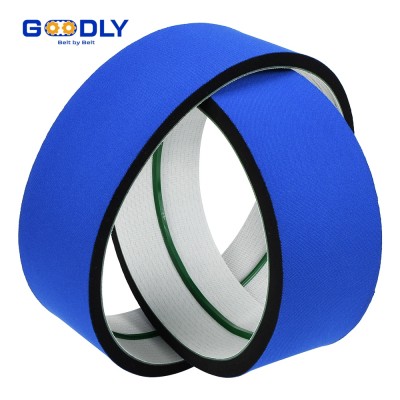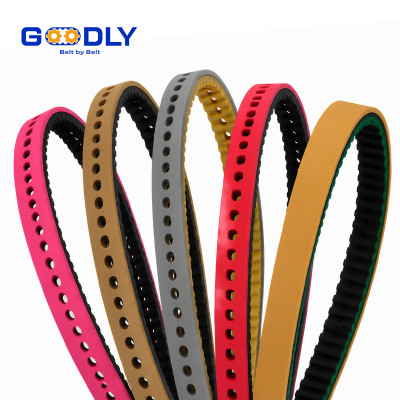
Silicone Timing Belt: Heat-Resistant Drive Belts for Food and Pharma Machinery
Silicone Timing Belt Properties: Temperature Range, Release and Hygiene
Why silicone is the standard for sealing jaws, wrapping lines and cleanroom drives
When a drive runs hot, gets washed down, or touches product, ordinary rubber stops being the right answer. A silicone timing belt keeps its properties to around 200°C, releases sticky product cleanly and can be compounded to food-contact standards — which is why silicone is the default choice on sealing and wrapping machines, bakery lines and pharmaceutical packaging. This guide covers the properties that matter, how to choose between silicone and rubber, and how GOODLY customises silicone timing belts for OEMs.
Silicone Timing Belt Properties: Temperature Range, Release and Hygiene
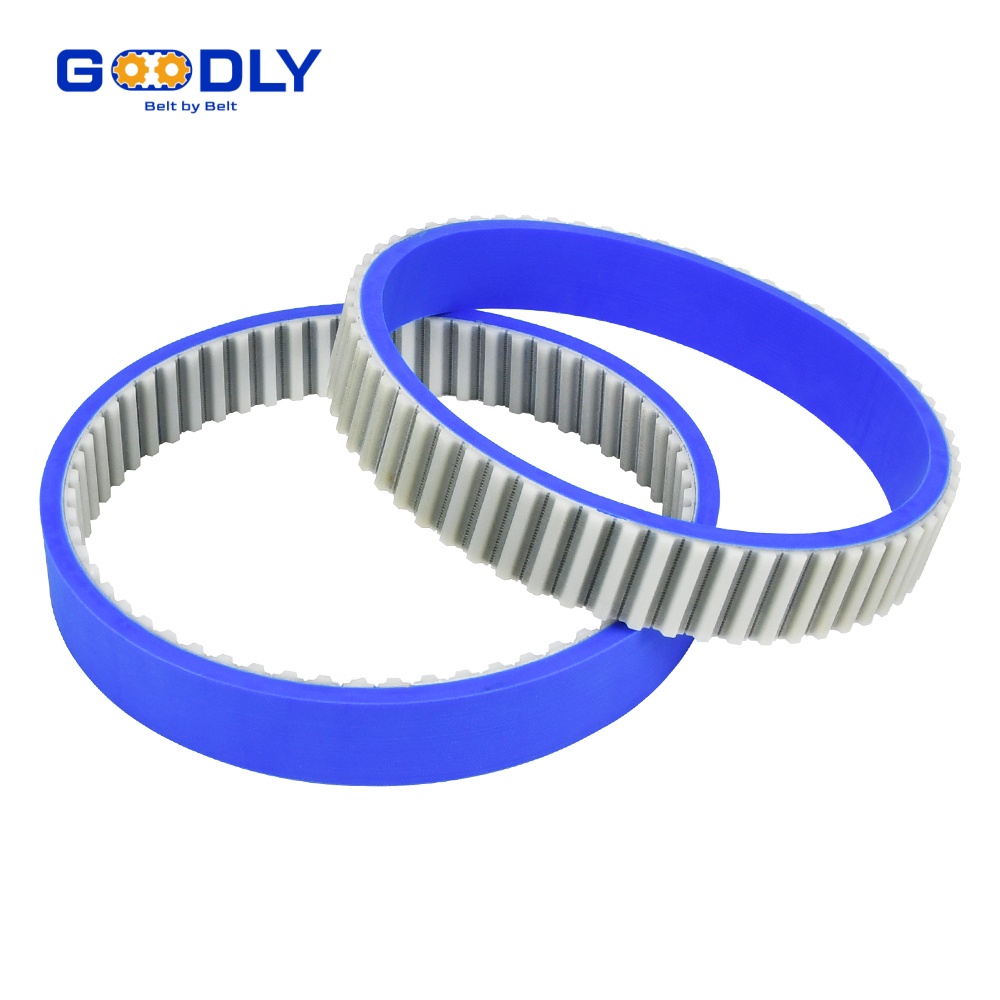
A silicone timing belt is a synchronous belt moulded from silicone elastomer over a glass or aramid cord. Its defining properties are heat resistance (continuous service to roughly 200°C, with peaks higher), excellent release (sticky films and hot seals do not bond to it), and a naturally clean, non-marking surface that suits hygiene-critical lines. Unlike rubber, silicone does not harden quickly under heat, so belt life stays predictable in ovens, sealers and dryers.
| Property | Silicone | Rubber | Polyurethane |
|---|---|---|---|
| Continuous temp. | ~200°C | ~100°C | ~80°C |
| Food contact | Excellent | Grade-dependent | Grade-dependent |
| Release / non-stick | Excellent | Poor | Moderate |
| Oil resistance | Moderate | Moderate | Good |
| Tear / abrasion | Moderate | Good | Excellent |
| Cleanliness | Excellent | Good | Very good |
The trade-off is mechanical: silicone has lower tear strength than rubber, so it suits heat and hygiene duties more than high-shock, heavy-torque drives. For the general basics, see what is a timing belt.
Silicone vs Rubber Timing Belt: Choosing the Right Elastomer
A silicone vs rubber timing belt decision usually comes down to one dominant condition. If that condition is heat above 100°C, or repeat contact with a hot sealing surface, silicone wins. If it is shock, abrasion or cost, rubber wins. Where both heat and strength are needed, the answer is often a silicone vulcanised belt, which bonds silicone to a reinforced body for the best of both properties.
Food-Grade Silicone Timing Belts for Direct Food Contact Applications
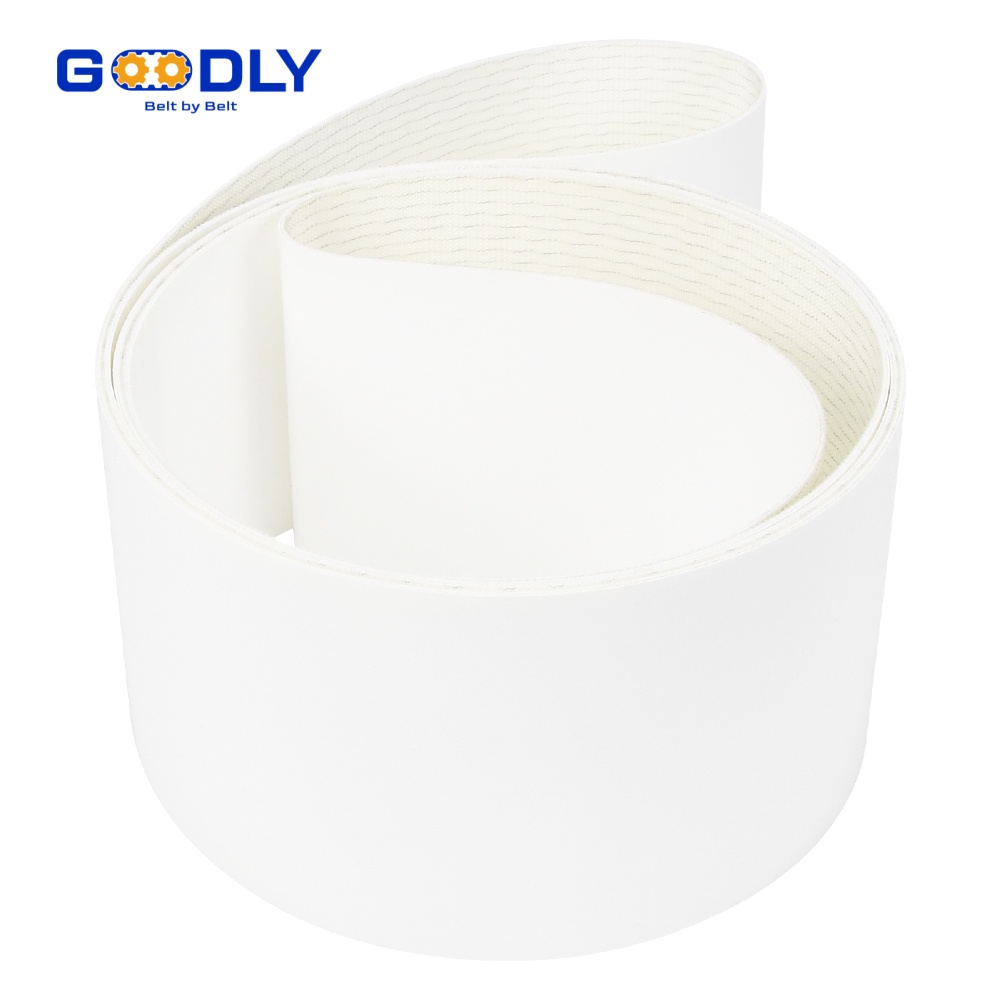
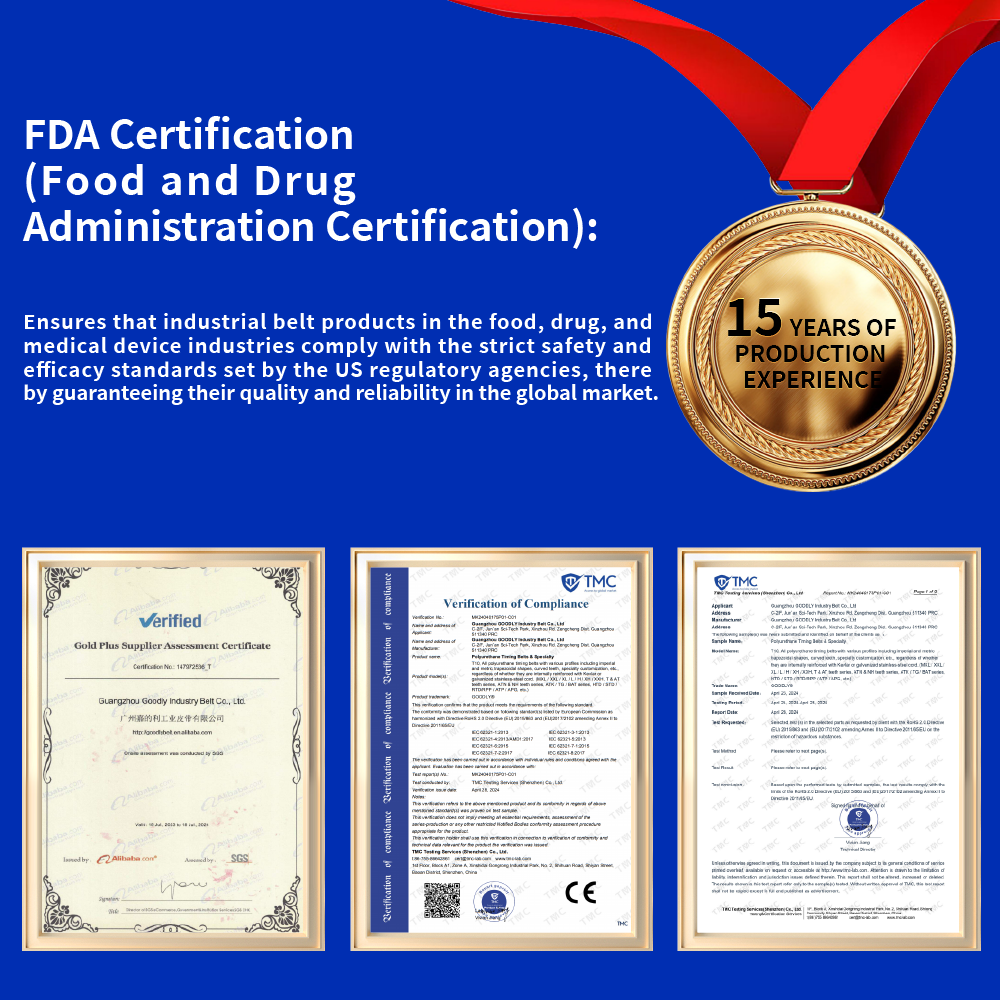
A food grade silicone timing belt is compounded to meet food-contact regulation, typically FDA 21 CFR 177.2600 and EU 10/2011, and supplied white or blue so any contamination is immediately visible. These belts are common on biscuit, chocolate and confectionery lines, on bakery depanning and on any conveyor that carries product. Always ask for a compliance declaration tied to the actual batch — a general brochure claim is not enough for a food-safety audit.
GOODLY supplies food-contact grades with per-order declarations. See the Silicone Timing Belt range and the dedicated pharmaceutical belt solution page.

High-Temperature Timing Belt Applications in Sealing and Wrapping Machines
Where do high temperature timing belts earn their cost? On vertical and horizontal form-fill-seal machines, the belt runs close to heated sealing jaws; on flow wrappers it carries hot film; in shrink tunnels and dryers it survives continuous warm air. In each case a rubber belt would harden and crack, while a silicone belt keeps its pitch and flex. Silicone also resists the cleaning agents used in washdown, which extends life in wet environments.
VFFS & HFFS sealers
Runs beside hot jaws without hardening or marking film.
Bakery & confectionery
Food-contact, non-stick, easy to clean.
Pharma packaging
Cleanroom-friendly and non-marking.
Washdown lines
Tolerates cleaning chemicals and moisture.
Dryers & tunnels
Holds properties where rubber fails.
Non-marking duties
Leaves no black marks on light product.
GOODLY Custom Silicone Timing Belts: Colours, Durometers and Profiles
Silicone timing belts are most valuable when they are engineered to the machine, not bought from a catalogue. GOODLY produces silicone and silicone vulcanised belts to order: white, blue or translucent colours, a range of durometers for grip and flex, and any standard pitch such as T5, T10, HTD 5M and AT10. We can also add profiles, cleats and backings, and match an existing OEM part number.
For heat plus strength, the silicone vulcanised range bonds a silicone surface to a reinforced body — useful where a plain silicone belt would tear.
Get a Silicone Timing Belt Quote with FDA-Compliant Options
What is the temperature limit of a silicone timing belt?
Continuous service to about 200°C is typical, with short peaks above that. Confirm the exact rating for your compound and duty.
Is silicone food safe?
Food-contact grades are compounded to FDA 21 CFR 177.2600 and EU 10/2011. Ask for a declaration matched to your batch.
Silicone or rubber for a sealing machine?
If the belt is near hot jaws or touches hot film, choose silicone. If the load is heavy and hot air is the only risk, rubber may be more economical.
Can you match an OEM silicone belt?
Yes. Send a sample or the OEM part number with pitch, length and width, and GOODLY will quote a drop-in equivalent.
Get a silicone timing belt quote with FDA-compliant options
Tell us your temperature, hygiene requirement and profile and GOODLY will recommend a compound, confirm compliance and deliver samples in 3–5 days with ±0.05 mm pitch control.
Request a Silicone Belt QuoteTemperature ratings and compliance statements are confirmed per compound and per order. Regulation references: FDA 21 CFR 177.2600 and EU Regulation 10/2011.