





Sponge-Coated Timing Belt Customization: Foam Types, Density and Profile Options
Sponge-Coated Timing Belt Customization: Foam Types, Density and Profile Options
Which foam, how dense, how thick — and how the foam layer is shaped so delicate products arrive without a mark
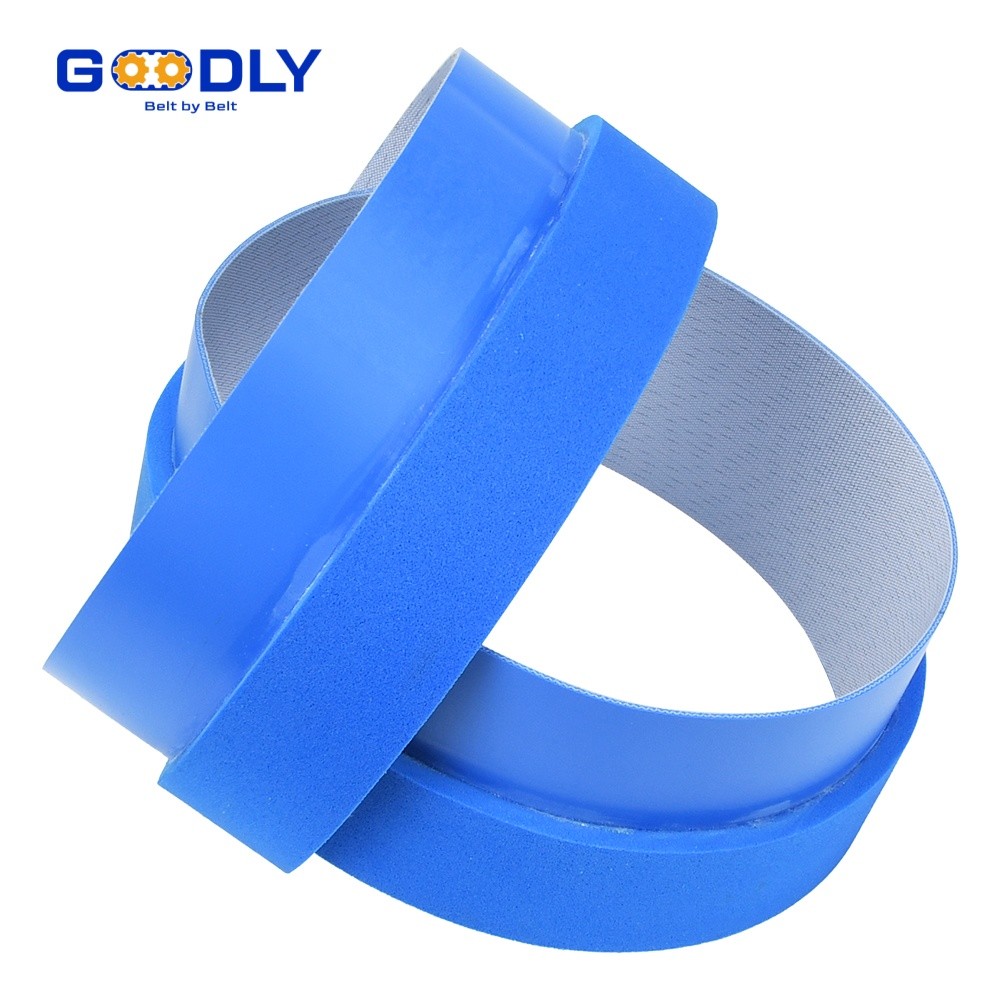
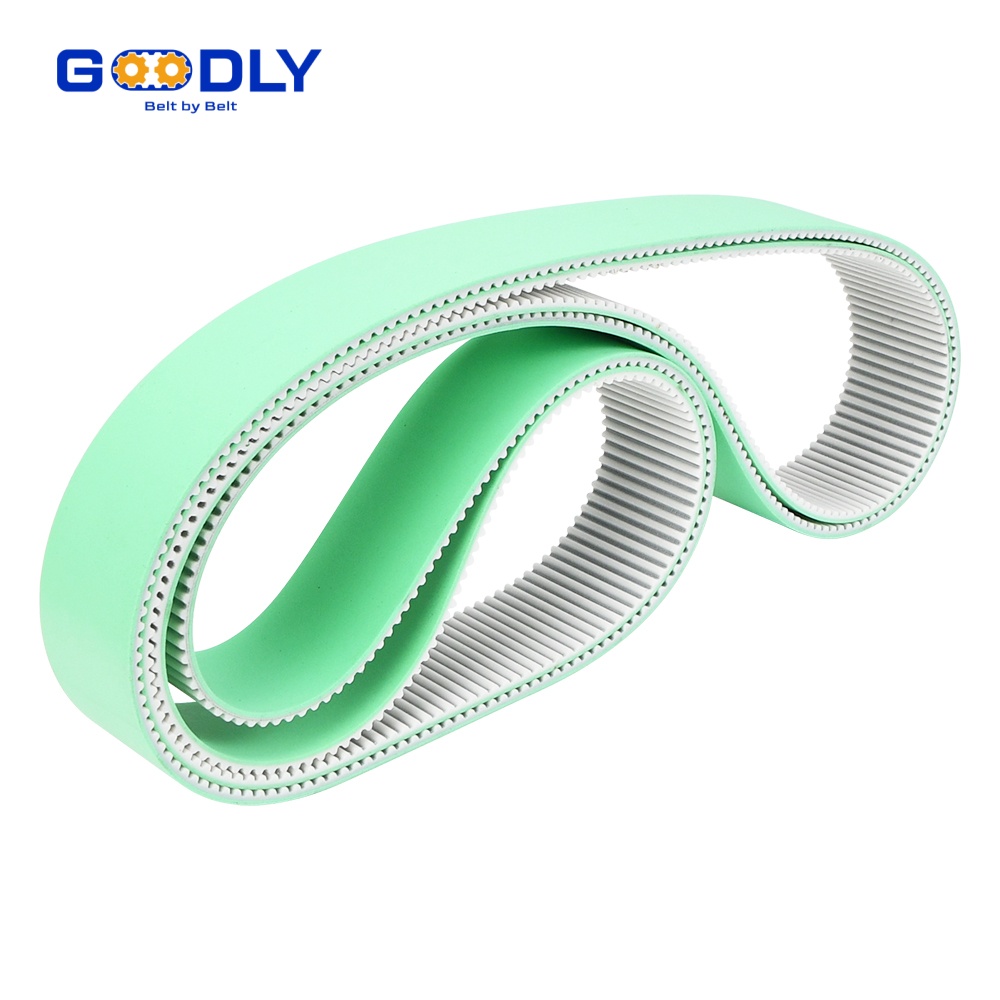
A custom sponge coated belt exists for one reason: some products cannot be gripped hard. Glass vials, filled pouches, eggs, blister packs, freshly printed labels — they need a surface that compresses and recovers instead of one that presses back. The timing belt underneath still does the precise positioning work; the sponge layer on its back does the gentle work. But foam is not one material, and the difference between a belt that performs for years and one that flatspots in a month is almost always the foam type, the density and the way the foam is profiled. This guide walks through how the foam layer is bonded, the three foam families and where each belongs, how to choose density and thickness against your compression target, the profile options from full sleeves to irregular pads, and the workflow from sample to production.
Sponge Coated Belt Construction: Bonding Foam Layers to Timing Belt Backs
A sponge coated belt is a three-part structure, and each part is specified separately:
- The base timing belt. Rubber or PU, with the tooth profile and pitch your drive needs. The base carries all tensile load in its cord line; the foam adds no strength and should never be asked to. Back thickness is ground to a controlled dimension before lamination so the foam lands on a clean, even surface.
- The adhesive system. A contact adhesive or a cured bonding layer, selected for the foam family — PU foam, EVA and rubber sponge each bond differently. The glue line is kept thin and even; a thick, blobby glue line shows through the foam as hard spots.
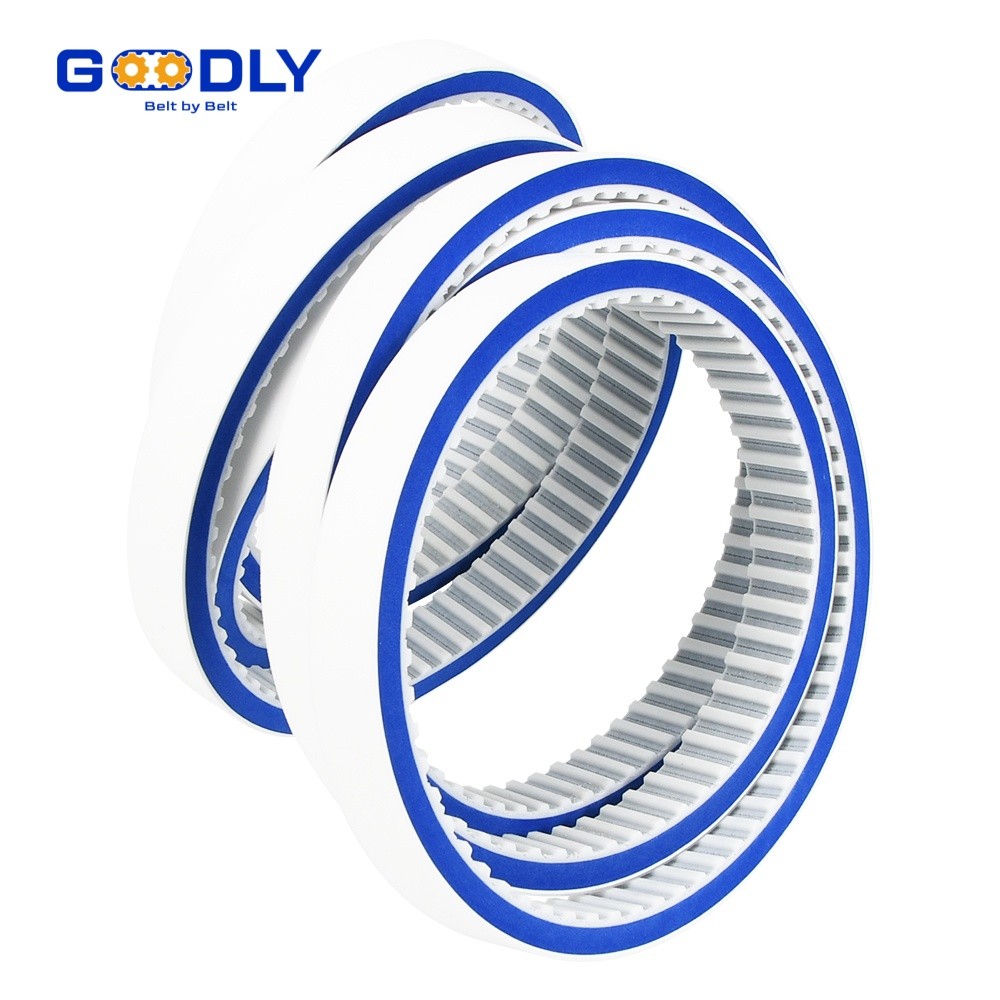
- The foam layer. Supplied as sheets or continuous rolls, slit to belt width, and applied either as a full-coverage sleeve or as cut pads at defined positions. The foam — not the glue — is the working surface that touches your product.
| Layer | Function | What buyers specify |
|---|---|---|
| Base timing belt | Carries load, positions precisely | Profile, pitch, width, cord type |
| Adhesive layer | Ties foam to belt back | Matched to foam family; thin and even |
| Foam layer | Compresses, grips gently, recovers | Foam type, density, thickness, profile |
One construction note that saves headaches: the foam adds to total belt thickness. On machines where the belt runs in a fixed channel or under a backside idler, the added millimetres must clear the machine — measure the free space before choosing a thick foam. The base belt itself is covered in our sponge timing belt guide, and the application side — which products suit foam handling — in the sponge-coated belt solutions article.
Foam Types for Sponge-Coated Belts: EVA, PU Foam and Closed-Cell Rubber
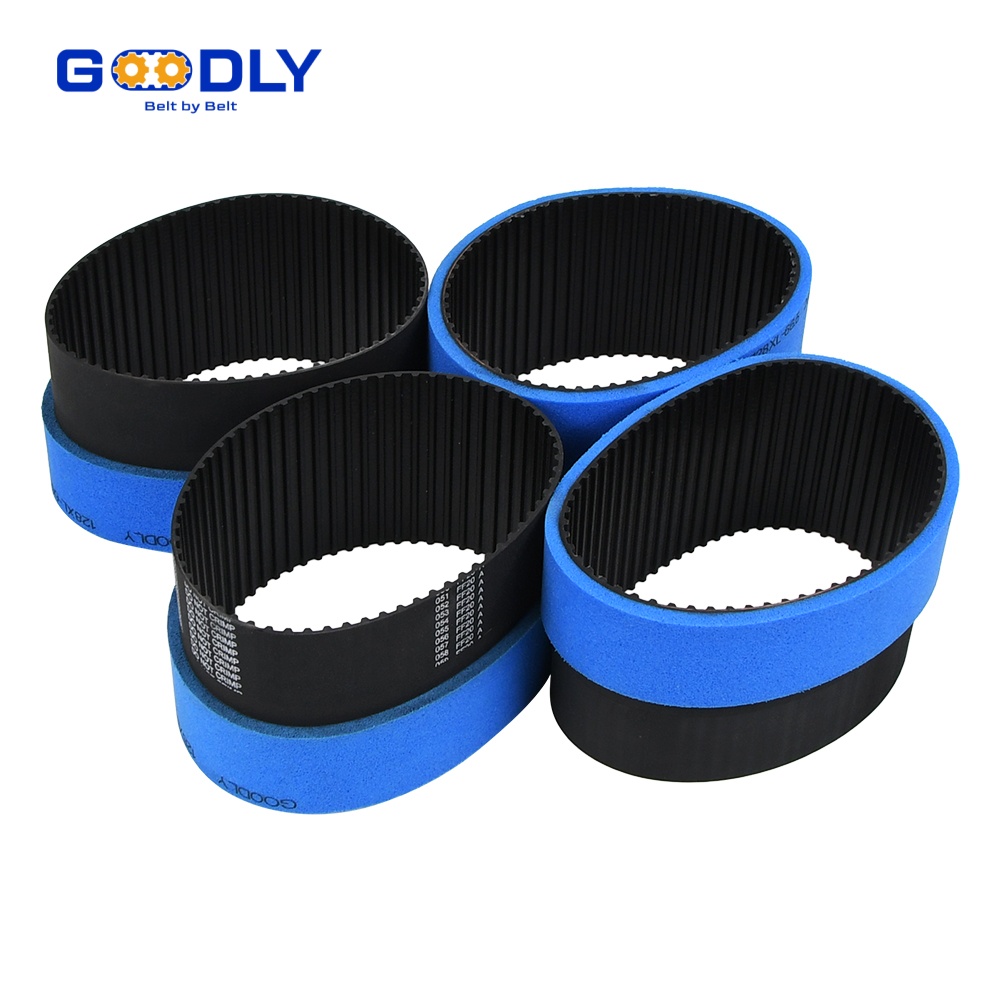
The three foam families behave differently under compression, and choosing between them is the first real decision in a sponge coated timing belt project:
| Foam type | Character | Best for | Watch out for |
|---|---|---|---|
| PU foam (polyurethane, open cell) | Soft, highly compressible, quick recovery | Glass, cosmetics, filled pouches; the classic foam backed timing belt surface | Absorbs water and cleaners; seal or choose closed-cell in wet areas |
| EVA foam (closed cell) | Firm, chemically inert, does not absorb liquids | Washdown areas, food-adjacent lines, repeat compression cycles | Lower compressibility; needs more thickness for the same softness |
| Rubber sponge (closed cell, e.g. neoprene/EPDM) | Most durable, resilient, tolerates heat and oils | Heavy or oily parts, metal stampings, higher-temperature zones | Firmest feel; higher density adds load on the belt |
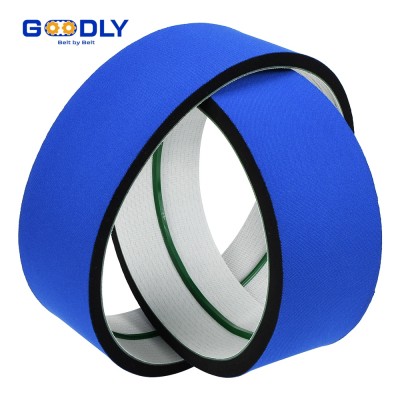
Two practical selection notes. First, open-cell PU gives the softest touch but behaves like a sponge in the literal sense — in washdown or humid environments it holds liquid, so closed-cell EVA or rubber sponge is the safer choice there. Second, colour does not indicate performance: blue, black and grey foams are the same families with different pigmentation, though a light-coloured foam makes it easier to see product residue and wear on the line.
Custom Sponge-Coated Belt Profiles: Cleats, Pads and Irregular Structures
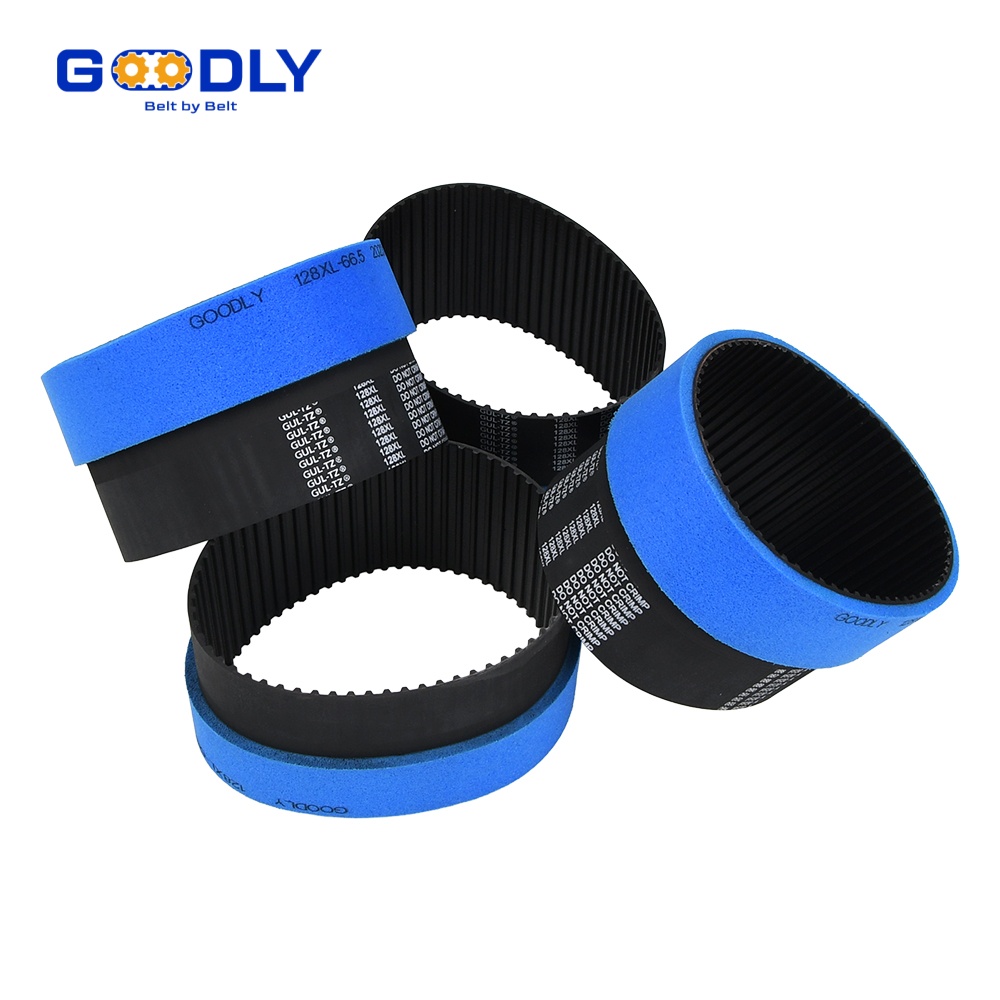
Foam does not have to cover the whole belt. In fact, most production sponge-coated belts are profiled — the foam is cut or bonded in shapes that match how the product sits:
- Full sleeve. Foam across the entire back, for continuous gentle contact — the standard for conveying delicate sheet product or for vacuum-assisted feeding where the whole surface works.
- Rectangular pads. Individual foam blocks at fixed pitch, so product nests between pads. This is the common build for holding bottles, cans or cartons upright on an incline.
- Cleats and profiles. Foam combined with harder cleats or V-guides: the cleat pushes, the foam cushions. Used where product must be both located and protected — the machining options behind cleats and guides are covered in the special machining guide.
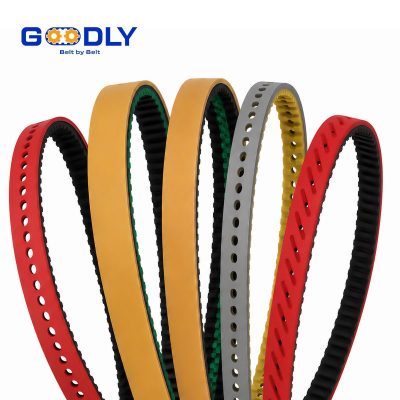
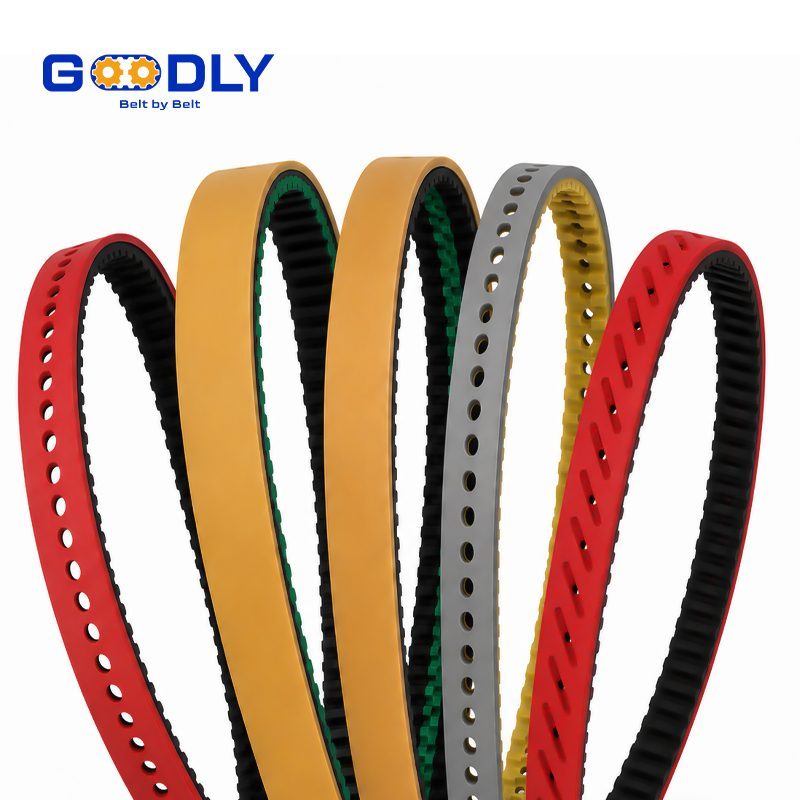
- Irregular and custom shapes. Contoured pads, finger shapes, cut-outs for nozzles or sensors — die-cut from the foam sheet and bonded at exact positions. If you can draw it on the belt drawing, it can usually be cut.
The profile decision follows the product: full sleeve when every point of the surface touches product, pads when products need to be separated or located, custom shapes when the machine geometry is unusual. Sending a sketch of the product path — or a photo of the existing belt — is usually enough for the first proposal.
Choosing Sponge Timing Belt Density and Thickness for Compression
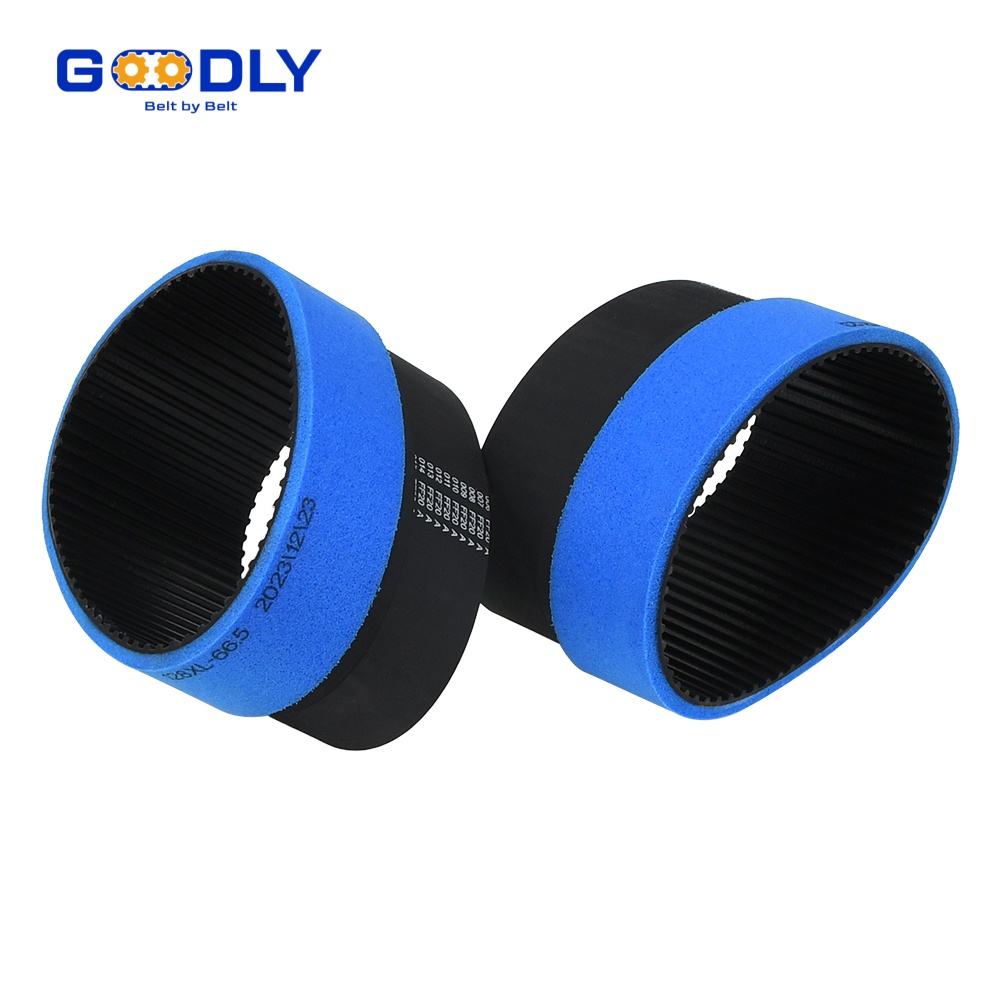
Density and thickness are the two numbers that decide how the foam actually feels on the machine, and they work together:
| Parameter | Typical range | What it controls |
|---|---|---|
| Foam thickness | 1-10 mm | How far the product can sink in; also adds to total belt thickness |
| Foam density | Low / medium / high grades | Compression force, recovery speed and wear life |
| Hardness (Shore 00 or C) | Soft to firm grades | Grip force on delicate surfaces |
| Compression set | Supplier datasheet | How much permanent flattening after months of cycling |
The working rule from practice: a foam layer does its job when it compresses to roughly 25-50% of its thickness under the product weight — soft enough to conform, firm enough to recover. Too thin and there is no cushion travel; too soft and the foam flatspots where the product rides, losing grip in exactly the zone that works hardest. Density is what resists that flatspotting, so for 24/7 lines it usually pays to step up one density grade rather than add thickness. If you can tell us the product weight, contact area and line speed, we will propose a density and thickness pair and confirm it with a sample rather than a datasheet argument.
Sponge-Coated Belt Customization Workflow: Samples, Testing, Production
A custom foam belt project is quick when the steps run in order — and expensive to redo once the foam is bonded, so the sequence matters:
1. Application brief. Product, weight, contact area, line speed, environment (washdown? oil mist?) and the base belt spec. Photos of the current belt or the machine station shorten this step to a single message.
2. Foam and profile proposal. Foam family, density, thickness and pad layout are proposed against the compression target, together with the adhesive choice and any total-thickness limits from your machine.
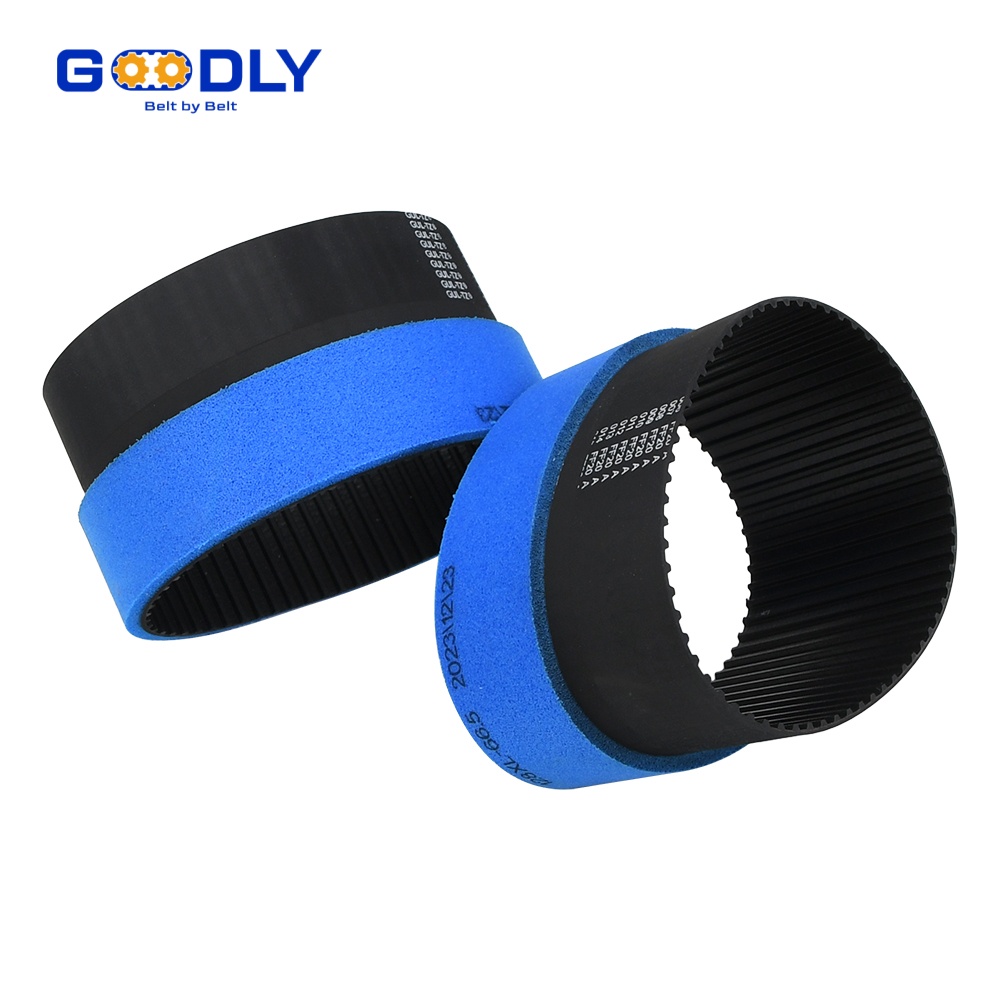
3. Prototype, 3-5 working days. Built on the actual base belt construction, with foam cut and bonded in-house. The sample ships with dimensions recorded — foam thickness included — so what you measure on arrival matches the drawing.
4. Line validation. You run the sample. Compression feel, product marking and tracking are checked on the real product, which is the only test that truly settles foam choice.
5. Frozen spec and production. Approved sample becomes the production record: foam batch, density grade, pad positions, adhesive system. Repeat orders are inspected against that record.
For the length, colour and pitch decisions on the base belt itself — choices worth settling before the foam conversation — the custom timing belt checklist covers them in order. The full custom solution page for this belt family, with more build photos, is the custom sponge coated belt solution.
Get a Custom Sponge Coated Belt Quote with Free Engineering Review
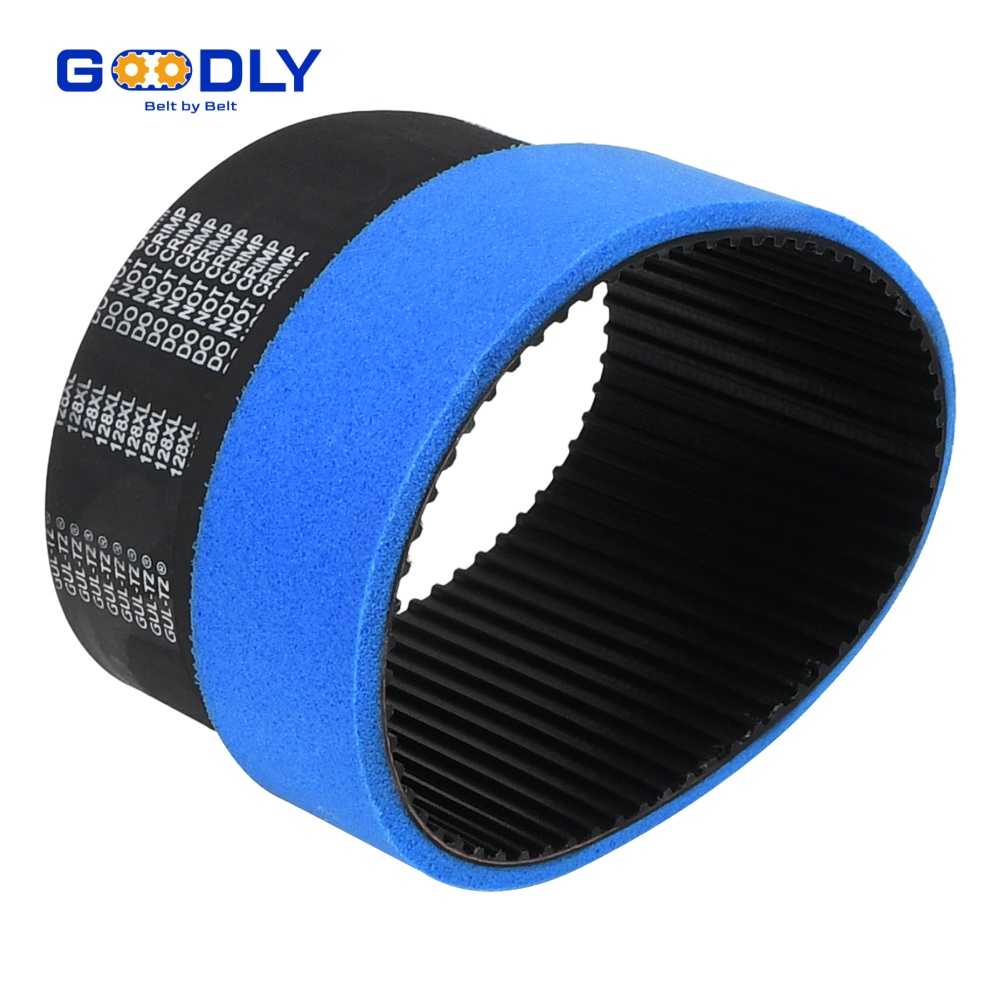
GOODLY manufactures sponge-coated and foam-backed belts end to end in its Guangzhou plant: base belt molding and grinding, foam selection and die-cutting, bonding and final inspection under one roof, which is what keeps a sponge timing belt prototype at 3-5 working days. Engineers — not sales staff — review every enquiry, and the review is free: send the product description, the machine type and what the current belt fails at, and you will get a foam, density and profile proposal with a quotation path. Company background and equipment are on the about page.
Two things speed up the first reply: the product weight per contact piece, and whether the line sees water or cleaning chemicals — those two answers eliminate most of the wrong foam choices before a sample is cut. If your project is part of a bigger OEM programme, the OEM and ODM manufacturing guide explains how tooling, NDAs and repeat-order specs are handled.
What foam is used on sponge coated timing belts?
Three families cover most projects: open-cell PU foam for the softest, most compressible touch on delicate products; closed-cell EVA for washdown and humid environments where the foam must not absorb liquid; and closed-cell rubber sponge (neoprene or EPDM based) for the most durable, oil- and heat-tolerant surface on heavier parts. The choice follows the environment first, the product second.
How thick can the foam layer be?
Typically 1-10 mm. The foam adds directly to total belt thickness, so the machine's backside clearance sets the practical ceiling — measure the free space in the channel or under any backside idler before specifying a thick layer. For most delicate-product lines, 2-5 mm gives enough compression travel without loading the belt edge.
What density should a sponge timing belt have?
Density should be chosen so the foam compresses to roughly 25-50% of its thickness under the product weight: soft enough to conform to the surface, firm enough to recover between cycles. For 24/7 production, step up one density grade rather than adding thickness — density is what resists the permanent flatspotting that kills grip in the working zone.
Can foam be applied as pads or cleats instead of a full layer?
Yes — and it is the more common build. Foam is die-cut into rectangular pads at fixed pitch, combined with harder cleats or V-guides for locating, or cut into irregular contoured shapes to match the machine geometry. Send a sketch of the product path or a photo of the existing belt and the pad layout can be proposed from that.
How long does a custom sponge coated belt take to make?
Prototype in 3-5 working days when the base belt construction is defined, including foam cutting and bonding. Line validation is on your side; after approval, production runs against the frozen specification. Repeat orders skip development entirely and are inspected against the recorded foam batch, density and pad positions.
Does the foam layer affect belt tracking or life?
The foam adds thickness and a small amount of compliance, but it carries no load and does not touch the teeth, so tracking and tensile life are decided by the base belt. The one failure mode to manage is foam flatspotting from chronic over-compression — which is exactly what the density choice controls.
Request a Custom Sponge Coated Belt Quotation
Send GOODLY your product description, line speed and machine type — and what the current belt fails at. Engineers will propose foam type, density, thickness and pad layout, confirm the base belt construction, and sample a custom sponge coated belt in 3-5 working days from our own plant.
Get a Foam Belt Quote