





OEM and ODM Timing Belt Manufacturing: How to Partner with a Factory
OEM and ODM Timing Belt Manufacturing: How to Partner with a Factory
What to prepare, how development actually runs, and how your design stays yours — from a brand buying belts to a brand owning the tooling
Ordering an OEM timing belt is a different exercise from buying a catalogue part. You are asking a factory to build to your specification, carry your branding, and hold the construction stable across every repeat order — and the factory is asking whether your drawing is complete enough to quote and your volumes are real enough to tool for. The good news is that the process is more standardised than most buyers expect: a clear brief, an engineering review, a prototype, then a frozen specification that both sides treat as the contract. This guide walks through the OEM and ODM models, what to put in the first message, how development runs from drawing to mass production, and the three agreements — NDA, tooling ownership and exclusive molds — that decide whether your design remains yours.
OEM Timing Belt vs ODM Development: Which Model Fits Your Brand
The two terms get used interchangeably, but in belt manufacturing they point to genuinely different projects with different costs and different risks. In an OEM project you own the specification: you bring the drawing, the dimensions, the compound requirements and often the part number, and the factory builds exactly that. In an ODM project the factory owns the design: you bring the application — speed, load, temperature, environment — and the factory selects or develops the construction, then manufactures it under your label. Neither is better; they answer different questions:
| Question | OEM path | ODM path |
|---|---|---|
| Who owns the design? | You do — drawing and spec come from your side | The factory does, based on your application data |
| What you must supply | Complete drawing: profile, pitch, width, cords, compound, tolerances | Application brief: machine type, duty cycle, environment, failure history |
| Engineering effort | Factory verifies manufacturability and suggests process adjustments | Factory does the selection, prototyping and validation work |
| Best fit when | You are replacing an existing part or scaling a proven design | You are developing a new machine or solving a recurring failure |
| Tooling | Yours if a new mold is needed — agree this in writing | Usually the factory's, unless exclusivity is agreed |
| Speed to first sample | Fast, if the drawing is complete | Slower, but you get engineering judgement included |
A practical middle path is common too: you specify the performance envelope, the factory proposes the construction, and after prototype approval the frozen drawing becomes an OEM document. That is usually how a first ODM project matures — the design brief turns into a drawing neither side changes without a signed revision.
How to Brief a Timing Belt Factory: Drawings, Samples and Specifications
The quality of the first brief decides how many weeks the project takes. Factories can work from almost anything, but every missing parameter becomes a question, and questions travel in time zones. A complete brief for a custom timing belt manufacturer contains four things:
- A drawing or a sample. A CAD file is ideal; a dimensioned sketch works; a worn or cut sample of the belt you are replacing is often better than both, because it carries the real construction — cord count, tooth geometry, compound hardness — even when the original drawing is lost. Send it and the factory will reverse-measure it and return a drawing for confirmation.
- The duty data. Torque or load, belt speed, smallest pulley diameter, operating temperature at the belt, and the environment: oil mist, dust, washdown, steam, product contact. These decide compound and cord, which are the two choices everything else hangs on.
- The commercial frame. Estimated annual volume, target price band and first-article timing. Volume does not change the engineering, but it changes the manufacturing route — a 50-piece prototype run and a 50,000-piece annual programme are tooled differently.
- Compliance requirements. Food contact, antistatic, non-marking, REACH or market-specific declarations. Stated up front, they cost nothing; discovered after approval, they cost a re-cure.
One habit separates smooth OEM projects from painful ones: send the smallest pulley diameter with everything else. It limits backing thickness, cleat height and minimum tooth depth, and it is the single most common missing parameter in a first enquiry. Tooth profile options and their pitch logic are mapped in our tooth profiles and pitches guide, useful if you are specifying a profile for the first time.
Inside the Factory: From Your Drawing to a Frozen Specification
The OEM Timing Belt Development Process: 48h Design to Mass Production
A vertically integrated factory runs development in one building, which is what compresses the timeline. The stages at GOODLY look like this:
1. Brief review and feasibility, within 24-48 hours. An engineer — not a salesperson — checks the drawing against cord line, pulley geometry and compound limits, and comes back either with a confirmation or with specific adjustments: a slightly thicker backing here, a changed cord there, and the reason for each.
2. Prototype, 3-5 working days. Moulded and cured in-house, inspected dimension by dimension against your drawing, and shipped with the measurement record. Where a new pitch length needs a ring mold, tooling is quoted alongside so you can compare both paths.
3. Validation on your machine. You run the sample; the belt either passes or tells you what to adjust. Iterations at this stage are cheap because tooling, mixing and curing are all internal.
4. Specification freeze and mass production. The approved sample becomes the frozen spec: compound batch, cord type, cure parameters and dimensions are recorded, and every future order is inspected against that record — not against a generic datasheet.
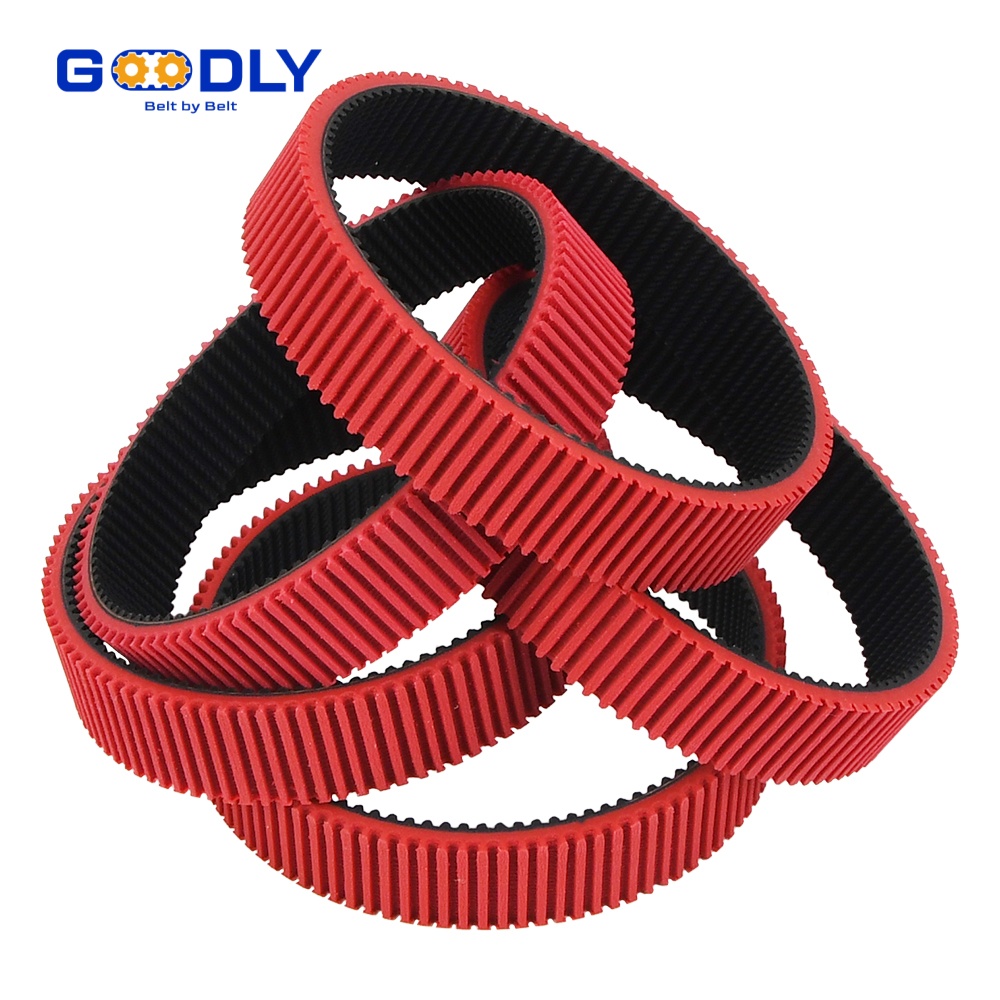
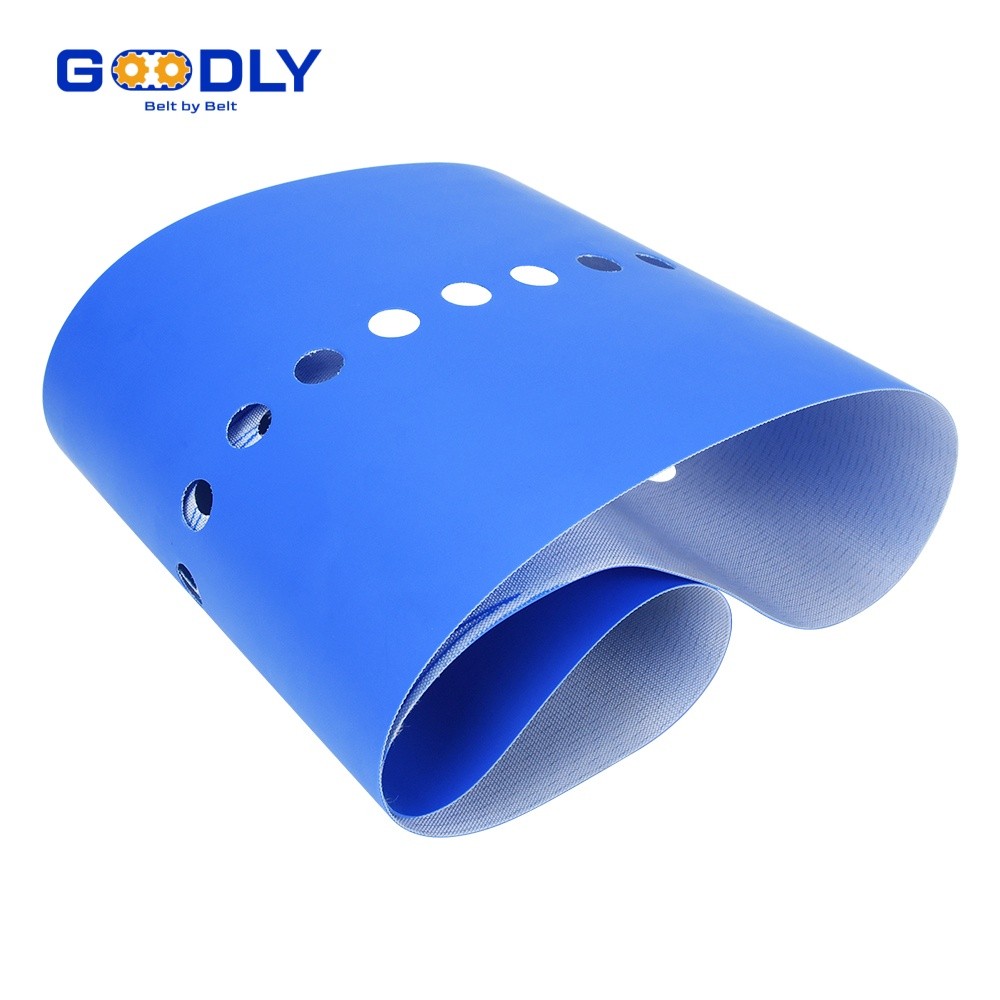
The manufacturing stage itself — ring molding versus molded-and-joined, and why cured-ring construction carries more strength — is explained in our vulcanized versus molded comparison. If your OEM project includes machining features such as holes, slots or cleats, the design limits are covered in the special machining guide.
Protecting Your Design: NDA, Tooling Ownership and Exclusive Molds
Design protection in belt manufacturing rests on three agreements, and it is worth being explicit about all three before the first sample ships:
- NDA before drawings. A mutual non-disclosure agreement signed before you send drawings costs a day and removes the main reason to hold back details. Serious factories sign without friction; hesitation is information.
- Tooling ownership in writing. When you fund a ring mold, agree who owns it. If it is yours, the factory states it on the quote and invoices the tooling separately — then you can move production, or demand the mold back, and everyone knows it. If the factory owns it, your volume commitment is what keeps it available to you.
- Exclusivity by construction. A truly exclusive design is protected less by paperwork than by construction: a compound blend, a cord pattern or a machining feature unique to your part. Ask the factory to register the construction to your account and to refuse the same spec to other buyers — reputable manufacturers honour this because repeat business is worth more than one copied order.
- Branding and private label. Printed logos, custom colours and private-label packaging are routine. Note what does not work: co-branding a belt with a third-party brand you do not own. Factories will decline it, and so should you.
MOQ, Pricing and Lead Times in OEM Timing Belt Manufacturing
Buyers expect these numbers to be arbitrary; they are not. Each one follows from a cost structure you can reason about:
| Factor | What drives it | Typical range at GOODLY |
|---|---|---|
| MOQ, existing construction | Compound batch and cure cycle economics | Tens of pieces; often no formal MOQ for stock profiles |
| MOQ, new pitch length | Ring mold cost must amortise over the run | 50-100 pieces, or tooling paid upfront and MOQ drops away |
| Unit price vs catalogue | Custom compound, small batch cure, inspection records | Higher than stock at low volume; converges at programme volumes |
| Prototype lead time | Internal mixing, molding, curing, inspection | 3-5 working days |
| Mass production lead time | Cure cycles and order queue | 2-4 weeks depending on construction |
| Repeat orders | Frozen spec on file, tooling retained | Fastest lane — no re-engineering, inspection against the record |
Two practical notes. First, tooling amortisation is why a new length is expensive at 10 pieces and unremarkable at 500 — ask for the with-tooling and without-tooling quotes separately so the decision is visible. Second, lead times quoted without inspection time are optimistic; a factory that measures every belt against the frozen spec needs those hours, and they are the hours that stop a failure arriving on your line instead.
Start Your OEM Timing Belt Project with GOODLY
GOODLY manufactures timing belts, flat belts and conveyor belts on a 20,000 m² own factory floor in Guangzhou, holding 60 project patents across the range. Because compounding, ring molding, curing, machining and inspection sit under one roof, an OEM or ODM project moves from brief to prototype in days rather than the weeks a trading company needs to route the same job through subcontractors. Company background, equipment list and factory photos are on the about page, and the product families that OEM projects most often draw on are the vulcanized timing belt range and the PU timing belt range.
To start, send the four things from the brief checklist: drawing or sample, duty data, commercial frame, compliance needs. You will get an engineer's reply with a feasibility answer and a quotation path — and if you are unsure whether your project is OEM or ODM, say so in the first message; we will tell you which one it actually is, because it changes who owns the tooling. For order-length, colour and profile choices before you commit, the custom timing belt checklist covers the decisions worth making early.
What is the difference between OEM and ODM for timing belts?
OEM means you own the specification and the factory builds to your drawing; ODM means the factory designs the construction from your application data and manufactures it under your label. In practice, OEM suits buyers replacing or scaling a known part, while ODM suits machine builders developing something new. Many projects start as ODM and freeze into an OEM drawing after prototype approval.
What documents do I need to start an OEM timing belt project?
At minimum: a drawing or sample, the duty data (load, speed, smallest pulley, temperature, environment), your estimated annual volume, and any compliance requirements such as food contact or antistatic grades. A worn sample of the belt you are replacing is often the fastest starting point, because it carries the real construction even when documentation is lost.
Who owns the mold for a custom timing belt?
Whoever pays for it, provided that is stated on the quote. If you fund the ring mold, ask for tooling to be invoiced separately and ownership noted in writing — then the mold is yours to move or demand back. If the factory absorbs tooling cost, availability is tied to your ongoing volume, which is a fair trade as long as it is explicit.
Can a timing belt factory protect my exclusive design?
Reputable manufacturers protect exclusivity three ways: an NDA signed before drawings change hands, written tooling ownership, and construction-level registration of your spec to your account so the same construction is not quoted to other buyers. Construction uniqueness — a specific compound blend or machining feature — is ultimately stronger protection than paperwork alone.
What is a realistic MOQ for custom timing belts?
For an existing construction, tens of pieces and often no formal MOQ. For a new pitch length that needs a ring mold, expect 50-100 pieces or an upfront tooling payment that removes the MOQ. Ask for both quotes separately: with tooling paid, unit price drops and the mold belongs to you; amortised, the unit price carries the tooling and commitment does the work.
How long does OEM timing belt development take?
Brief review within 24-48 hours, prototype in 3-5 working days where no new tooling is needed, then validation on your machine. Mass production typically runs 2-4 weeks. New tooling adds mold-making time to the first sample only; repeat orders against a frozen specification skip development entirely and ship fastest.
Start Your OEM Timing Belt Project with GOODLY
Send your drawing, sample or application brief and GOODLY's engineers will confirm feasibility within 24-48 hours, quote tooling and unit price separately, and sample a prototype in 3-5 working days — moulded, cured and inspected in our own 20,000 m² factory. NDA signed before your drawings move.
Send Your OEM Brief