Sponge-Coated Belt Solutions: Foam Timing Belts for Fragile Product Handling
Sponge-Coated Belt Solutions: Foam Timing Belts for Fragile Product Handling
Cushioning, grip and cleanliness from a foam backing: how a sponge coated belt protects fragile products without giving up synchronous accuracy
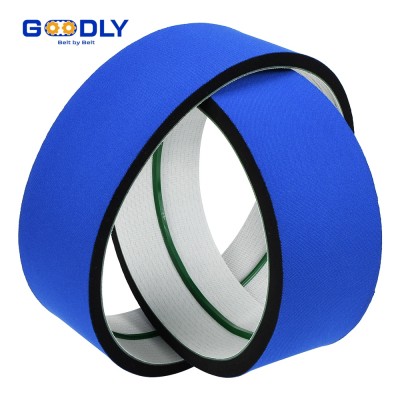
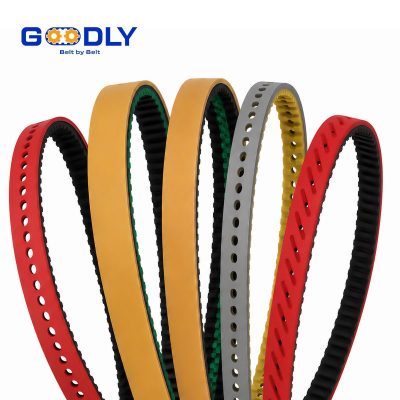
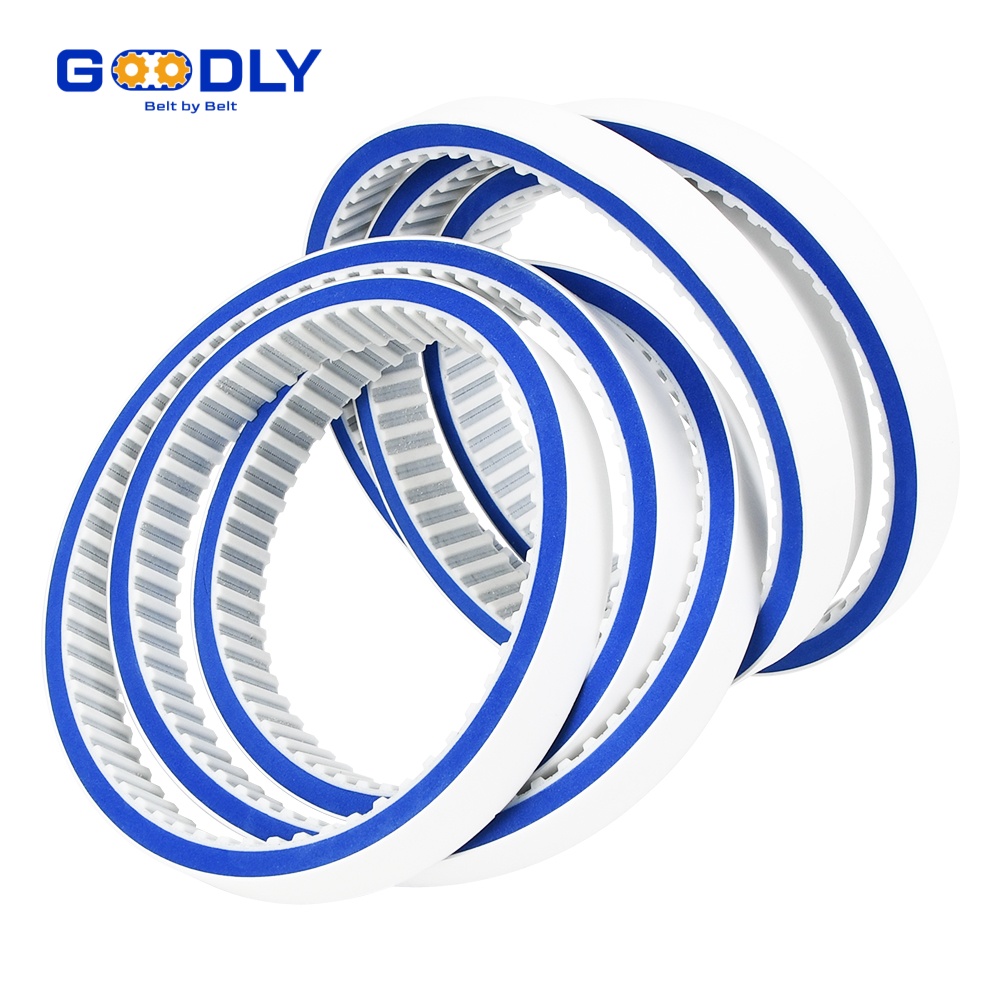
A hard belt surface treats every delicate product as an enemy. Biscuits crack at the transfer, chocolates gloss-marks against rubber, eggshells meet their end at the changeover wheel, and polished electronics housings pick up scuffs that customers notice before the product inside is even seen. A sponge coated belt — a timing belt or conveyor belt with a bonded compressible foam layer — solves the problem mechanically: the foam compresses against whatever it touches, spreading contact pressure so gently that even a potato-chip-thin surface arrives unmarked, while the synchronous core underneath keeps every station in phase. This guide covers where sponge timing belts and foam-coated belts belong, how closed-cell and open-cell foams differ, and how to specify density and thickness for your own line — practical sponge coated belt solutions that protect product without slowing the line.
Why Fragile Products Need Sponge-Coated Timing Belt Cushioning
Fragility damage is a contact-pressure problem, and contact pressure is a surface-hardness problem. When a rigid belt face touches a biscuit, the entire contact force concentrates on whatever microscopic high points exist on both surfaces — a pressure spike that exceeds the biscuit's strength long before the visible load does. A compressible foam layer behaves like a suspension system: it flattens over the product's surface, multiplying the contact area and cutting peak pressure by an order of magnitude. Our earlier sponge and foam-coated belt guide introduced these constructions for packaging lines; here the focus is on choosing them deliberately.
- Peak pressure collapse. Foam conformity turns point contact into area contact — the same reason crash helmets work.
- Vibration damping. A timing belt coated with foam absorbs the high-frequency chatter that resonates through rigid conveyor decks and rattles product in transit.
- Grip without clamps. Foam grips by conformity rather than force, holding odd-shaped items — an egg, an ampoule, a blister card — without crushing them.
- Quiet lines. Soft surfaces kill product-on-belt clatter, which matters in food and pharma plants where noise limits are contractual.
Sponge-Coated Belt Applications: Biscuits, Chocolates, Eggs and Electronics
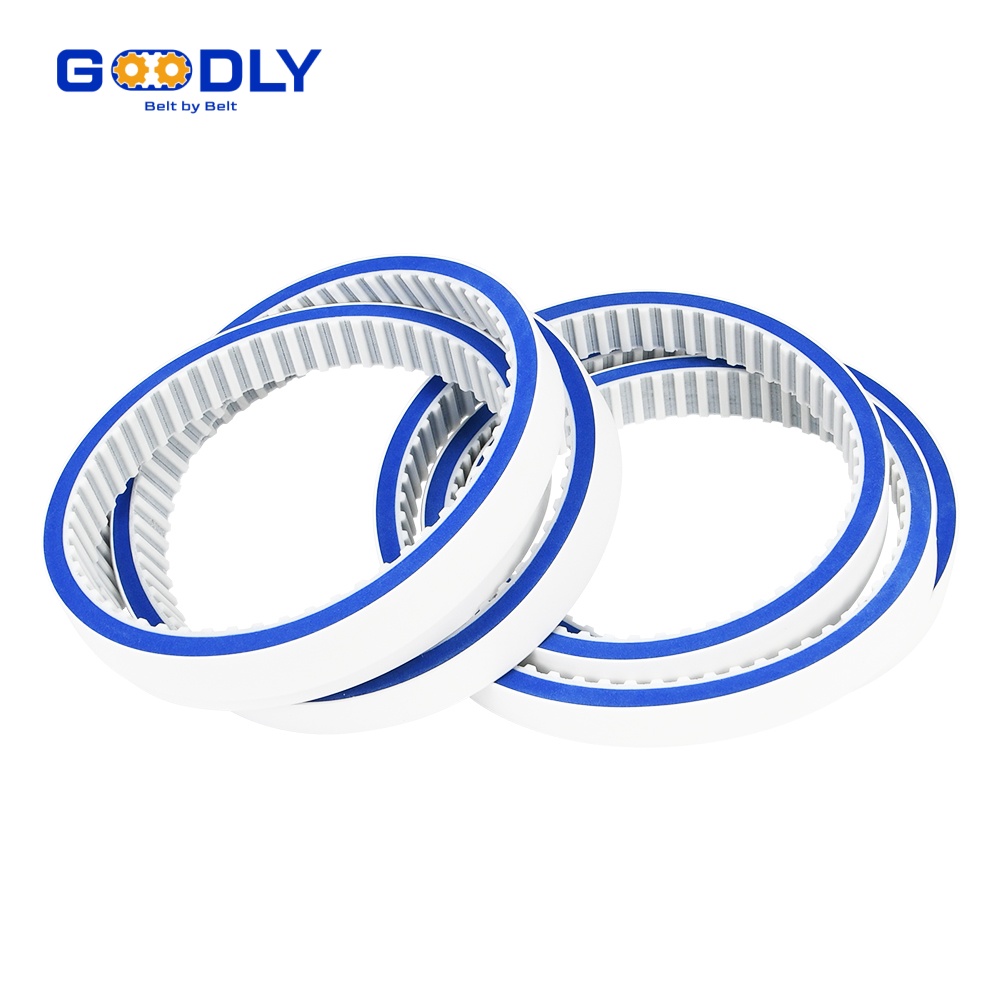
Foam-coated belts appear wherever the conveyed surface has a market value that a scuff, crack or fingerprint would destroy. The pattern across industries is consistent: the more the surface itself is the product, the softer and thicker the foam:
| Application | Damage mode with a hard belt | Foam backing answer |
|---|---|---|
| Biscuit and cracker lines | Edge cracking at transfer points, surface imprints | Soft open-cell or fine-cell sponge, 3-6 mm, food-contact grade |
| Chocolate and confectionery | Gloss marking, bloom triggered by pressure points | Non-marking fine-cell foam, smooth ground surface, 2-5 mm |
| Egg handling and grading | Shell micro-fracture from deck vibration and contact spikes | Thick conforming sponge, 6-10 mm, washdown-compatible closed cell |
| Electronics and display modules | Housing scuffs, film scratches, ESD-sensitive surfaces | Clean closed-cell PU foam, low particulate, antistatic options |
| Glass and ceramics | Chipping at deck joints and transfer lips | Dense sponge layer bridging transfer gaps, 4-8 mm |
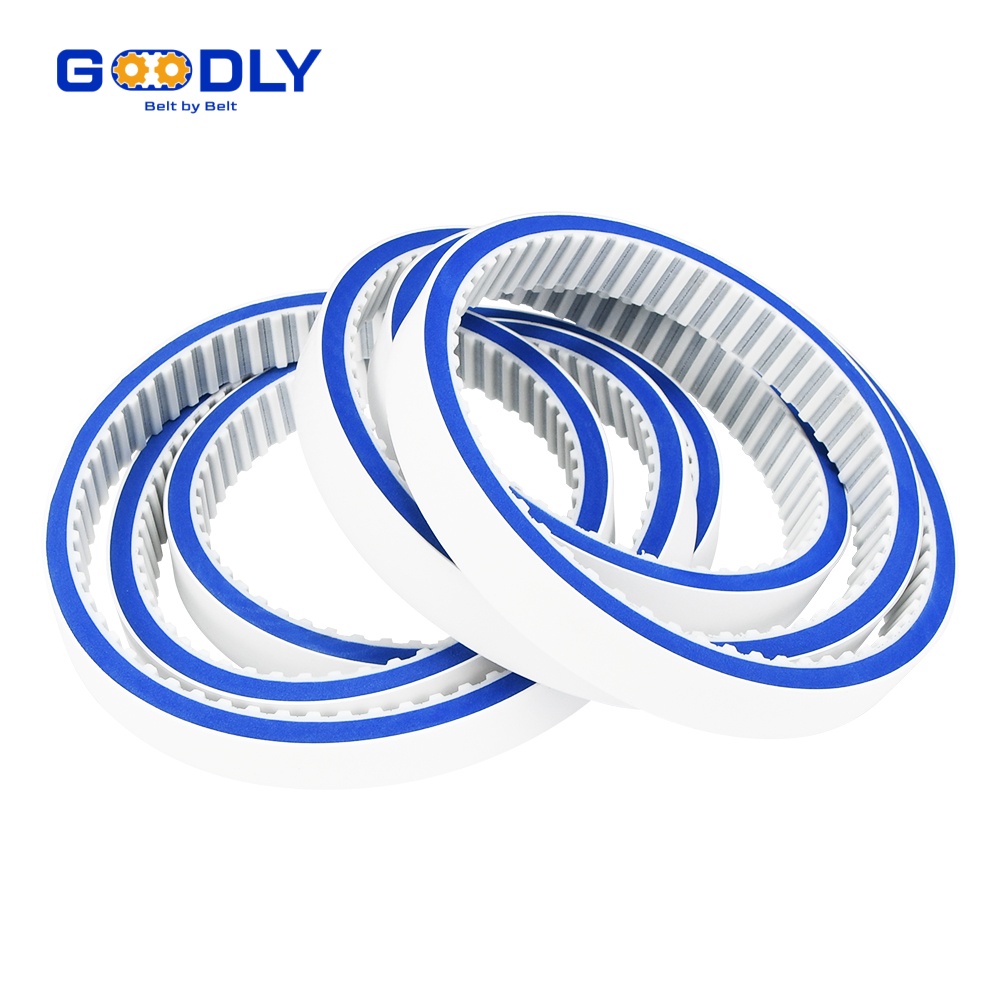
Food applications add a compliance layer on top of the mechanics: the foam, the adhesive system and the belt body all need food-contact documentation, following the same logic as our food-grade timing belt compliance guide. On hygienic lines the belt washes down daily, which is exactly where backing material choice — closed versus open cell — stops being academic.
Closed-Cell Foam Backings: Clean, Non-Absorbent and Gentle
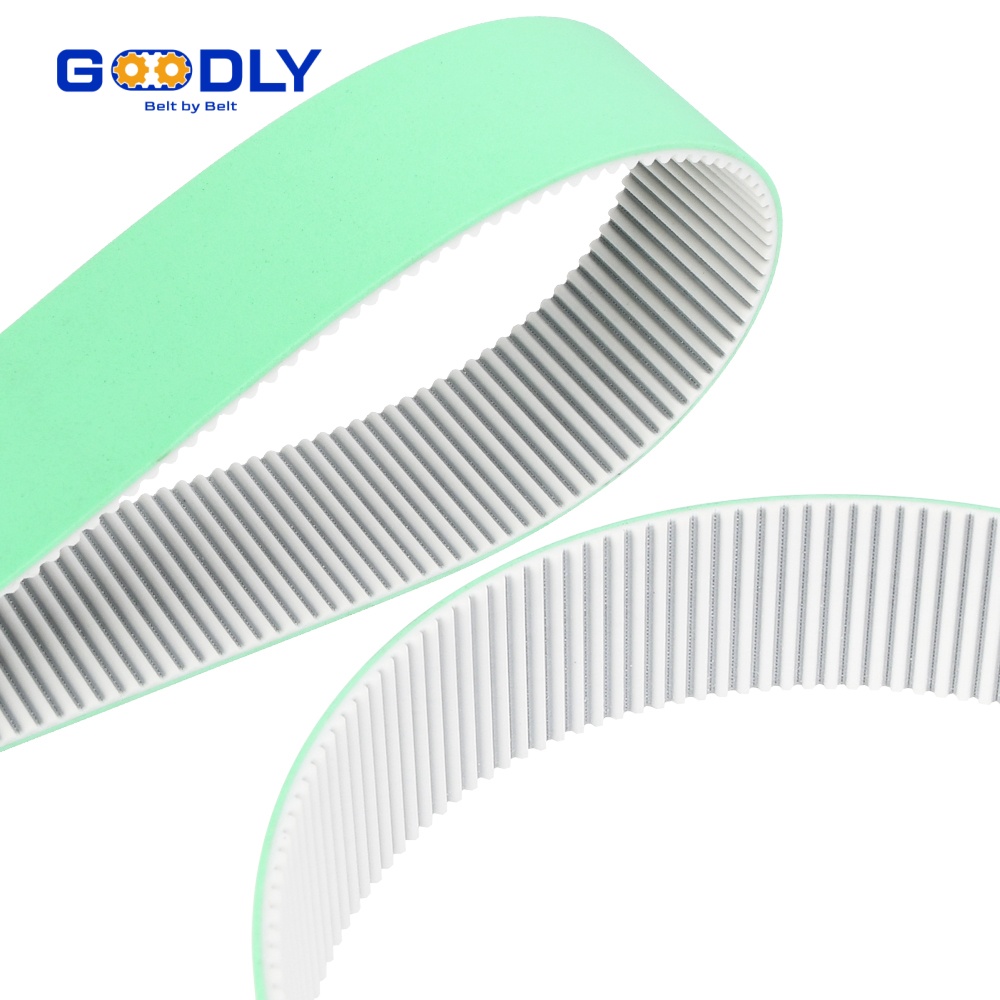
Foam chemistry decides how a backing survives a wet, cleaned, product-contact environment. Closed-cell foam keeps its cell walls intact: liquid cannot wick in, so the backing neither swells on washdown nor becomes a hygiene reservoir. Open-cell foam absorbs — which gives a softer, more luxurious contact feel and slightly better conformity, but on washdown lines it must be ruled out or fully encapsulated. A practical rule: closed cell wherever the belt gets wet or cleaned; open cell only on dry, ambient lines where maximum softness matters more than washability. Both variants bond to the same timing belt bodies, so choosing cell structure never forces a change of drive design.
Choosing Foam Density and Thickness for Your Sponge Coated Belt
Density and thickness trade against each other. Thickness buys conformity — the ability to wrap around an egg, a blister bump or a jar cap — while density buys durability and pressure control: a denser foam compresses less per newton, holds its geometry longer and resists cutting. A foam coated timing belt for delicate glass might run thick and soft; one for fast biscuit transfer runs thinner and denser to survive the cycle rate.
| Backing spec | Compression behaviour | Typical duty | Lifetime note |
|---|---|---|---|
| Thin & dense (2-3 mm, high density) | Low compression, firm contact | Fast transfer of robust-ish surfaces, high cycle rates | Longest wear life, easiest to keep clean |
| Medium (4-6 mm, medium density) | Balanced conformity and support | Biscuits, cartoned confectionery, sleeved products | The everyday workhorse spec |
| Thick & soft (6-10 mm, low density) | Deep conformity, maximum cushioning | Eggs, glass, bare electronics, irregular shapes | Verify compression set over months of duty |
Sponge Timing Belt or Foam-Coated Conveyor Belt: Which Does the Line Need?
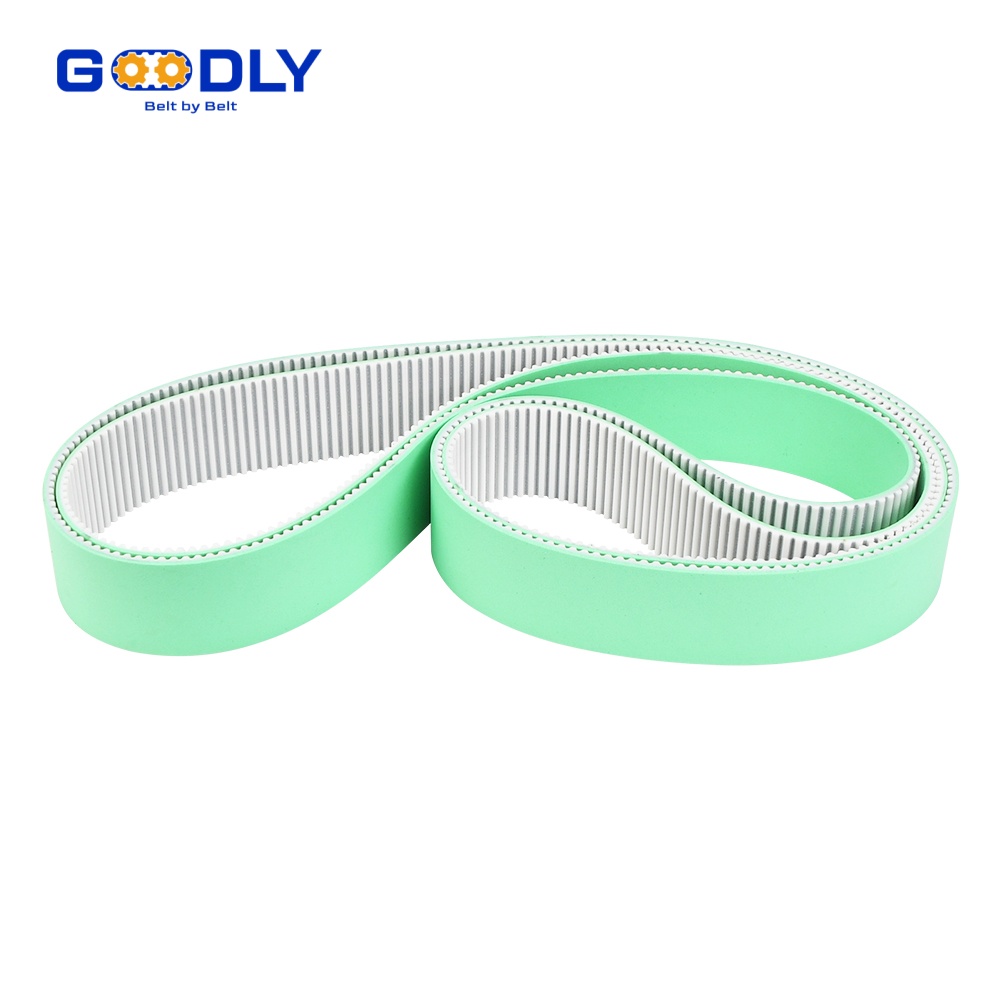
The distinction matters at purchase time. A sponge timing belt carries its foam on a synchronous body: it belongs where position matters — indexing conveyors, pusher and gripper stations, registration-critical transfers, anywhere the belt must arrive in phase with the machine. A foam-coated friction belt belongs where only cushioning matters, on long transfer runs where no station coordinates with the belt. If a pusher, gate or printer must act exactly when a product point passes, you need the timing version — and you can compare constructions on the custom sponge coated belt solution page.
Integrating Foam-Backed Timing Belts into Gripping and Pushing Stations
The cleverest foam-belt applications are not plain conveyors at all — they are gripping and pushing stations where the belt itself is the actuator. Because a timing belt with foam backing is synchronous, machine builders exploit its deterministic position to build soft-touch automation:
- Pinch-grip transfers. Two opposing foam-faced timing belts form a gentle vice that lifts cartons, pouches or trays between levels without suction cups or clamps — the foam supplies the grip area, the teeth supply the coordination.
- Soft pushers. A bonded foam block on the belt back face becomes a pusher finger with no sharp edges, phasing each push off the pulley position.
- Indexing nests. Foam-coated belts carry product into fixed nests with the cushioning absorbing placement tolerance — protecting both product and nest from misalignment damage.
- Changeover-friendly surfaces. Soft foam forgives the small product variations that would crack against hard decks, which shortens format-change adjustments.
Integration questions worth settling with the belt supplier early: the foam's compression set over your duty cycle (does it recover fully after millions of compressions?), chemical compatibility with cleaning agents, and temperature near ovens or hot-fill zones. These determine backing material as much as the product does — the same checklist logic our OEM packaging machinery belt guide applies to coated drives.
Get a Custom Sponge-Coated Belt Prototype for Your Line
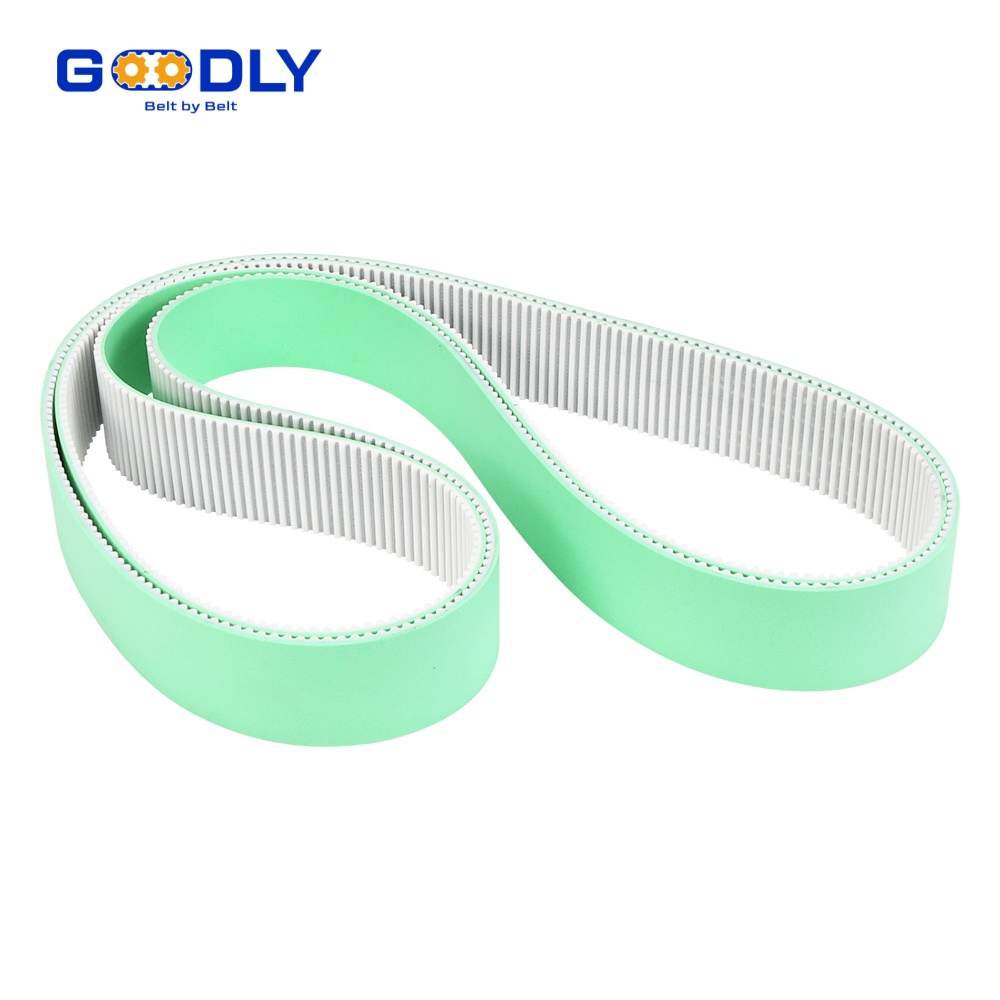
GOODLY manufactures sponge coated belt solutions as one in-house chain: timing belt moulding, foam sheet production, bonding and profile machining under one roof, so a custom foam-backed belt moves from drawing to sample in 3-5 working days and reproduces identically on every repeat order. Send us the product, the line speed and the washdown regime — or simply a worn belt — and we will return a confirmed density, thickness and cell-structure specification within 48 hours. Learn more about our factory and quality system before you send the drawing.
Pressure engineered down
Foam density and thickness selected to protect your specific product, not a generic catalogue.
Washdown-ready closed cell
Non-absorbent backings with food-contact documentation for hygienic lines.
Synchronous softness
Foam on timing belt bodies, so gripping and pushing stations stay in phase.
Frozen constructions
Approved foam, adhesive and geometry reproduced batch after batch.
What is a sponge coated belt used for?
It conveys or manipulates fragile, delicate or surface-sensitive products — biscuits, chocolates, eggs, glass, electronics — using a compressible foam layer that spreads contact pressure and prevents marking, cracking and scuffing while the belt keeps its drive or indexing function.
Closed-cell or open-cell foam backing: which should I pick?
Choose closed-cell whenever the belt is washed down, exposed to moisture or requires low bacterial retention — it does not absorb liquid. Open-cell is softer and conforms slightly better but absorbs water, so reserve it for dry, ambient-duty lines where maximum cushioning matters most.
Does a foam backing affect the timing belt's tooth engagement?
No. The foam bonds to the back face only; the tooth system on the opposite side engages the pulleys exactly as an uncoated belt would, so pitch accuracy and synchronous phasing are unchanged. Total belt thickness grows, so pulley flange clearance should be checked.
Can foam-coated belts be supplied with food-contact documentation?
Yes. For food lines we supply foam, adhesive and belt body with declarations matching the contact zone's requirements, following the same documentation approach as our food-grade belt guide. Tell us whether contact is incidental or prolonged and we match the compliance level.
Protecting Fragile Product on Your Line?
Send GOODLY your product sample, line speed and cleaning regime. We confirm foam density, thickness and cell structure within 48 hours and ship a custom sponge-coated timing belt prototype in 3-5 working days — with documentation ready for food and pharma audits.
Request a Foam Belt Prototype