Sponge Timing Belt and Foam-Coated Belts: Gentle Handling for Packaging Lines
What Is a Sponge Timing Belt? Foam-Backed Timing Belt Construction
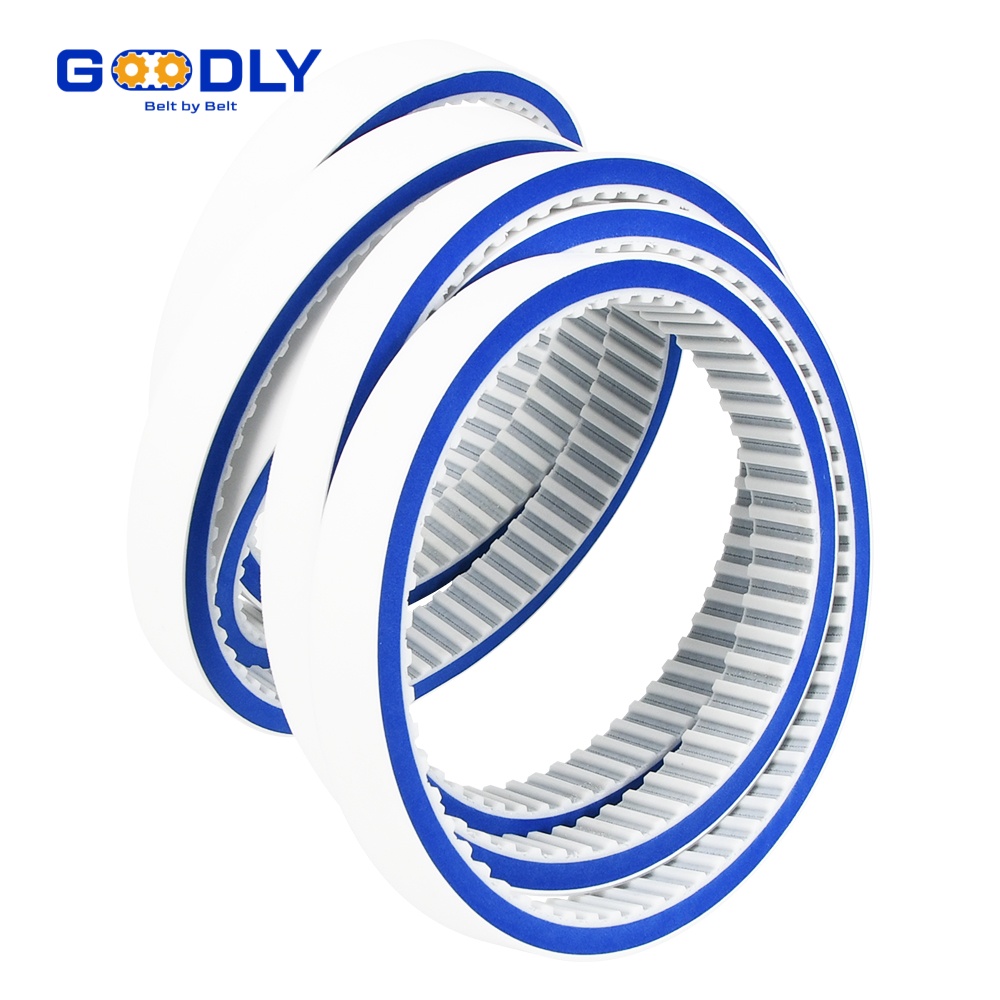
A synchronous belt with a soft foam layer bonded to the back for cushioned conveying
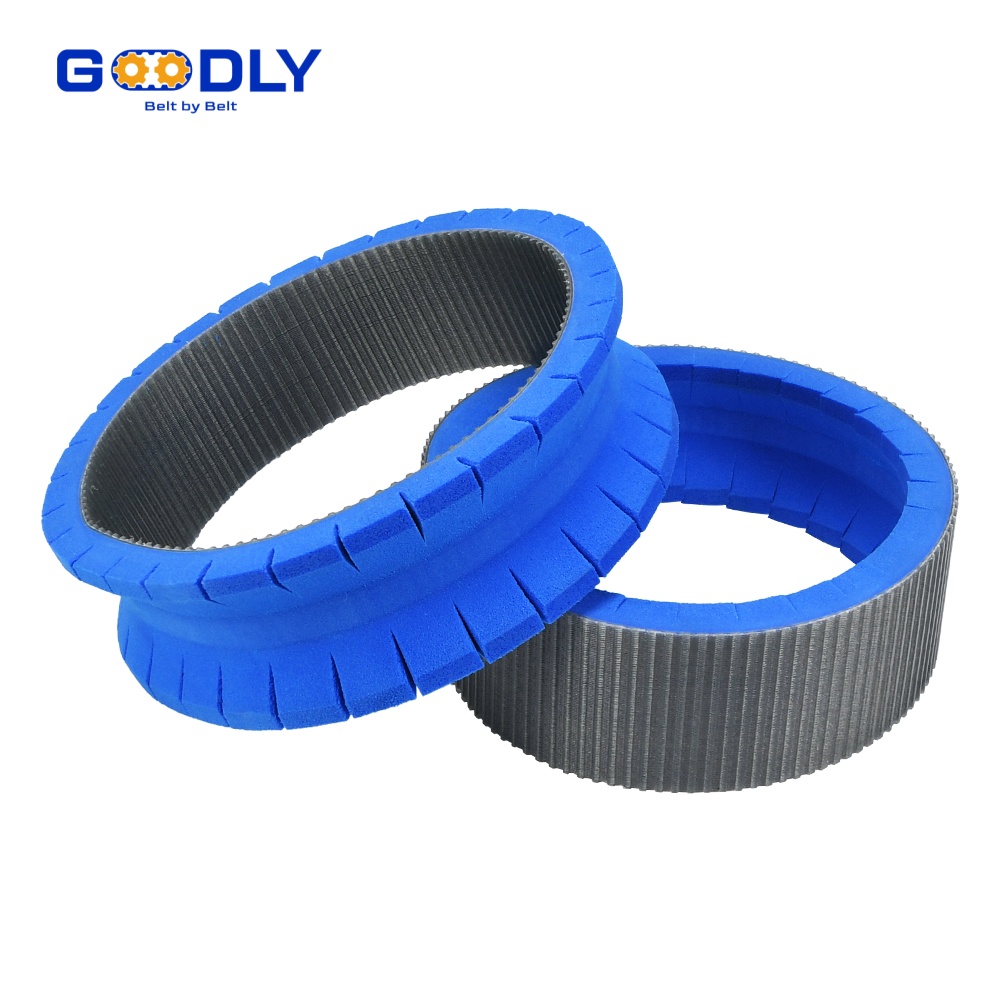
A sponge timing belt is a toothed synchronous belt with a soft foam or sponge layer bonded to its back. The teeth still drive the machine with positive engagement, while the foam face carries the product gently — no crushing, no scratching, no marks. On packaging lines handling biscuits, chocolate, confectionery or delicate pharma items, a foam-coated belt is often the difference between a sellable product and a reject. This guide explains how these belts are built and where they work best.
What Is a Sponge Timing Belt? Foam-Backed Timing Belt Construction
A sponge timing belt combines two jobs in one part: synchronised drive and soft product contact. The tooth side meshes with the pulley for precise motion; the back carries a bonded foam layer that compresses slightly under load, spreading the contact pressure so fragile items are not damaged. Foam type, density and thickness are chosen to match the product — a light sponge for brittle biscuits, a denser foam for heavier packs.
| Backing | Compression | Grip | Best for |
|---|---|---|---|
| Plain (no backing) | None | Low | Non-contact drive only |
| Sponge / foam | High | Moderate | Very fragile, fragile, no-mark handling |
| Rubber coated | Low | High | Grip and traction on inclined lines |
| Fabric | Low | Moderate | General conveying, low noise |
The driving side is unchanged by the backing, so the mechanical basics in what is a timing belt still apply.
Timing Belt Coated with Foam: Compression, Friction and Cushioning Benefits
A timing belt coated with foam earns its place through three physical effects. Compression: the foam deforms under the product and spreads load, so a point contact becomes an area contact. Friction: the foam face holds the product gently in place on inclines without needing high belt tension. Cushioning: the soft layer absorbs the small impacts of product transfer, protecting both the item and the machine. Together these let a line run faster with fewer rejects.
Sponge Coated Belt vs Rubber Coated Belt: When to Use Each Backing
The choice between a sponge coated belt and a rubber coated belt is about whether you need cushioning or grip. Choose sponge when the product is fragile and must not be marked; choose a rubber-coated belt when the line is inclined, the product is heavy, or grip and traction matter more than softness. Some lines use both: sponge on the fragile transfer, rubber coating on the incline.
Compare the two constructions on the Sponge Timing Belt and Customized Rubber Coated Belt pages.
Applications: Biscuit, Chocolate, Pharma and Fragile Product Handling
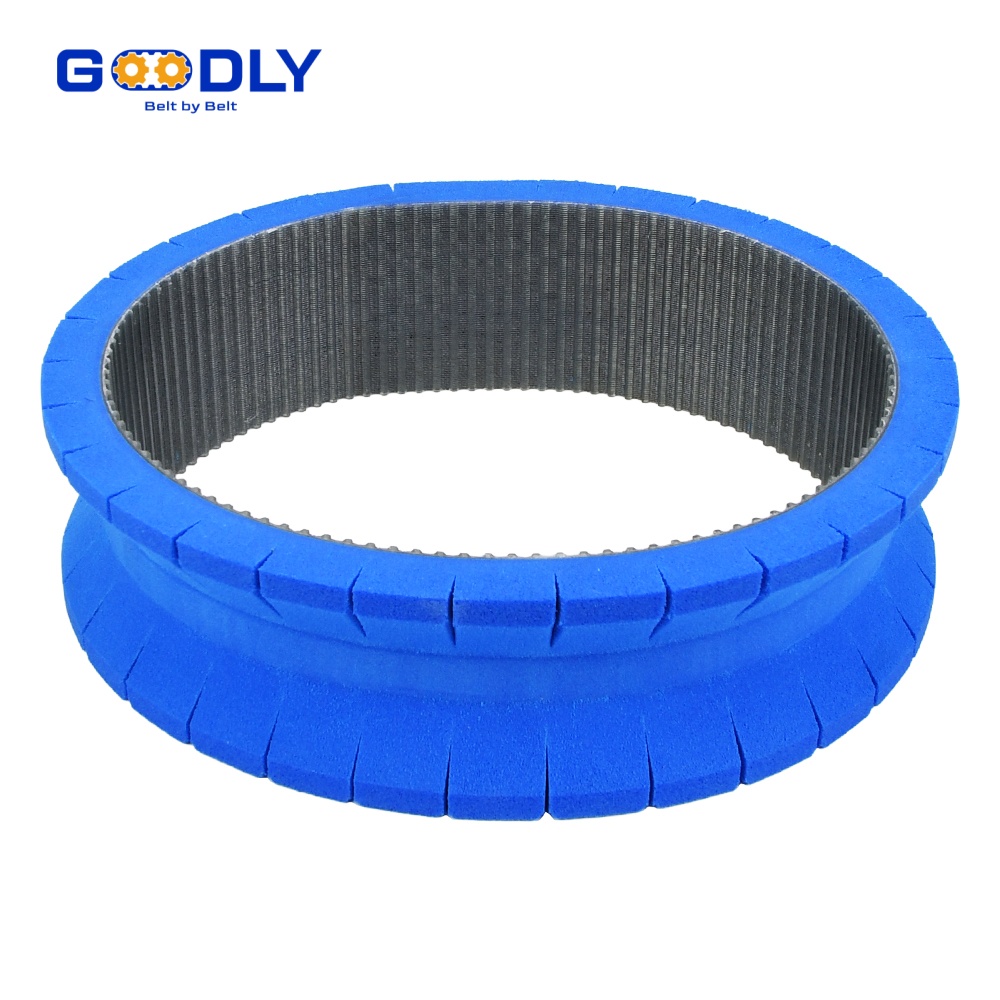
Foam and sponge-backed belts show up wherever product is delicate. In biscuit and cracker lines they carry baked goods from oven to packing without breakage. In chocolate and confectionery they handle coated items without scuffing the surface. In pharma they move blisters and vials gently and cleanly. In electronics and cosmetics they protect finished surfaces. The common thread is a product that would be damaged or marked by a hard, grippy belt.
Biscuit & bakery
Carries baked goods without breakage.
Chocolate & confectionery
Protects coated surfaces from scuffs.
Pharmaceutical
Gentle, clean handling for blisters and vials.
Electronics & cosmetics
No marking on finished surfaces.
Incline transfers
Holds product on gentle inclines.
Delicate assembly
Cushions parts between stations.
Custom Sponge Timing Belts: Foam Density, Thickness and Tooth Profiles
A custom sponge timing belt is specified by three variables: foam density (how soft), foam thickness (how much cushion) and tooth profile (how it drives). GOODLY bonds foam to PU, rubber or vulcanised bodies and machines the foam to your thickness, then cuts any standard pitch such as T5, T10, HTD 5M or AT10. We can also add cleats, side walls and multiple foam zones on one belt. The result is a belt engineered around the product rather than the closest catalogue item.
Custom sponge options are detailed on the Custom Sponge Coated Belt solution page.
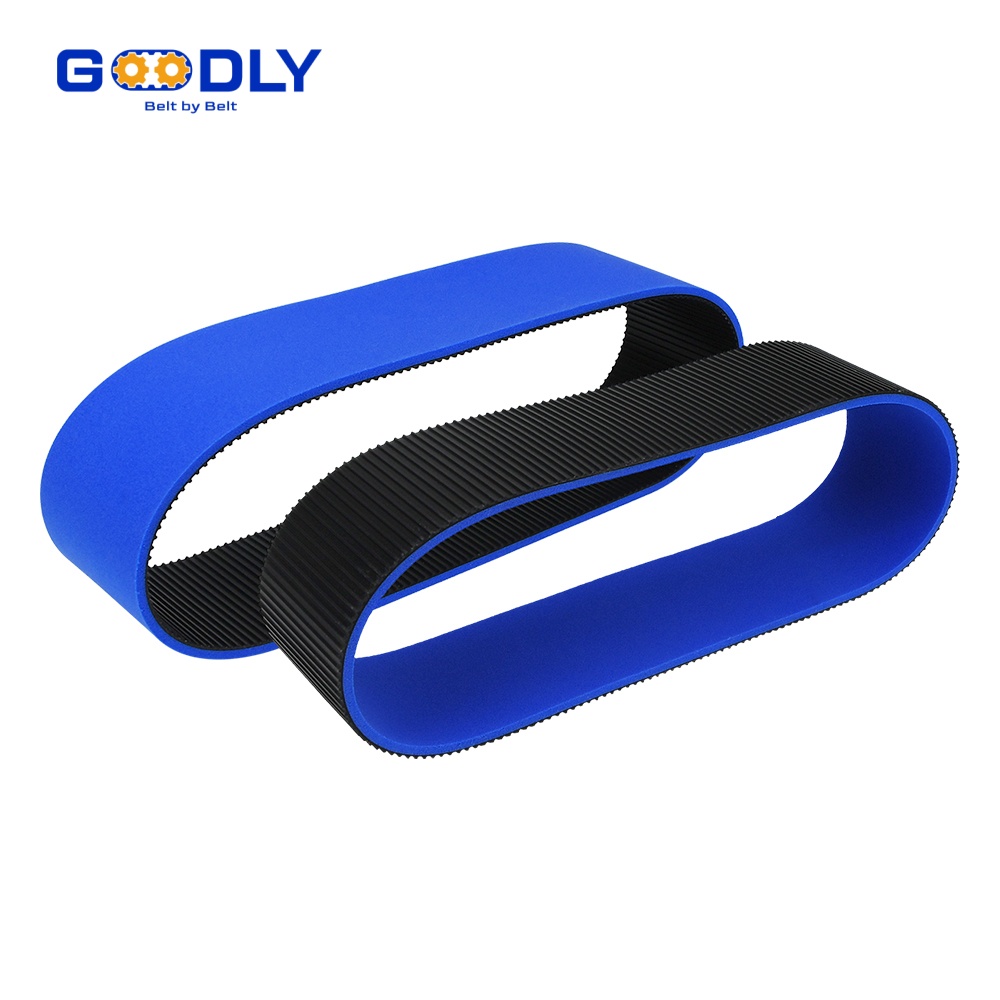
Get a Custom Sponge-Coated Belt Sample from GOODLY
What is a sponge timing belt used for?
It is used wherever a product is fragile or easily marked: biscuits, chocolate, confectionery, pharma blister packs, electronics and cosmetics.
How thick can the foam backing be?
Foam thickness is matched to the product and the transfer; talk to our engineers about the cushion you need and we will quote a thickness.
Is a foam-coated belt food safe?
Food-contact grades are available and declared per order against FDA 21 CFR and EU 10/2011.
Can foam belts handle inclined conveyors?
They hold light product on gentle inclines; for steeper lines a rubber-coated belt gives more grip.
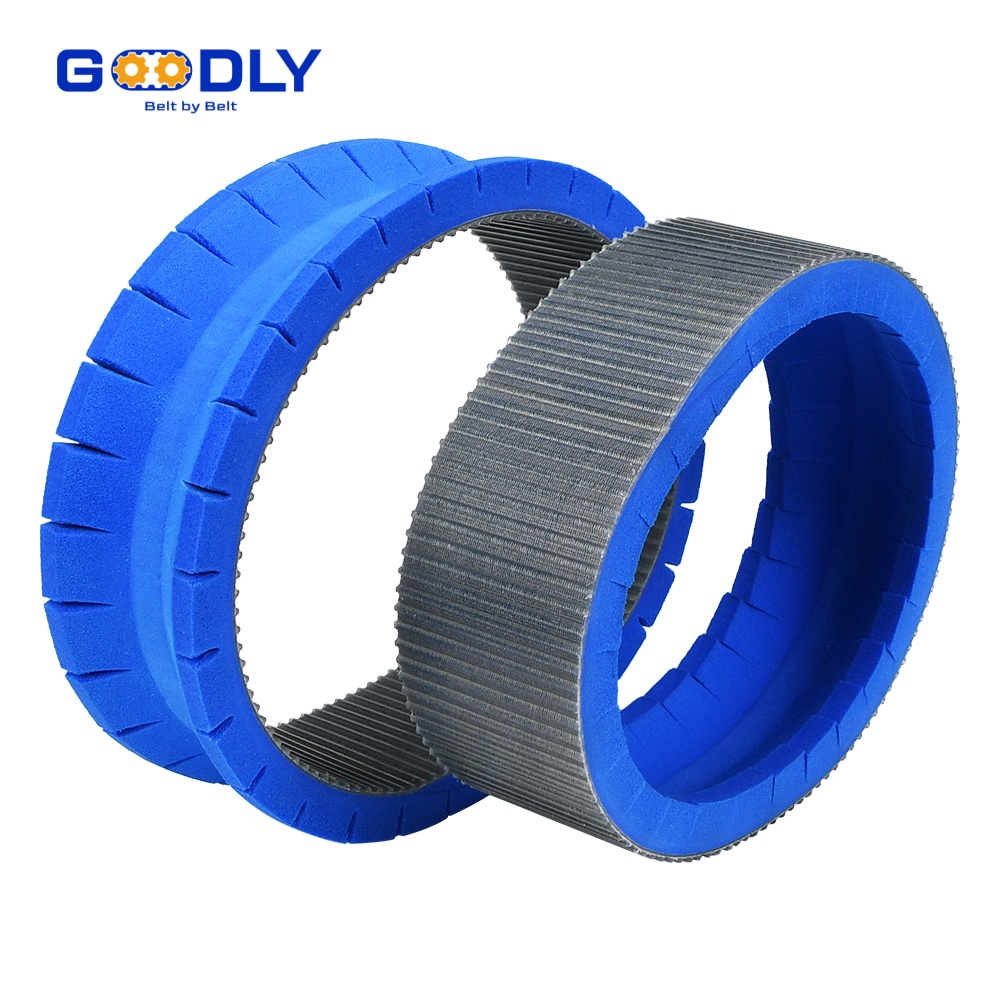
Protect your product with a custom sponge-coated belt
Send us the product, the transfer and the incline and GOODLY will prototype a sponge-coated belt with the right foam density and deliver samples in 3–5 days.
Request a Sponge-Coated SampleFoam density, thickness and food-contact grades are confirmed per project and per order.