





Silicone Vulcanized Timing Belts: Properties, Applications and Custom Manufacturing
Silicone Vulcanized Timing Belts: Properties, Applications and Custom Manufacturing
Why a ring-cured silicone belt behaves differently from standard rubber, where it is the only sensible choice, and how it is made
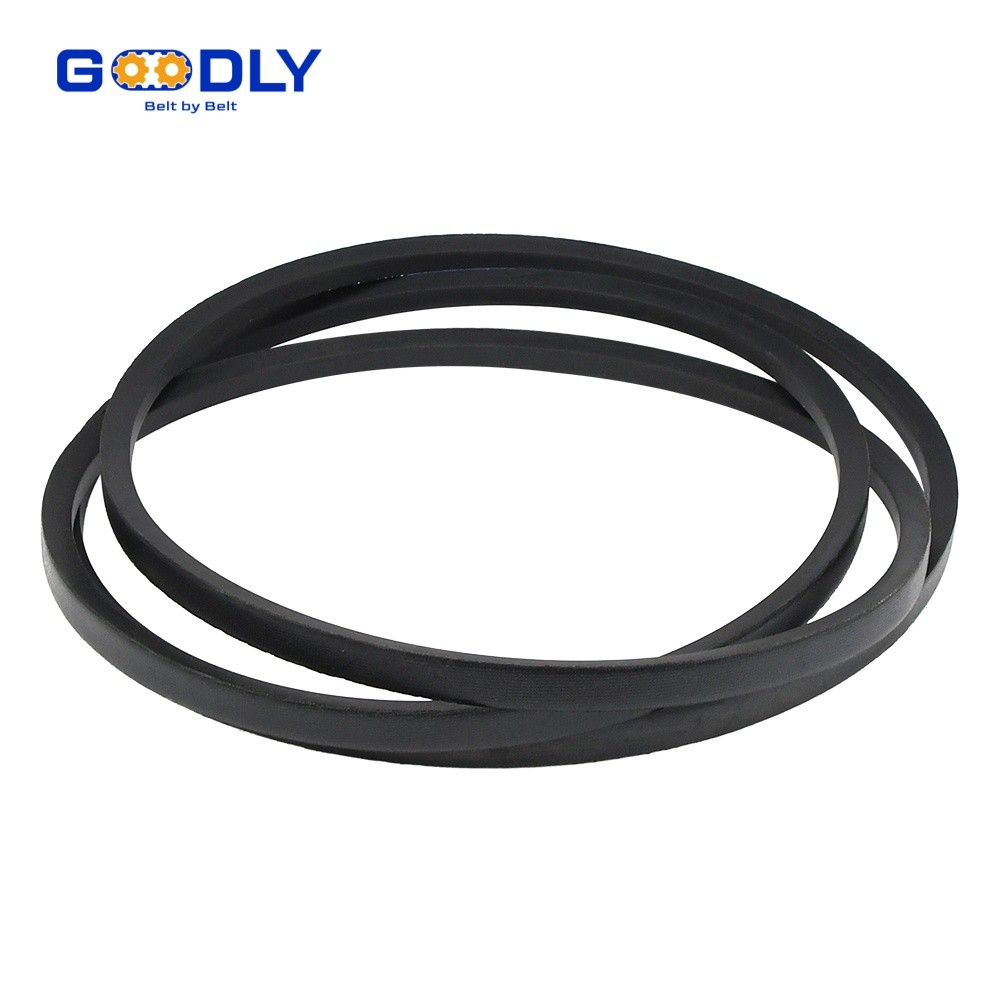
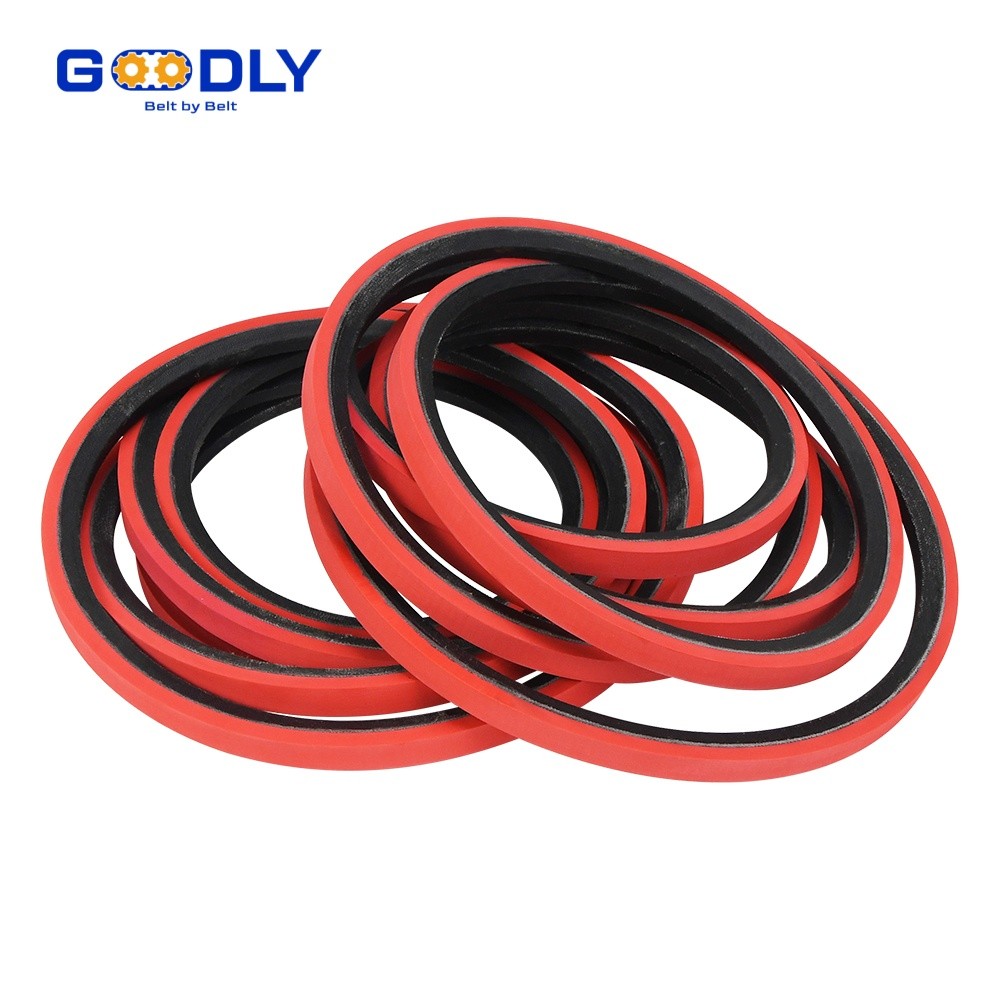
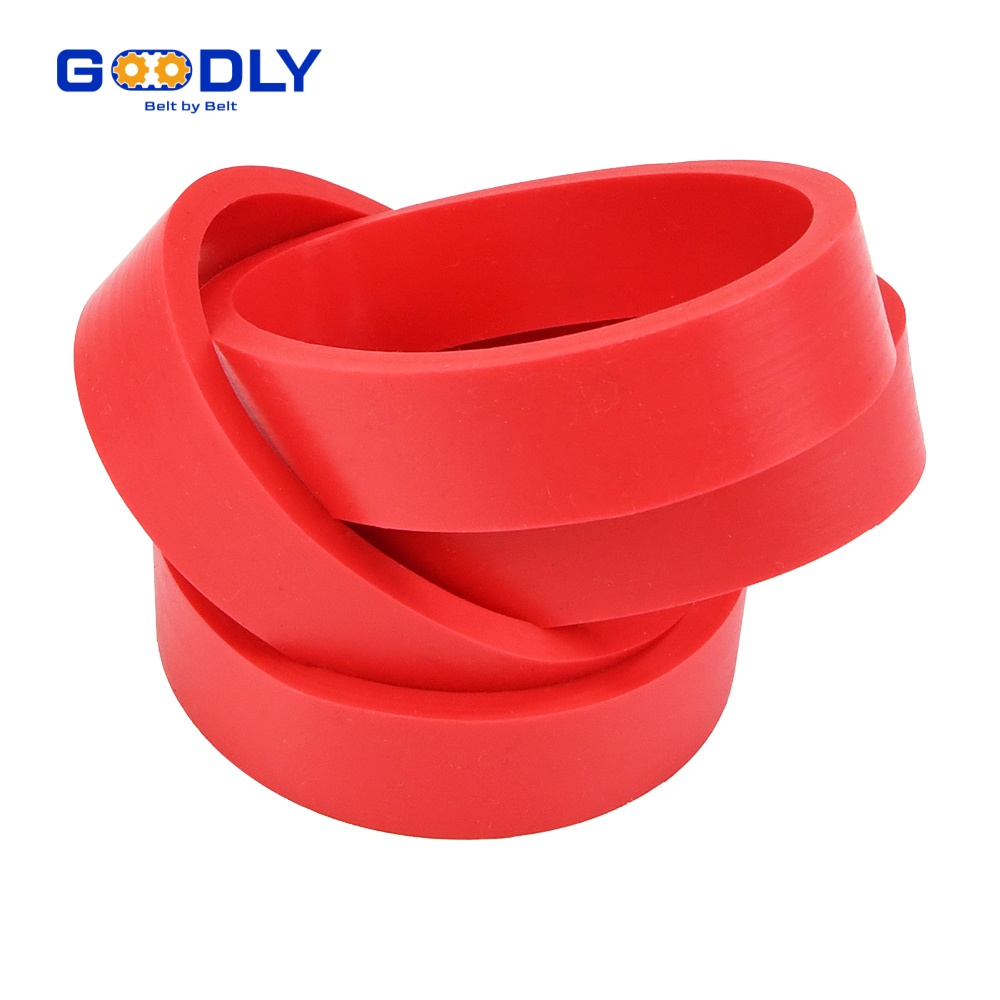
A silicone vulcanized timing belt combines two decisions that are usually made separately: the compound, which decides what the belt can survive, and the construction, which decides how long it lasts. Silicone brings heat resistance up to roughly 200 °C continuous, flexibility that survives cold stores, non-marking contact and easy cleaning. Vulcanizing brings a seamless ring with no splice in the cord line, so the belt does not have a joint to fail where it is flexed most. Put together, that combination is what sealing jaws, hot-fill lines, ovens and cleanroom drives actually need — and it is why a standard neoprene belt keeps failing in those positions even when the size is right.
What Makes a Silicone Vulcanized Timing Belt Different from Standard Rubber
Two things, and they are independent. The first is the polymer: silicone keeps its elasticity across a far wider temperature band than neoprene and does not harden into a brittle solid when a line runs hot, nor stiffen when it runs cold. The second is the construction: the belt is built as a sleeve and cured as one ring under heat and pressure, so the cord line is continuous around the whole loop. A joined silicone belt has the heat resistance but not the strength; a neoprene belt has the strength but not the heat resistance. Only the combination gives both.
That matters because most failures blamed on “cheap belts” are actually a mismatch. A neoprene belt on a sealing jaw running at 170 °C is being asked to do something its compound was never designed for: it hardens, cracks at the tooth root, and the operator concludes the supplier is unreliable. The silicone versus rubber comparison walks through that decision in more detail, and the vulcanized belt explainer covers the construction side.
Silicone Vulcanized Timing Belt Properties: Heat Release and Chemical Resistance
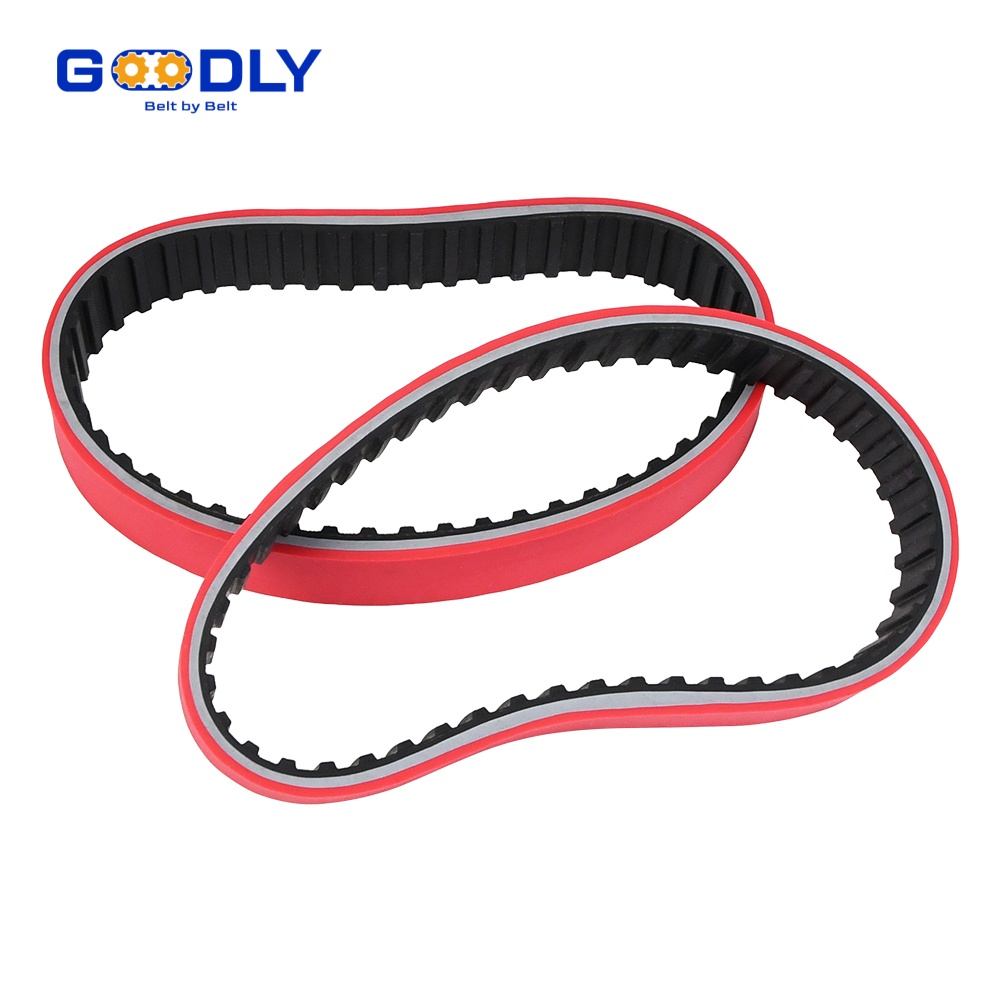
Silicone is not universally better than neoprene — it is better in specific conditions and worse in others. The comparison below is the one that matters when specifying:
| Property | Silicone vulcanized belt | Standard neoprene belt |
|---|---|---|
| Continuous service temperature | About -60 °C to +200 °C, higher for short peaks | About -25 °C to +100 °C |
| Cold-store flexibility | Stays elastic, no stiffening at -40 °C | Stiffens below about -20 °C |
| Food and pharma contact | Grades formulated for direct contact, non-marking, easy to clean | Possible with specific grades, less common |
| Cleaning agents and steam | Good resistance to many washdown chemicals and steam cycles | Degrades faster under repeated hot washdown |
| Oil, fuel and solvent | Poor — silicone swells in oils and some solvents | Good oil resistance, better choice where oil is present |
| Tear and abrasion | Lower; needs gentler pulleys and clean edges | Higher abrasion resistance |
| Product release | Non-stick surface, little build-up | Tends to pick up sticky product residue |

Vulcanized Silicone Timing Belt Applications in Food and Pharma Sealing
The applications where silicone vulcanized belts are not just better but effectively the only workable answer share one feature: heat plus cleanliness plus no room for a joint.
- Sealing jaws and band sealers. The belt runs directly over a heated jaw, so it is the component carrying heat into the seal while transmitting the drive. A splice passing over the jaw every revolution is a failure waiting to happen.
- Hot-fill and pasteurising lines. Steam and hot water washdown plus product contact. Silicone tolerates both; the single-piece ring keeps the belt tracking through the wash.
- Pharma blister and filling machines. Cleanroom drives need low particle generation, no black transfer and cleanability. Our pharmaceutical belt solutions page covers the machine-side requirements.
- Bakery and confectionery ovens. Ambient temperatures inside oven tunnels exceed what neoprene survives, and the belt usually doubles as the conveying surface.
- Cold stores and freezers. The opposite end of the range, where silicone stays flexible and neoprene becomes a stiff band that slips on start-up.
- Packaging and labelling equipment. Where non-marking contact and easy cleaning matter more than ultimate abrasion resistance — see the packaging industry solutions for typical drive positions.

Silicone Vulcanized vs Standard Silicone vs Neoprene: Which Should You Specify
Three constructions get quoted for the same job and the differences are not obvious on a datasheet. This is the short version:
| Construction | Heat ceiling | Food contact | Strength | Best fit |
|---|---|---|---|---|
| Silicone vulcanized, endless | About 200 °C | Yes, select grades | Highest, no splice | Sealing jaws, hot fill, ovens, cleanroom drives |
| Silicone, joined or open-ended | About 200 °C | Yes, select grades | Lower at the joint | Prototypes, light duty, lengths beyond available tooling |
| Neoprene vulcanized, endless | About 100 °C | Limited grades | High | General industrial drives, oil contact, abrasive duty |
| PU timing belt | About 80 °C | Some grades | High, very precise | Clean dry precision drives and positioning |
The practical rule: if the belt sees more than about 100 °C, or has to touch product, or both, silicone is the starting point — and if it also has to run for years without a stoppage, specify the vulcanized endless version rather than a joined one. Detailed compound options are on the silicone timing belt page; the ring-cured range is on the silicone vulcanized timing belt page.
Manufacturing Silicone Vulcanized Timing Belts: Precision Curing and Tolerance
Silicone is less forgiving to process than neoprene, which is why so few plants run both well. Three process points decide whether the finished belt holds its pitch and profile:
- Cure temperature control. Silicone compounds cure in a narrow window. Under-cure leaves a soft body that creeps and grows in length; over-cure makes the belt brittle at the tooth root. Mold temperature is held within a few degrees across the whole ring, not just at the sensor.
- Pressure during cure. The compound has to fill every tooth cavity and bond to the cord without porosity. Low pressure shows up later as voids at the tooth root — invisible at dispatch, obvious at 500 hours.
- Constrained cooling. Silicone has a high coefficient of expansion, so the sleeve is cooled under restraint. Freed from the mold too early, a ring relaxes out of round and the pitch length drifts.
- Post-cure and dimensional check. Every sleeve is measured for pitch length, width, tooth height and hardness against the drawing before slitting, and the measurements are recorded against the batch.
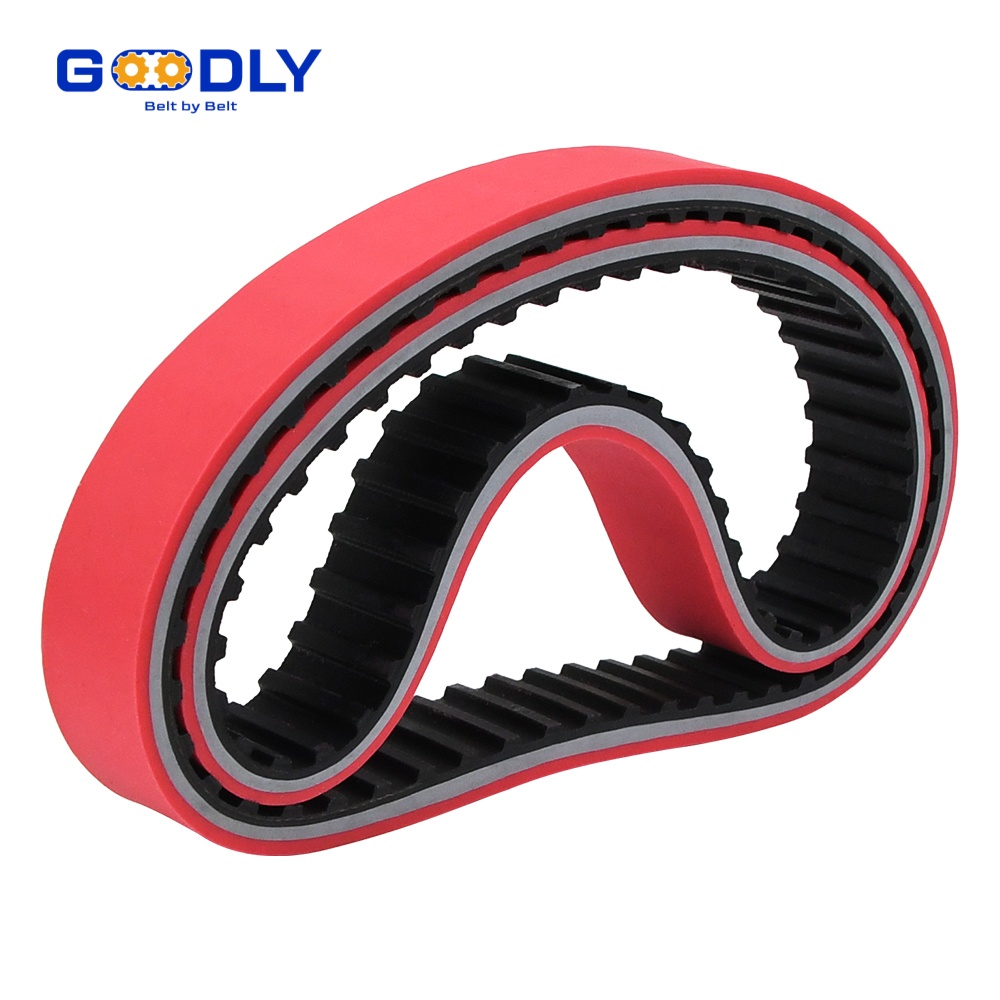
This is the same process discipline described in our vulcanized versus molded comparison, applied to a harder compound. It is also why a custom silicone length is a tooling question as much as a material question: the mold circumference fixes the pitch length.
Custom Silicone Vulcanized Timing Belts: Hardness, Colour and Profile Options
Beyond the standard range, five parameters can be customized on a silicone vulcanized belt. Each one has a practical consequence, so it is worth knowing which are cosmetic and which change performance:
- Shore hardness. Typically 50-80 Shore A for silicone timing belts. Softer compounds flex better around small pulleys and grip more; harder compounds resist tooth shear and carry more torque. Hardness is a performance choice, not a preference.
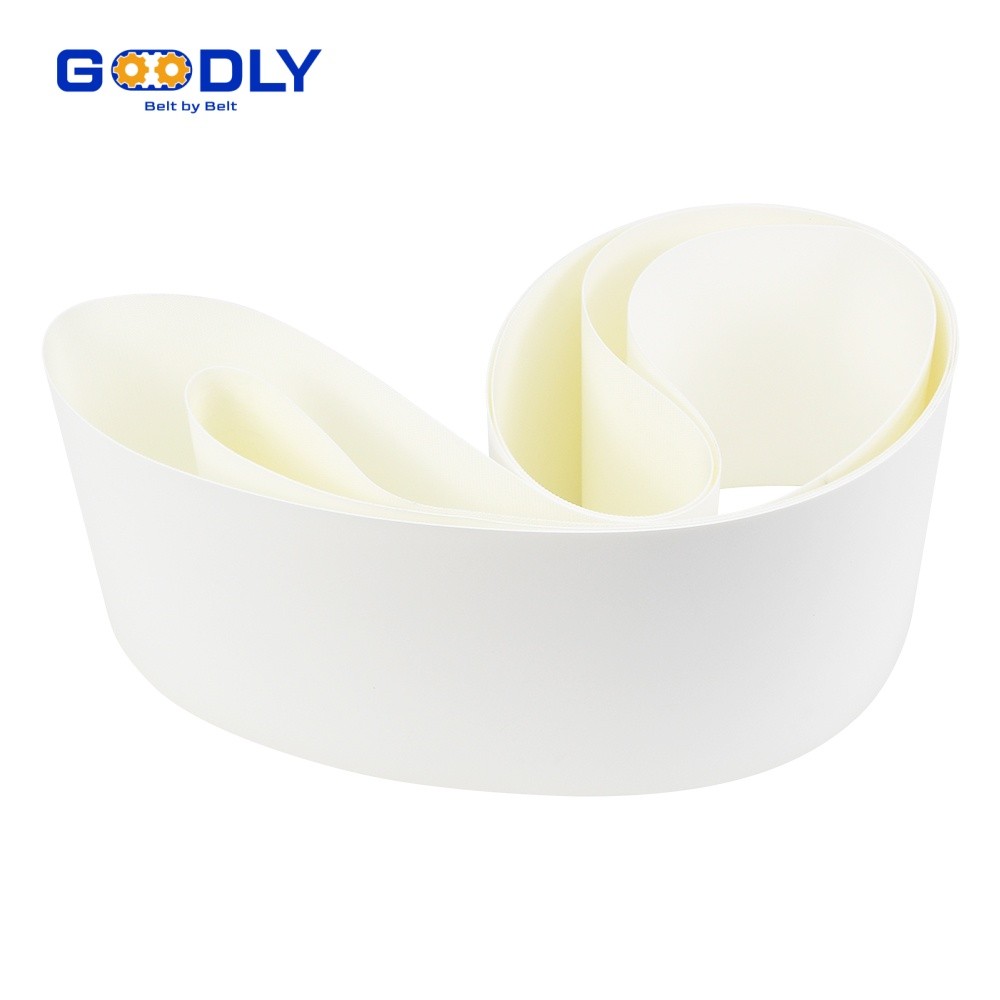
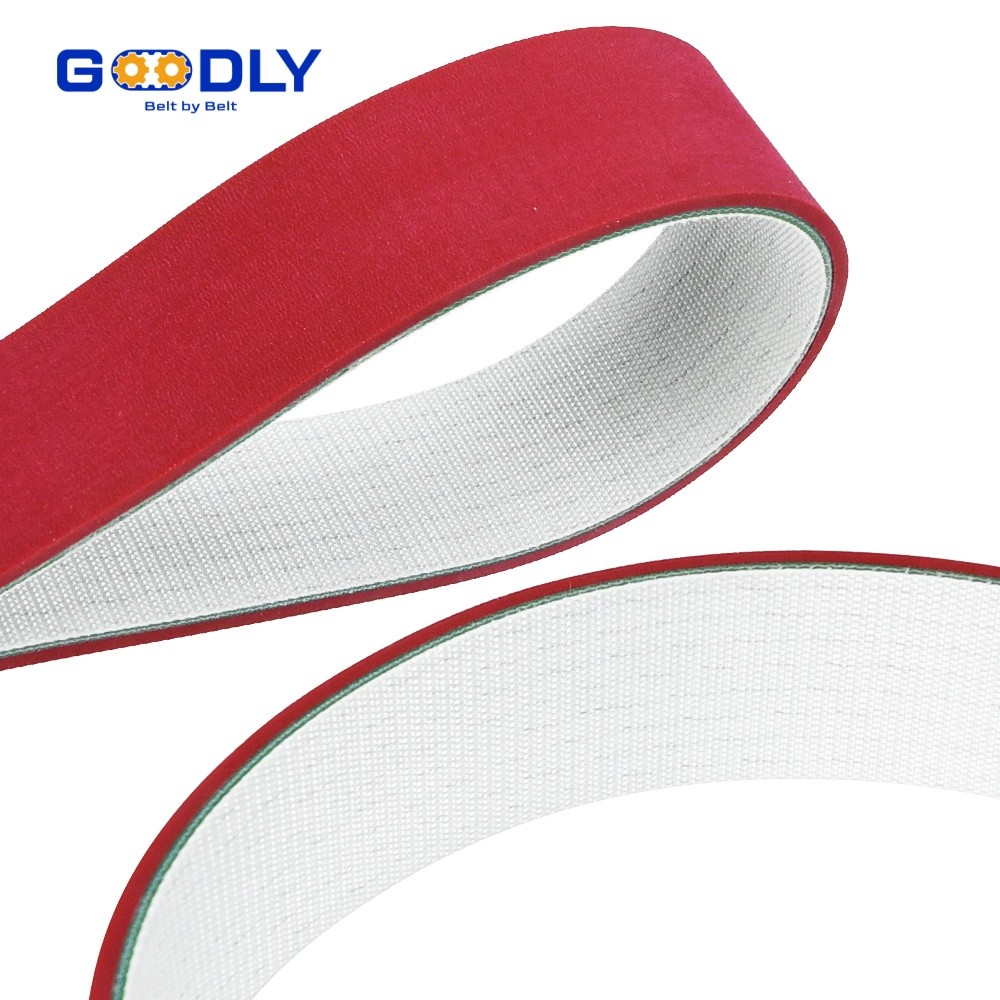
- Colour. Red, white, translucent and black are all available and the choice is mostly about visual detection and brand consistency — a red belt on a stainless machine is easy to inspect at a glance. Colour does not change the compound's temperature rating.
- Pitch length and width. New lengths need a ring mold; widths can be slit freely inside the sleeve range. This is where a vertically integrated factory saves weeks, because tooling and slitting happen in the same building.
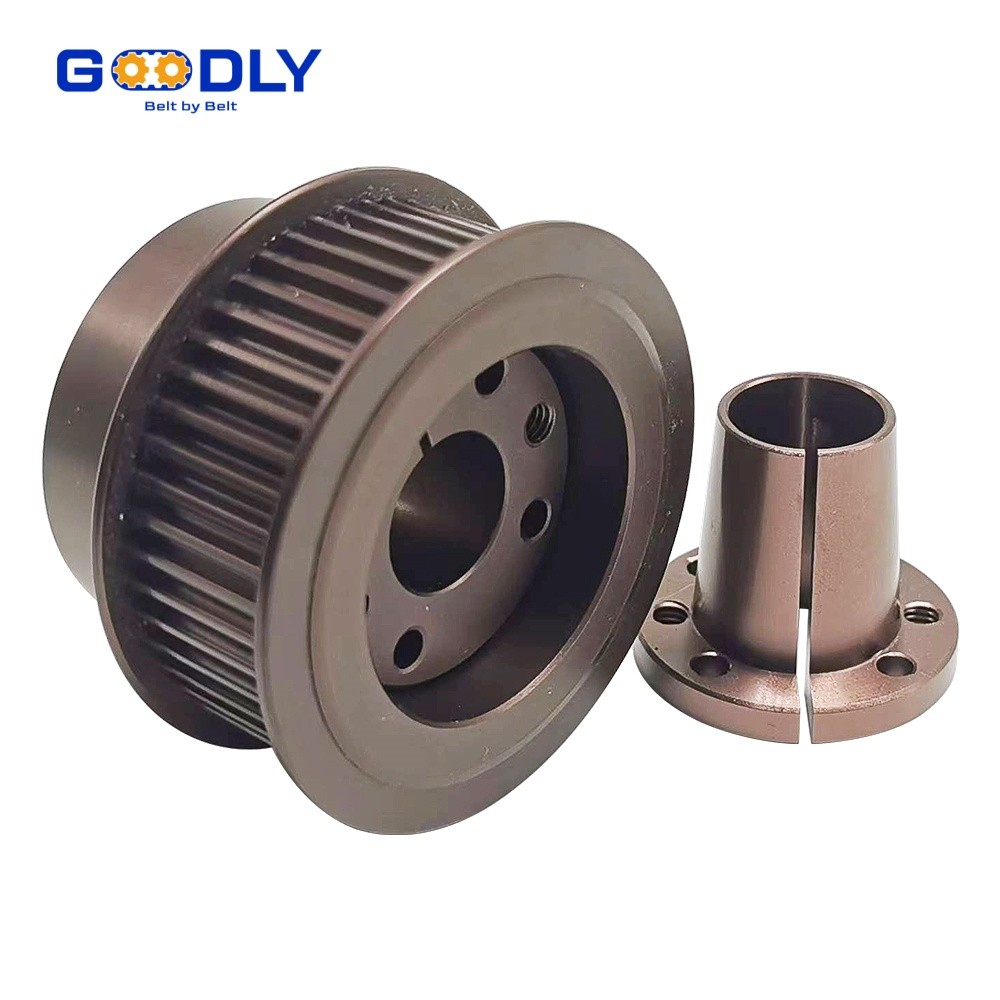
- Tooth profile. HTD, AT, T and imperial profiles matching your pulleys, mapped in the tooth profiles and pitches guide.
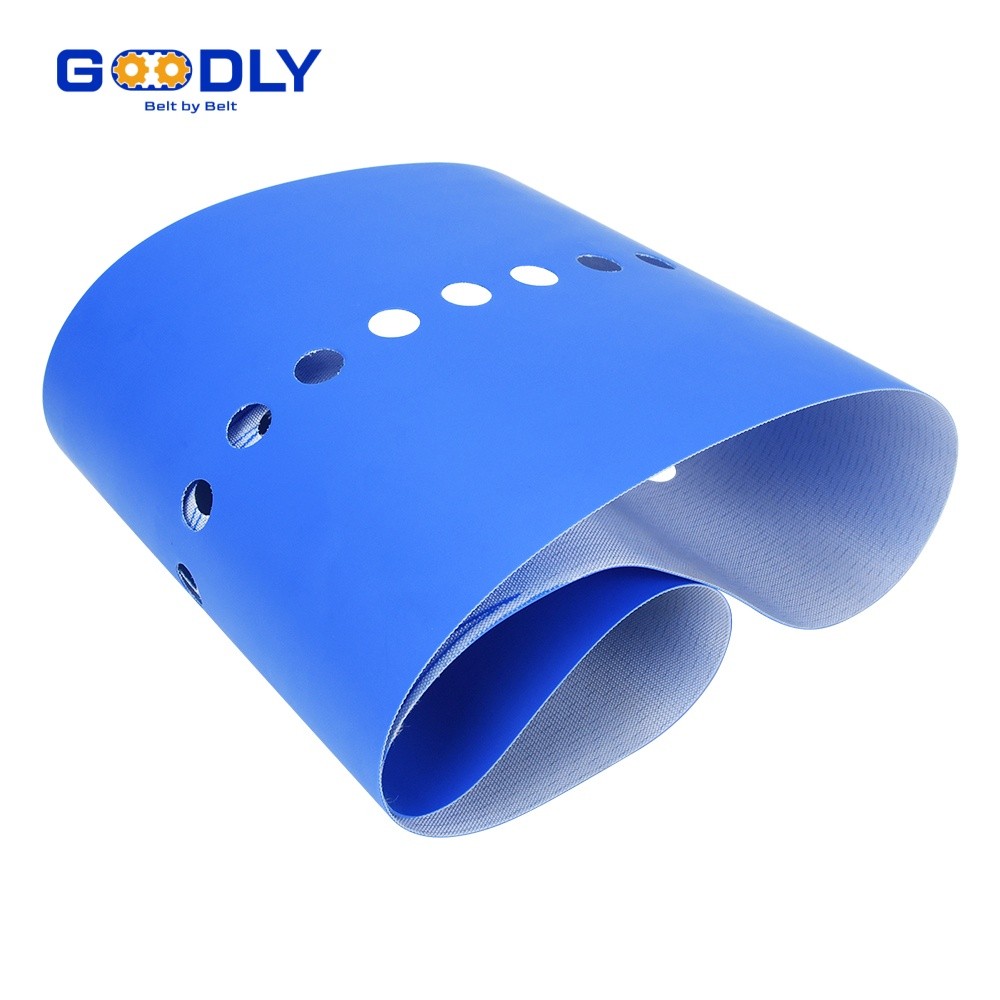
- Backing and machining. Fabric backing for low friction, rubber backing for grip, plus punched holes, slots or cleats where the belt also handles product — the operations described on the special machining page and in our timing belts with special machining guide.
For a food or pharma project, ask for the compound declaration with the sample. Graded silicone compounds differ in what they contain, and the declaration is what your quality team needs for the file — it is also the fastest way to check whether a supplier is actually running silicone or relabelling neoprene.
Request Samples of GOODLY Silicone Vulcanized Timing Belts
GOODLY moulds and cures silicone vulcanized belts in its own plant in Guangzhou, on a 20,000 m² floor with 60 project patents across the timing belt, flat belt and conveyor belt lines. Because compounding, ring molding, curing, machining and inspection sit under one roof, a custom silicone construction can be sampled in 3-5 working days instead of the weeks a trading company needs to route the same job through three subcontractors. Background and equipment are on the about page, and the product range is on the Silicone Vulcanized Timing Belt page.
To get a useful sample quickly, send four things with the enquiry: the belt marking or a photo of the belt you are replacing, the smallest pulley diameter, the operating temperature at the belt (not the oven setpoint), and whether the belt touches product. Those four answers decide compound, hardness and construction before price is even discussed.
Is a silicone vulcanized timing belt food safe?
Graded silicone compounds are widely used for direct food contact and are formulated without animal-derived ingredients, and the vulcanized endless construction removes the splice where residue collects. Food safety is always a property of the specific compound, not of the word “silicone”, so ask for the compound declaration and confirm the grade matches your market's requirements before approving the sample. Our food grade timing belt guide covers what to request from a supplier.
Why use silicone instead of neoprene on a sealing jaw?
Because the belt is the heat path. On a band or jaw sealer the belt runs over a heated element for its whole life, and neoprene at 150-170 °C hardens, cracks at the tooth root and loses tension within weeks. Silicone holds its elasticity at that temperature, and the vulcanized endless construction means there is no splice passing over the hot jaw once per revolution.
Can silicone vulcanized belts be made in custom lengths?
Yes, within the mold range a factory holds. A new pitch length needs a ring mold, which is why the first belt in a new length carries a tooling cost and the following ones do not. Send the length and width and we will confirm whether it sits inside existing tooling or needs a new mold, and quote both paths so the decision is visible.
What Shore hardness should I specify for a silicone belt?
Start from the duty rather than from habit. Small pulleys and tight wraps favour 50-60 Shore A because the belt has to flex; high torque and tooth shear favour 70-80 Shore A. If the belt also has to grip product, solve that with a rubber or foam backing rather than by hardening the whole body, which would cost flex life.
Do silicone belts handle steam and washdown?
Better than neoprene, but not unconditionally. Silicone tolerates repeated hot water and steam cycles and does not absorb water, which is why it is common on hot-fill and pasteurising lines. Aggressive alkaline or solvent-based cleaning agents still need checking against the specific compound, and the belt should be allowed to dry before restart rather than sitting wet under tension.
Request a Silicone Vulcanized Belt Sample
Send GOODLY the belt marking, the smallest pulley diameter, the belt's operating temperature and whether it touches product. Our engineers will confirm compound, hardness and construction, quote the exact specification, and sample a custom silicone vulcanized belt in 3-5 working days — moulded, cured and measured in our own plant.
Ask for a Silicone Belt Sample