Top Timing Belt Manufacturers in China in 2026: Factory-Direct Sourcing Guide

Top Timing Belt Manufacturers in China in 2026: Factory-Direct Sourcing Guide
Who the real manufacturers are, how to tell a factory from a trading company, and the steps that take a shortlist to a production-ready supplier
A large share of the world’s industrial timing belts is now made in China — and searching for a timing belt manufacturer in China returns thousands of results that all claim to be one. Some are. Many are trading companies with factory photos borrowed from the internet. The price difference between the two is small; the engineering difference is enormous, because only a real timing belt factory can change a tooth profile, adjust a compound, machine a belt to your drawing and stand behind the measurement record. This guide covers the landscape of Chinese timing belt manufacturers in 2026, the tests that separate factory from trader, a verification workflow built on audits and samples, the logistics and import details worth knowing in advance, and what buying factory direct should get you.
Top Timing Belt Manufacturers in China: Who Supplies Global Machinery Brands
Ask which plants deserve to be called the top timing belt manufacturer China fields today, and the honest answer is a capability filter rather than a league table. The industry is concentrated in a few industrial regions — the Pearl River Delta around Guangzhou, the Yangtze Delta around Shanghai and Ningbo, and a cluster of coastal plants in Shandong and Hebei. Within that map, the factories that matter to global buyers fall into three groups: large general belting groups that make everything from conveyor belts to timing belts; mid-size specialized timing belt plants focused on industrial synchronous drives; and application specialists that build coated, vulcanized and machined belts for packaging, food, pharma and logistics machinery. The third group is where most OEM relationships live, because machine builders rarely need a catalogue belt — they need a construction matched to a station.
What has changed by 2026 is not the price advantage — that has been stable for a decade — but the capability gap. Leading Chinese factories now run their own compounding, ring molding and vulcanizing lines, hold pitch tolerances in the hundredths of a millimetre, and export under frozen specifications to the same industries the established brands serve. The practical question for a buyer is no longer whether China can make a competent timing belt, but which of the thousands of listings can — and that is a verification problem, not a search problem. A walk through a real production flow, from mixing to final inspection, is in our inside a timing belt factory article.
Timing Belt Manufacturer in China vs Trading Supplier: How to Tell the Difference
Trading companies are not automatically bad — some aggregate useful capacity. But when you need customization, tolerance commitments or corrective action on a batch, the difference decides outcomes. The reliable tells are behavioral, not visual:
| Question to ask | Real manufacturer answers | Trading supplier answers |
|---|---|---|
| Can you modify the tooth profile or add a coated back? | Discusses mold options, grinding and bonding in-house | Sends the question away and relays an answer a day later |
| Do you hold the tooling for my profile? | Names the mold, its age and what it can and cannot hold | Vague; tooling “depends on the factory” |
| Can I see measurement records for my batch? | Produces pitch and thickness records against the drawing | Offers a certificate without measurements |
| Can I visit or video-audit the floor? | Welcomes it, shows live molding and inspection | Proposes a showroom, reschedules the floor |
| Why is your price 15% lower for the same spec? | Explains a real construction difference or declines | Matches any spec on paper to win the order |
One more signal worth weighting heavily: an engineering conversation. At a real factory, your technical questions reach an engineer who owns the process — ask why a belt cracked at the tooth root and you get a cord-adhesion or cure-depth answer with a proposed fix. From a trader, the same question becomes a discount negotiation. Since the answer often arrives within one email, this is the cheapest test in the entire qualification.
Why Top Machine Builders Source China Timing Belts Factory Direct
The OEM case for factory direct rests on four things a channel cannot provide. First, engineering ownership: the factory that molds your belt also changes it when your machine revision demands it, with no re-quotation layer in between. Second, custom machining: backings, grooves, cleats and profiled coatings are done on the same line that made the belt — the range of what can be machined is covered in our special machining guide. Third, specification control: drawings, compounds and molds stay under NDA with one party. Fourth, cost structure: removing the distribution margin typically funds the sampling and audit work several times over. The partnership mechanics — tooling, NDAs, repeat-order specs — are laid out in the OEM and ODM manufacturing guide.
Verifying a Chinese Timing Belt Factory: Audits, Samples and Payment Terms
Verification is a sequence, and each step is cheap relative to the failure it prevents:
1. Paper screen. Check the registered business scope (manufacturing, not just trading), the factory address against the office address, and how long the company has operated. Ten minutes of registry reading eliminates a surprising share of candidates.
2. Video or on-site audit. Ask for a live walk of molding, grinding and inspection — not a produced video. The highest-value minutes are the same as in any audit: watch an operator measure a belt with a calibrated instrument and record the result. The QC questions worth asking are listed in our quality control article.
3. Sample protocol. Order samples of the exact construction, measure them on arrival against the drawing — pitch, width, thickness across the belt, hardness where relevant — and run them on the machine. A sample that arrives with a measurement record from the maker is worth ten that arrive in a plastic bag.
4. Commercial terms. Standard terms are T/T with a deposit and balance before shipment; letters of credit appear on larger contracts. Put the frozen specification, inspection criteria and remedy for out-of-spec batches into the purchase contract — real factories sign these without drama, because they expect to meet them.
Start with a small trial order even after everything checks out. The first production batch, packed and shipped as a real order, completes the qualification — and it is also when a factory’s true lead-time discipline becomes visible.
Logistics, Lead Times and Import Considerations from China
Plan lead time in two parts. Production for standard profiles is typically one to two weeks, custom constructions two to four, and prototypes three to five working days at responsive factories. Transit then dominates: sea freight from South China runs roughly four to six weeks to North America or Europe, air freight days. Urgent needs are usually solved with an air-shipped sample plus a sea-shipped production batch running in parallel.
| Incoterm | Who arranges what | Typical use |
|---|---|---|
| EXW | Buyer arranges everything from the factory gate | Buyer has a freight consolidator in China |
| FOB | Seller delivers to the Chinese port; buyer handles main carriage | The default for regular sea shipments |
| CIF | Seller also pays freight and insurance to destination port | Buyer wants a single landed cost to port |
| DDP | Seller delivers cleared to the destination | Occasional orders without import infrastructure |
Two import details specific to belts are worth knowing before the first order. Packaging: timing belts are shipped coiled in their natural curvature, boxed to protect teeth from flat spots and contamination — confirm the packing method for long belts, which may require larger coil diameters. Documentation: transmission belts of vulcanized rubber move under their own HS classification (chapter 4010), and food or pharma projects should secure the material declarations with the shipment, not after it. Buyers who need stock positions locally usually solve this with a scheduled wholesale programme rather than one-off orders, agreed with the factory against a frozen specification and restocked on a fixed cadence.
Source Direct from GOODLY: A Chinese Timing Belt Factory with Global QC
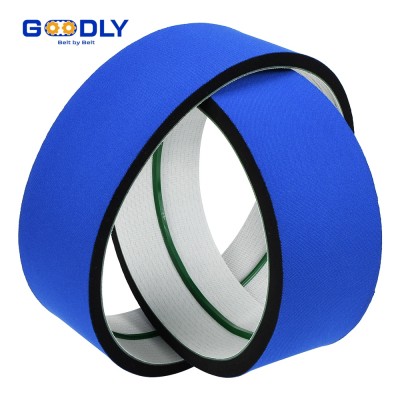
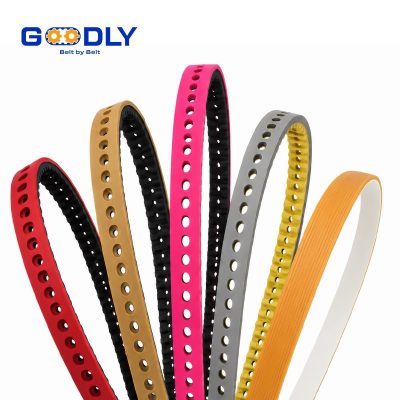
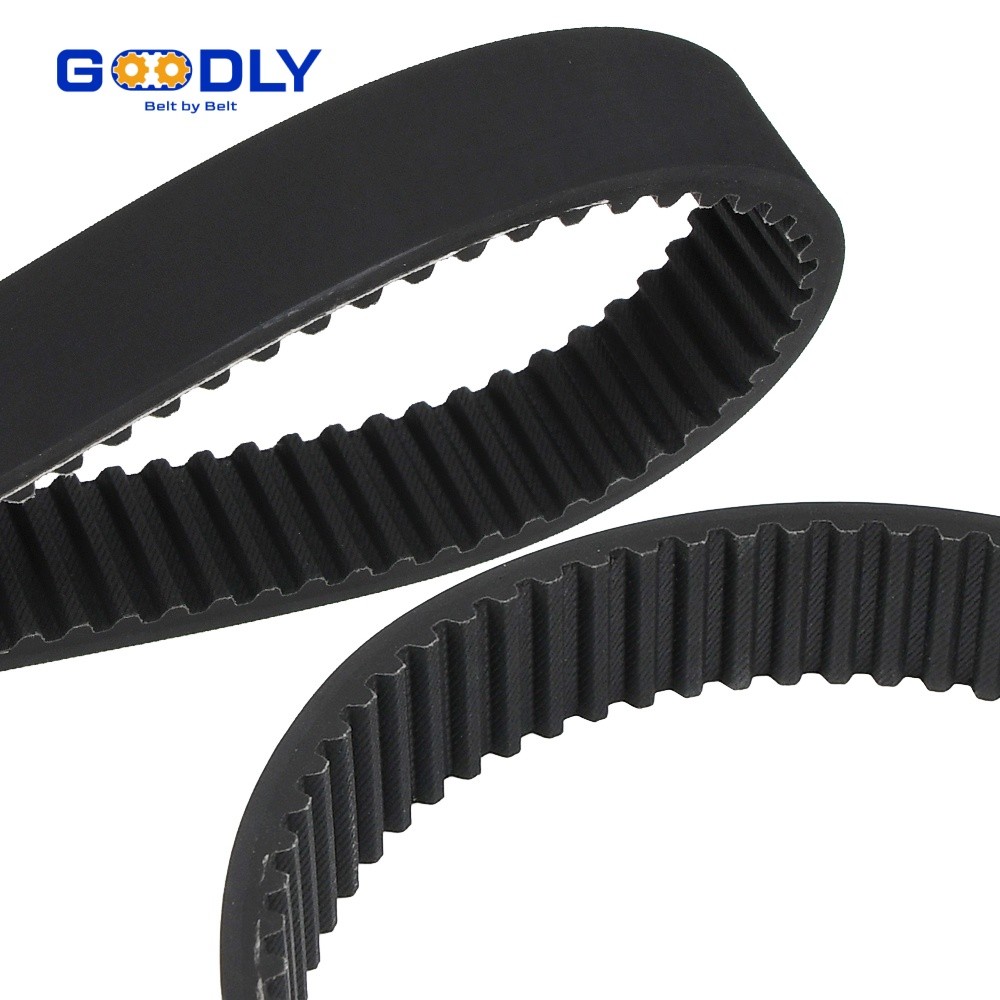
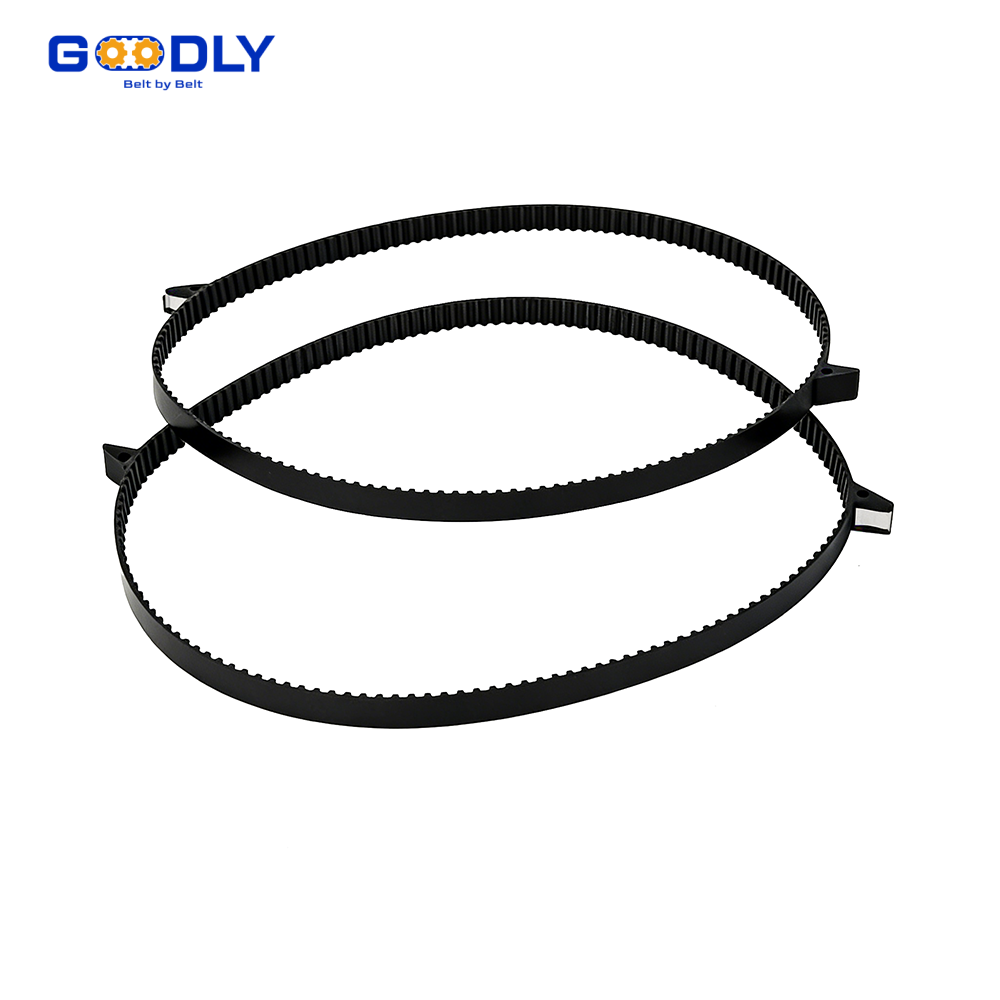
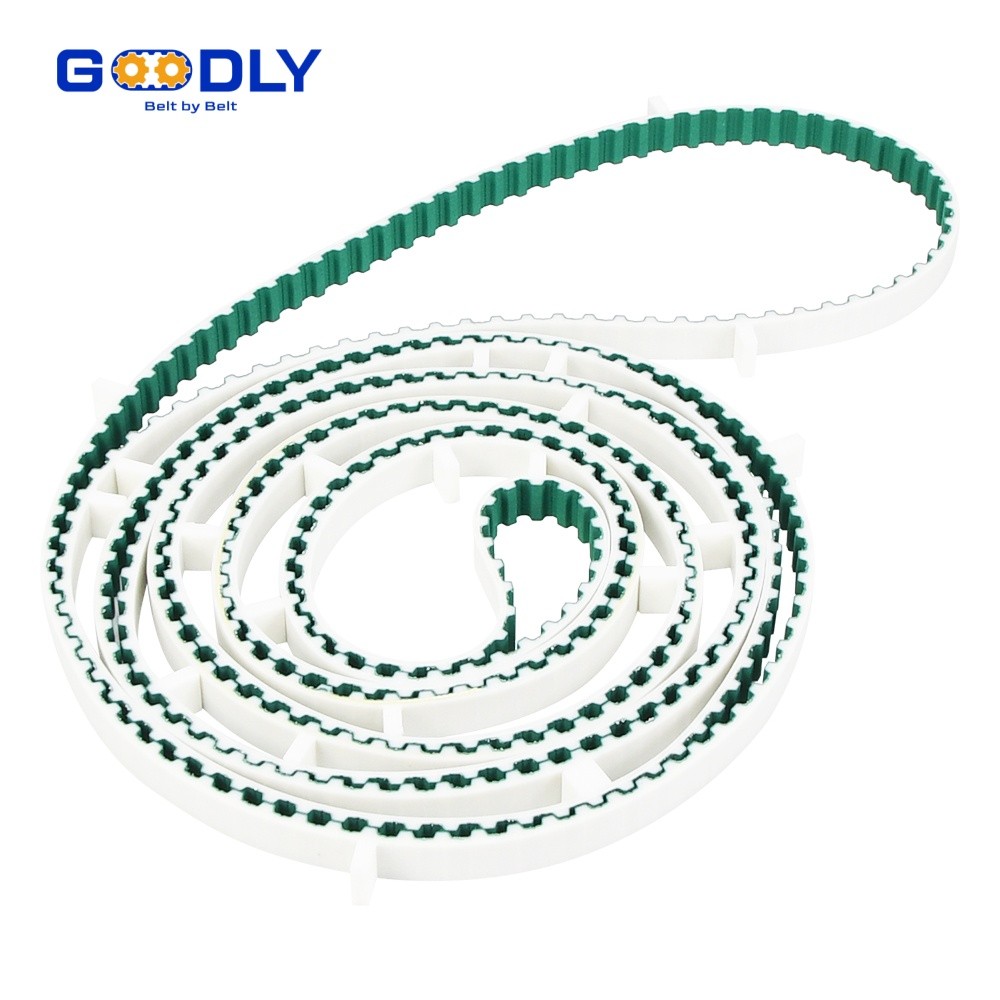
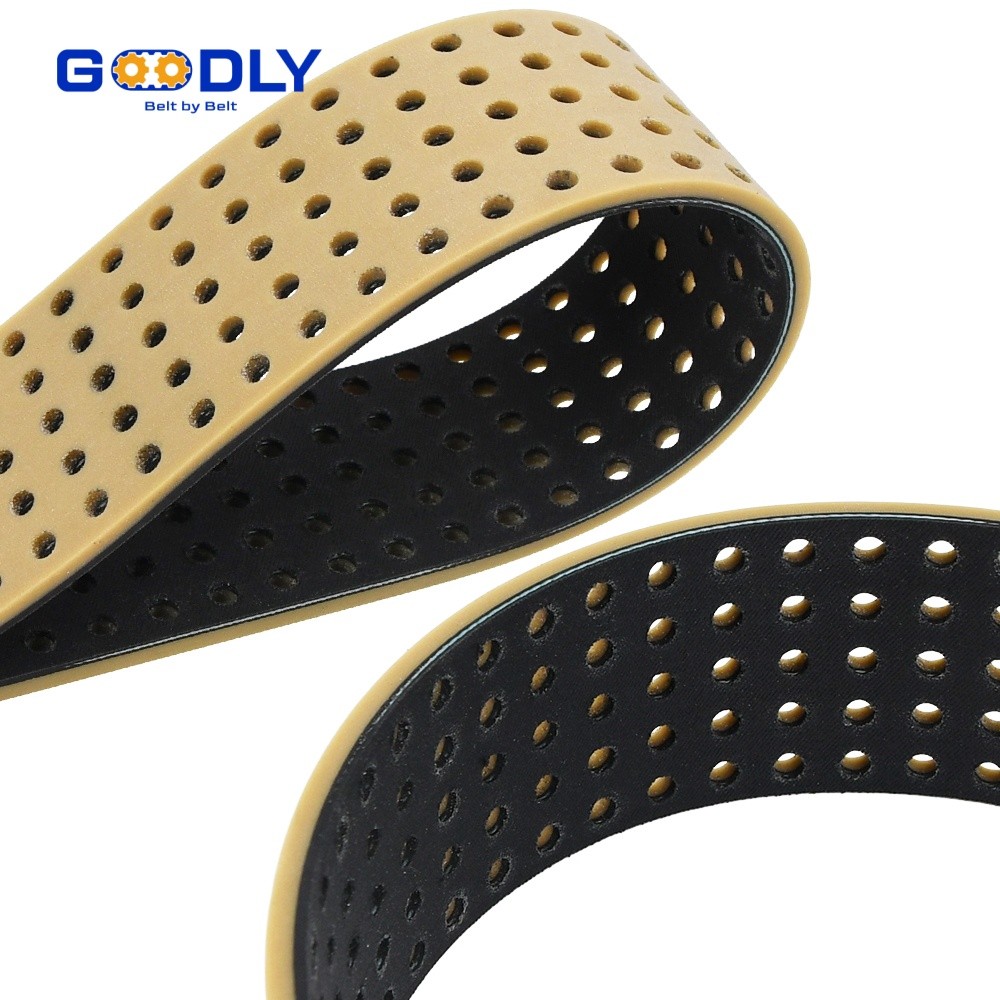
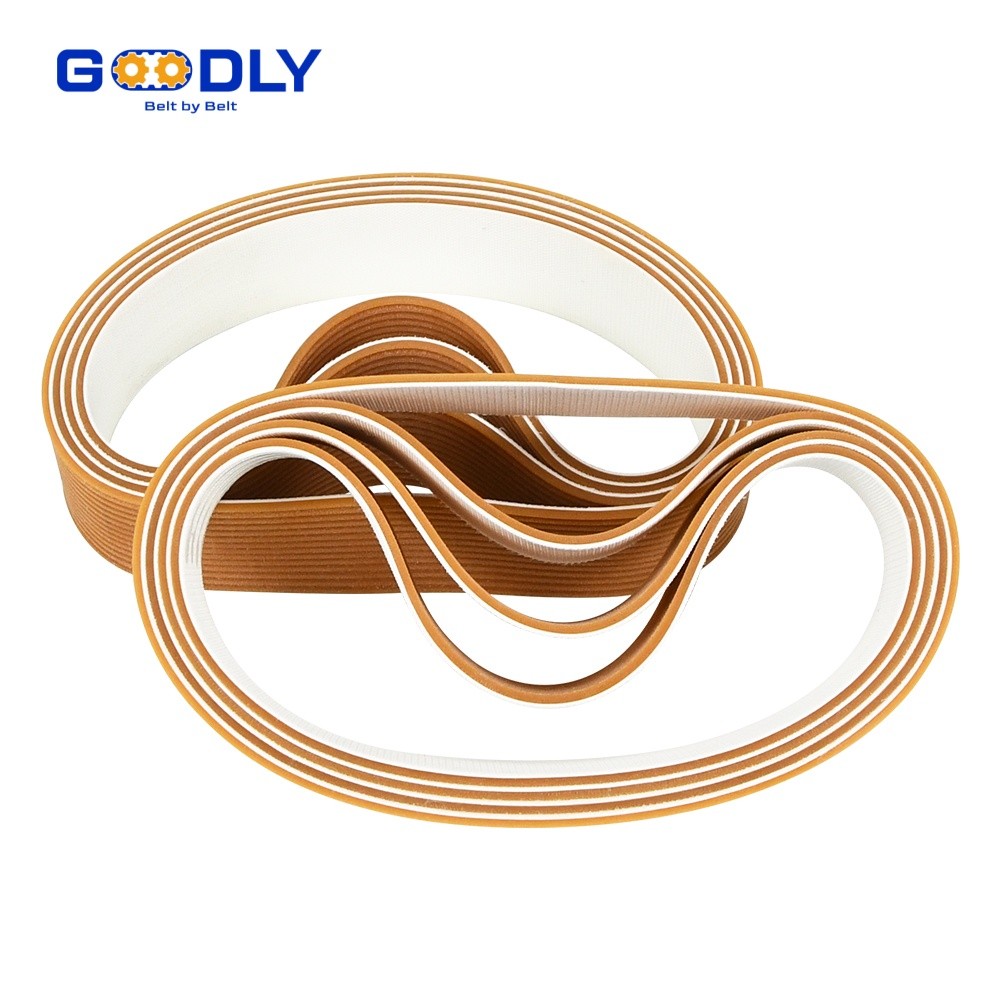
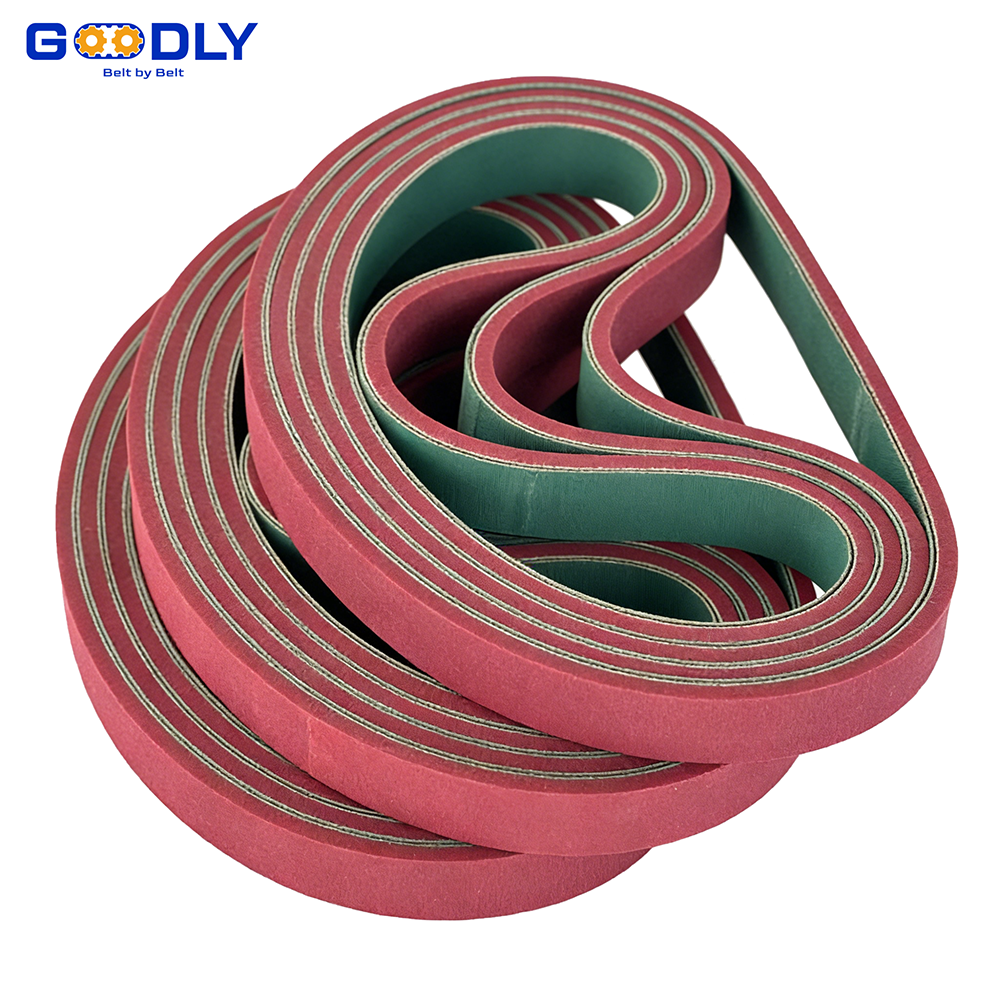
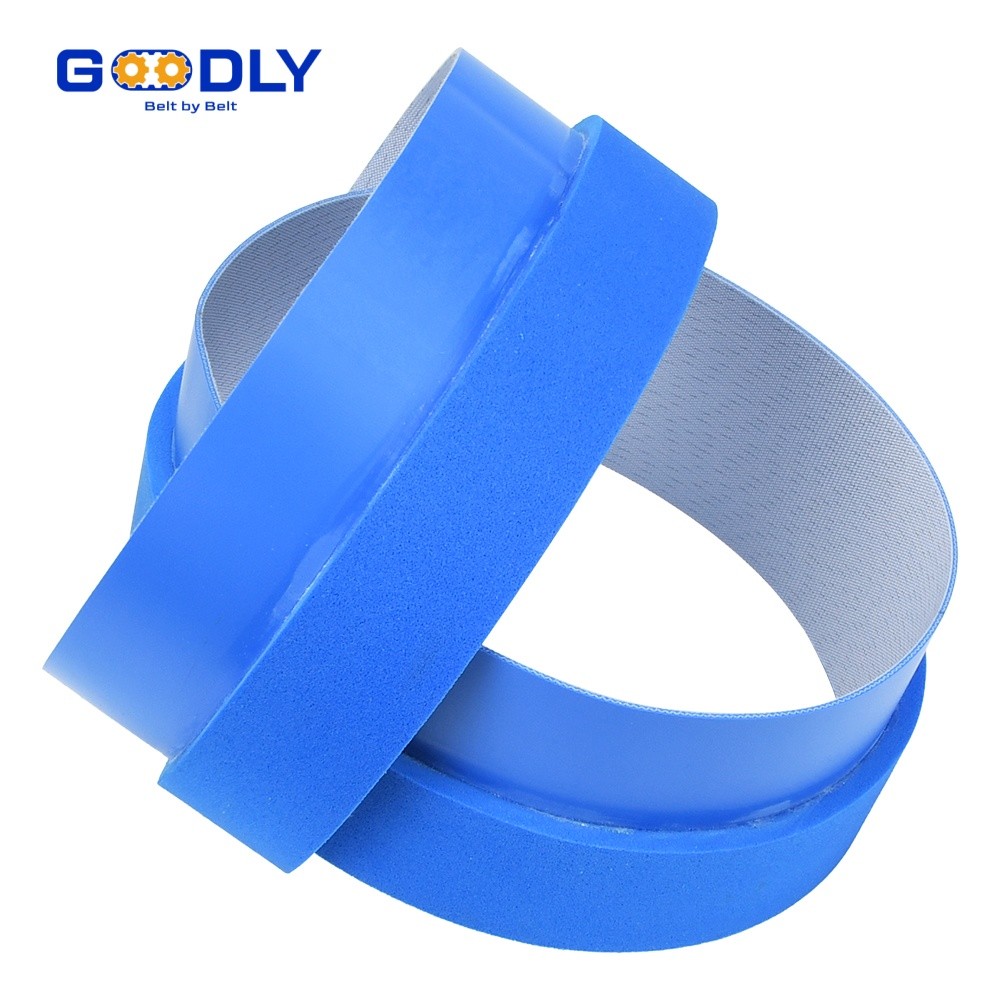
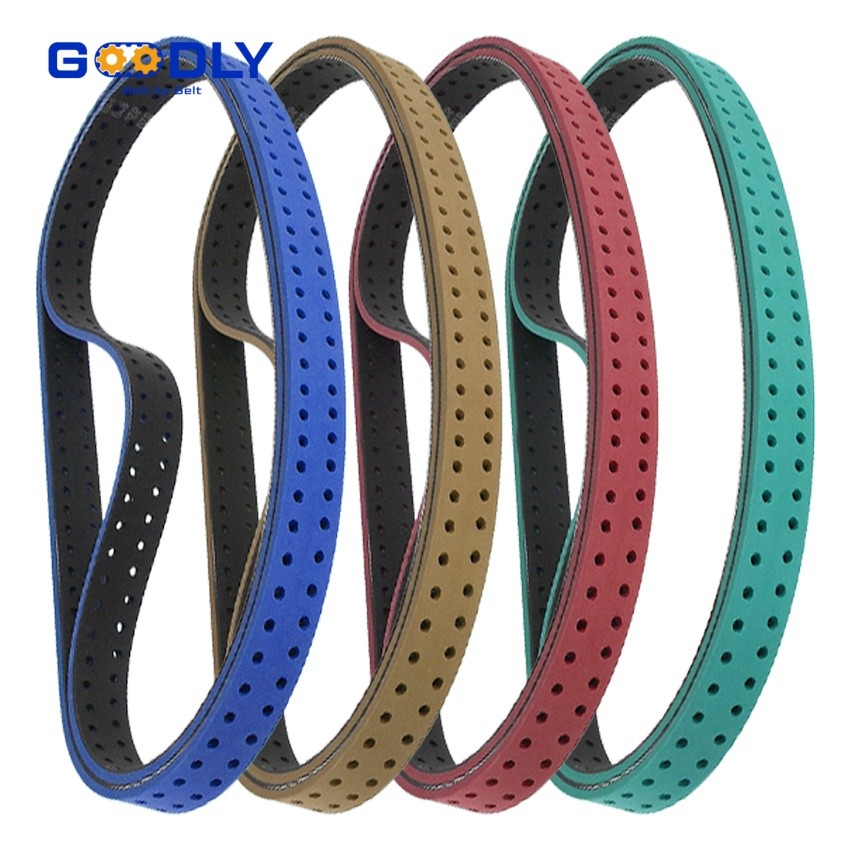
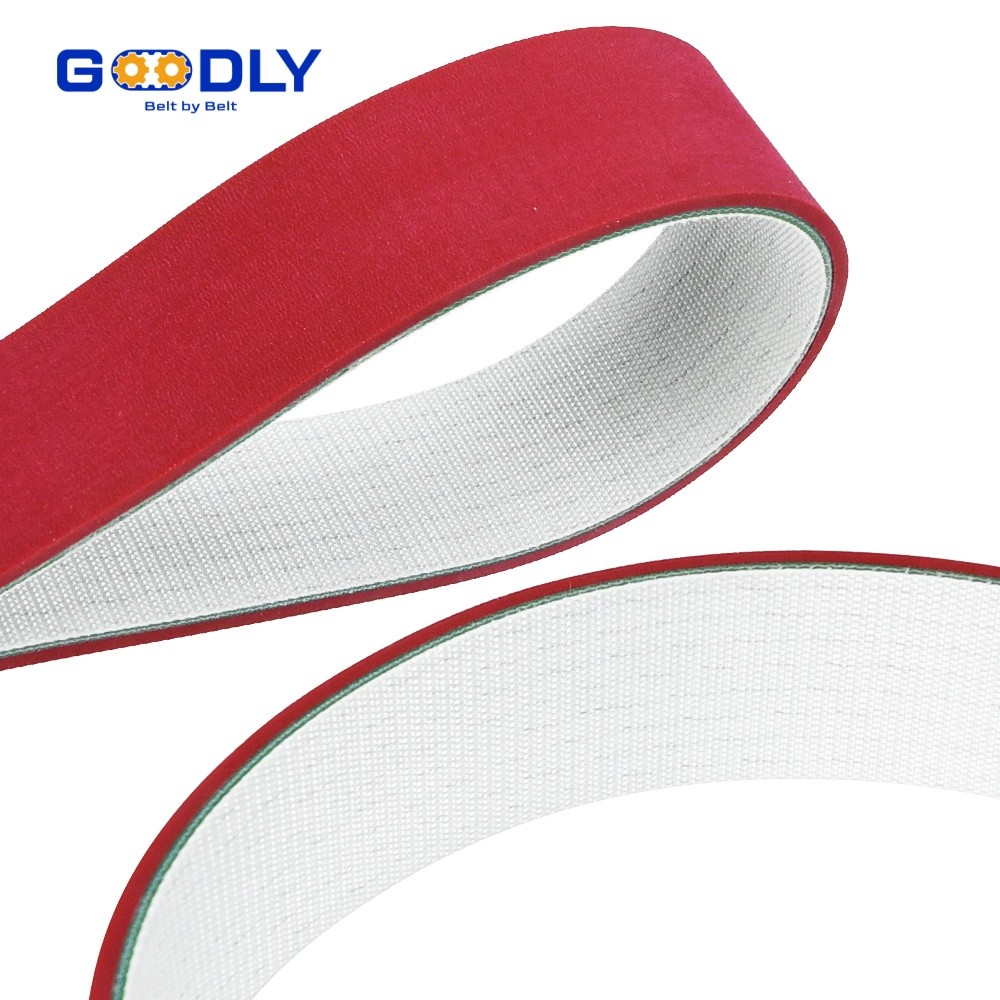
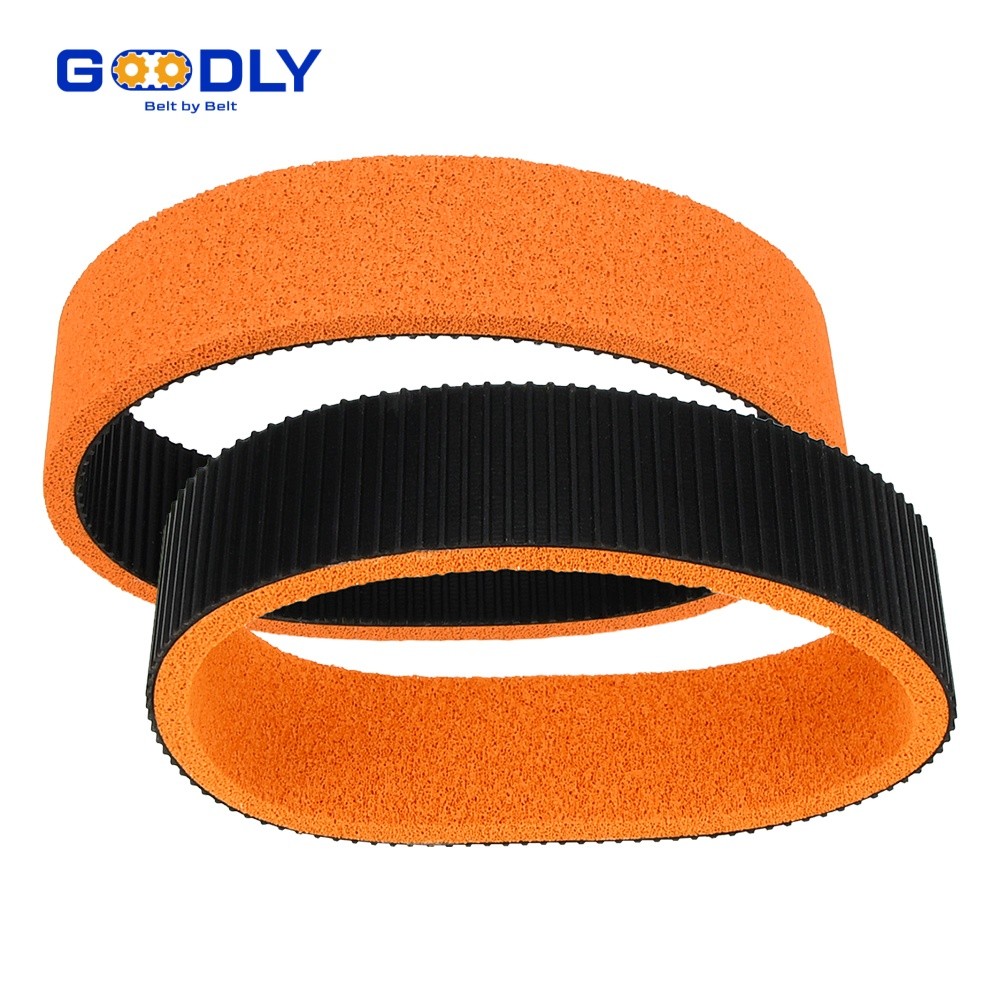
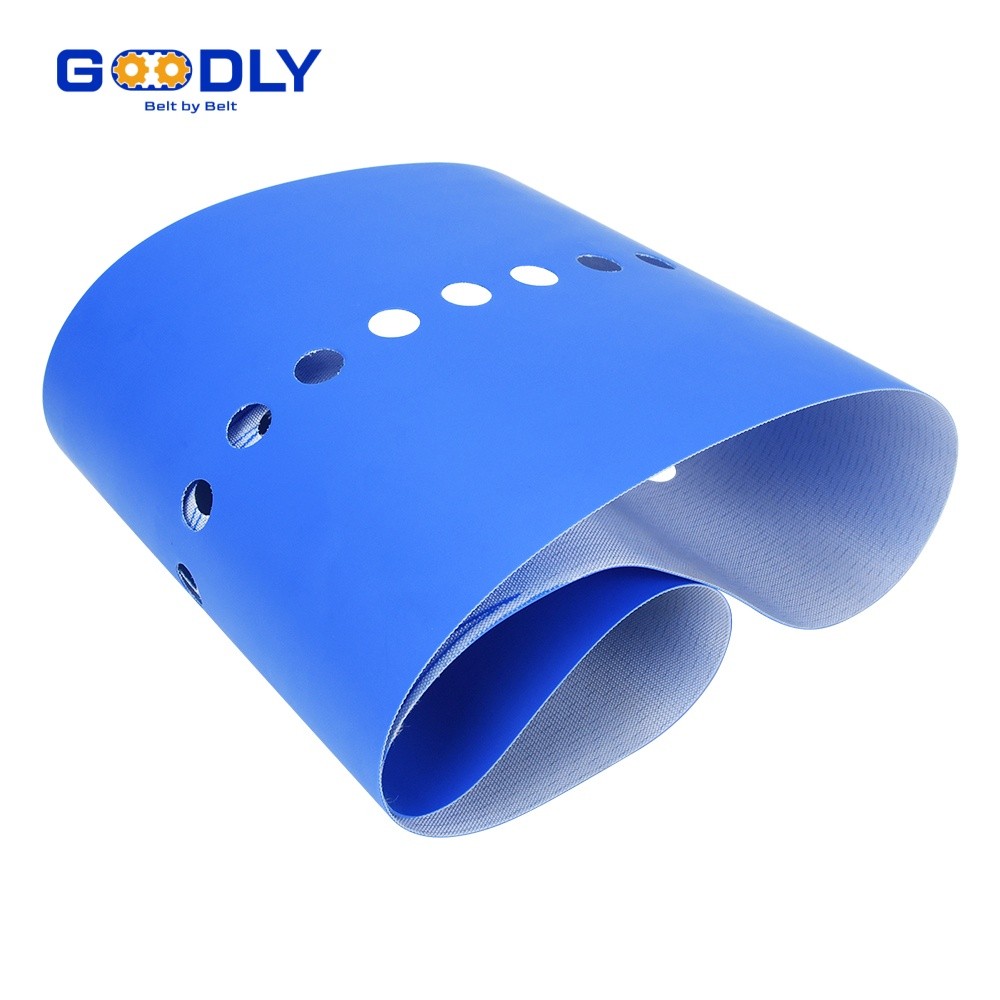
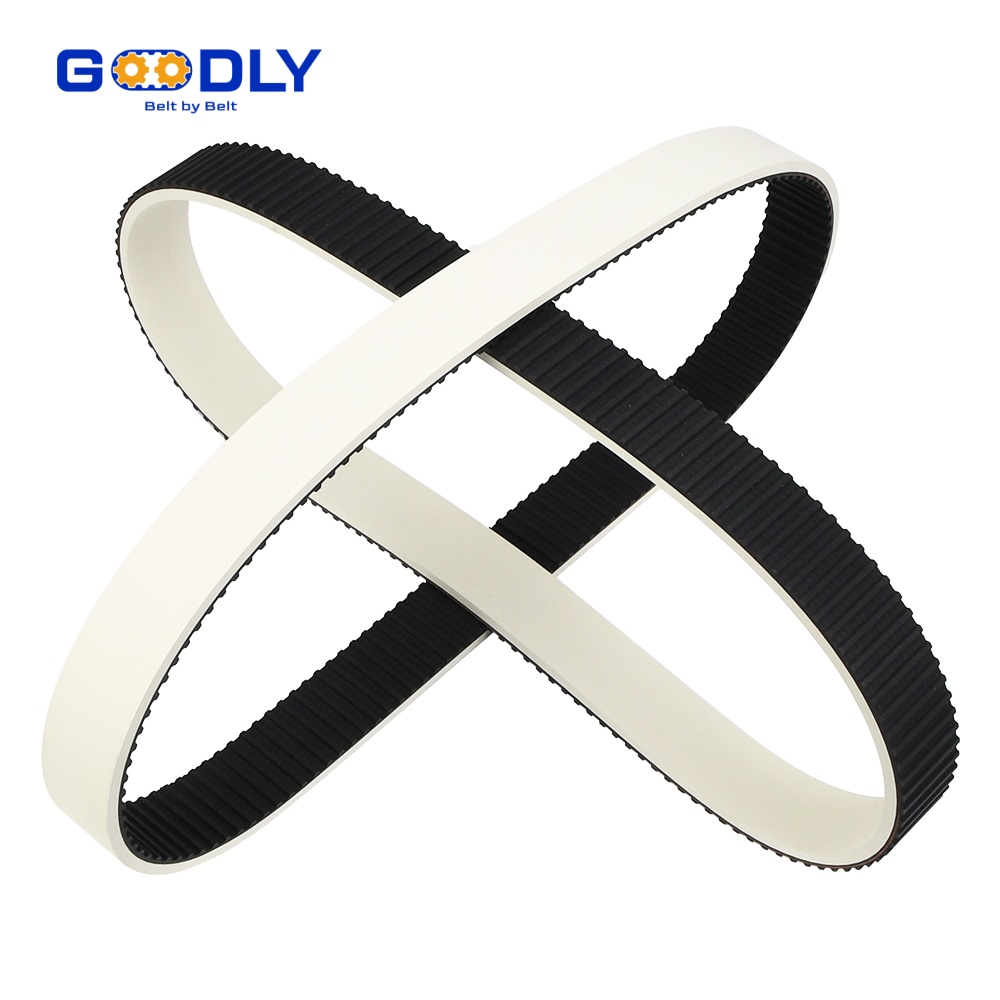
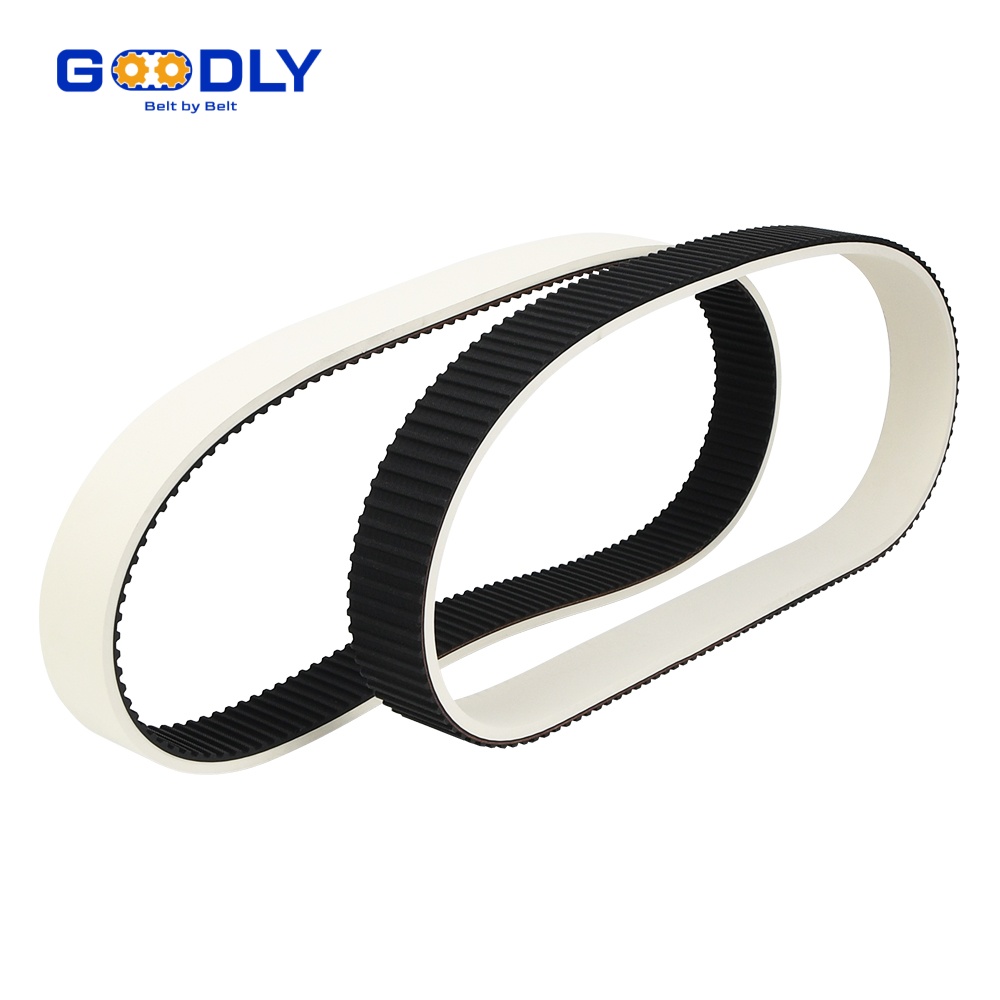
GOODLY is a timing belt manufacturer China-based OEMs and global buyers both rely on, running its own 20,000 m² plant in Guangzhou — compounding, ring molding, vulcanizing, grinding, machining and inspection under one roof — supplying industrial synchronous belts to machinery builders across packaging, food, pharma, logistics and printing. Because the whole process is in-house, customization is normal business rather than an exception: vulcanized rubber and silicone covers, sponge and rubber-coated backs, special machining, custom lengths and profiles. Every belt is inspected against the frozen specification before dispatch, and engineers — not sales staff — answer technical enquiries. Company background, equipment and certifications are on the about page, the product families are in the timing belt range, and the full production flow is photographed in the factory walkthrough.
To start, send the belt spec or a photo of the current belt, the machine type, and the annual quantity you expect. You will get a feasibility answer, a construction proposal and a quotation path — and if a sample makes sense, it typically ships within five working days. For buyers comparing several suppliers, the audit and sample steps in this guide apply to us exactly as to anyone else; we send measurement records with samples as standard practice.
Who are the top timing belt manufacturers in China?
There is no official league table, and the useful answer is a capability filter rather than a name list. The factories that matter to global buyers cluster in the Pearl River Delta, the Yangtze Delta and coastal Shandong/Hebei, and divide into large general belting groups, mid-size specialized timing belt plants, and application specialists in coated and machined belts. Judge candidates on in-house molding and grinding, measurement records, custom capability and engineering responsiveness — not on website claims. The title of best timing belt manufacturer China can offer is earned exactly there, and it is verifiable in one video call.
How do I verify a Chinese timing belt factory is a real factory?
Three checks work: registry screening of business scope and factory address; a live video audit of molding, grinding and inspection where you watch an operator measure a belt and record the result; and a sample order where the arrival measurement is compared against the drawing. A factory passes these casually; a trader struggles at the video audit stage, which is exactly where the test belongs.
What is the lead time for timing belts from China?
Standard profiles typically ship in one to two weeks, custom constructions in two to four, prototypes in three to five working days at responsive factories. Sea transit adds roughly four to six weeks to North America or Europe; air freight is measured in days. Urgent projects usually combine an air-shipped sample with a sea-shipped production batch.
Can Chinese factories produce custom or coated timing belts?
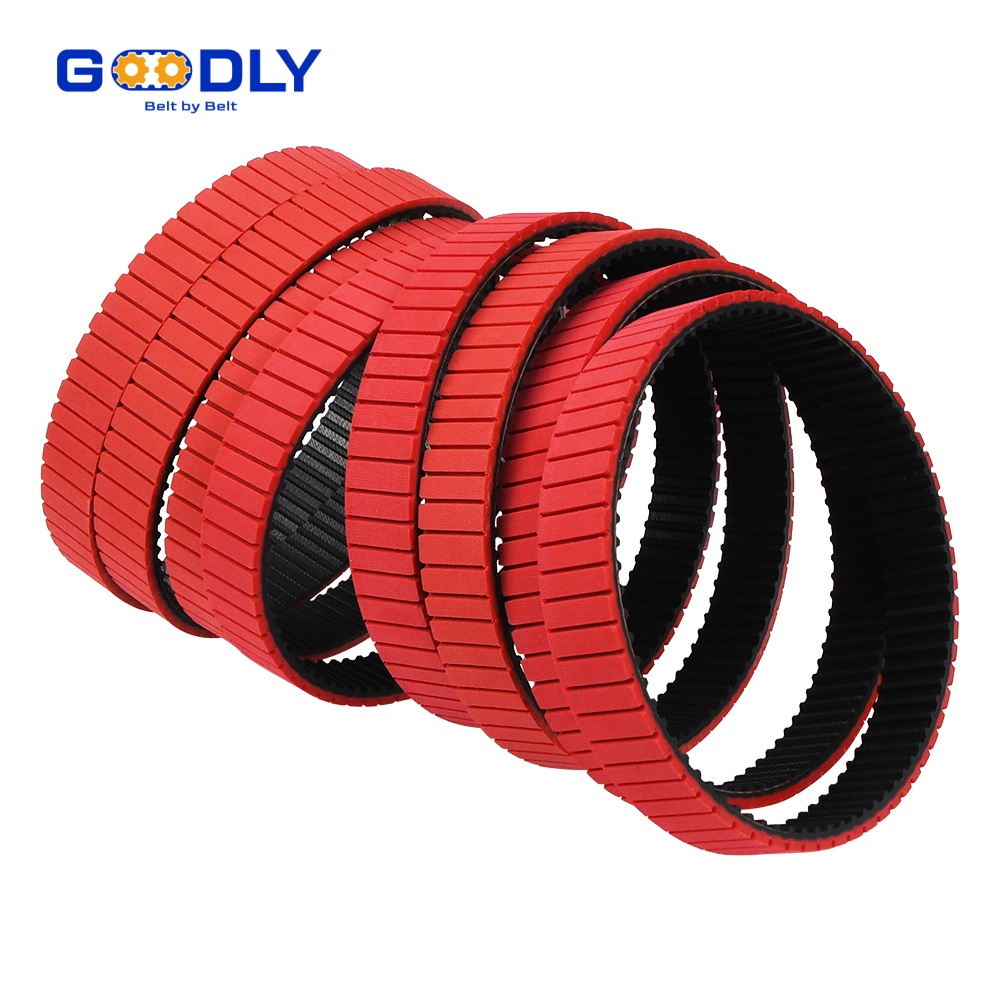
Yes — coating and machining are among the areas where specialized Chinese factories are strongest: vulcanized rubber and silicone covers, sponge and rubber-coated backs, grooves, cleats and profile modifications. The practical test is whether the proposal comes back from an engineer with construction details, not a re-sent catalogue page.
What payment terms are standard when buying from a Chinese belt factory?
T/T with a deposit and balance before shipment is standard; letters of credit appear on larger contracts. Put the frozen specification, inspection criteria and out-of-spec remedy into the contract itself. A factory confident in its QC accepts these terms easily — resistance to written inspection criteria is itself a signal.
Is it safe to buy timing belts wholesale from China?
When the verification sequence is followed — paper screen, audit, measured samples, trial order, then volume — wholesale sourcing from a qualified factory is routine and typically delivers a double-digit cost advantage with equal specification compliance. The failures happen when buyers skip the sequence and select on price alone, which this guide is designed to prevent.
Get Factory-Direct Timing Belt Quotes from GOODLY
Send your belt spec or a photo of the current belt, the machine type and expected quantity. Engineers will reply with a construction proposal, a quotation path and — where useful — a sample with measurement records, shipped from our own Guangzhou factory.
Get a Factory-Direct Quote