Timing Belts for Medical Devices and Diagnostic Equipment: Precision You Can Trust
Timing Belts for Medical Devices and Diagnostic Equipment: Precision You Can Trust
Miniature drives, low-noise lab duty and documented materials: how to specify a medical timing belt that passes both engineering review and audit
A diagnostic analyser or an infusion pump has no tolerance for the two failure modes an ordinary drive belt treats as normal: drift and noise. A medical timing belt is asked to position a syringe plunger to a fraction of a millimetre thousands of times a day, inside a machine that sits three metres from a sleeping patient. That is why timing belts for the medical industry are specified as precision components — fine pitch, low-creep cords, quiet running and fully documented materials — rather than selected from a general industrial catalogue. This guide walks through where belts run on medical and diagnostic equipment, which constructions suit each duty, and what documentation a medical-grade supplier must provide.
Timing Belts for the Medical Industry: Where Precision Motion Matters
Medical and diagnostic equipment concentrates its most demanding motion duties in a handful of subsystems, and each one selects its own belt construction. Treating them all with one catalogue belt is the fastest route to calibration drift and service calls.
| Subsystem | Motion duty | Dominant failure mode with a standard belt | Right construction |
|---|---|---|---|
| Syringe and infusion pumps | Precise plunger positioning across millions of strokes | Pitch elongation, dose drift over service life | Miniature precision timing belt, glass or aramid cord |
| In-vitro diagnostic analysers | Index reagent racks and optical heads in fixed phase | Tooth wear shifting sampling position | Fine-pitch GT2 or T2.5 belt, moulded teeth |
| Liquid handling and pipetting stations | Fast, repeatable X-Y carriage moves | Backlash from ratcheting under acceleration | Low-backlash precision timing belt, high-shear teeth |
| Centrifuges and lab sealing units | Speed and timing accuracy under vibration | Noise, resonance, belt wander | Low noise timing belt with stable cord tension |
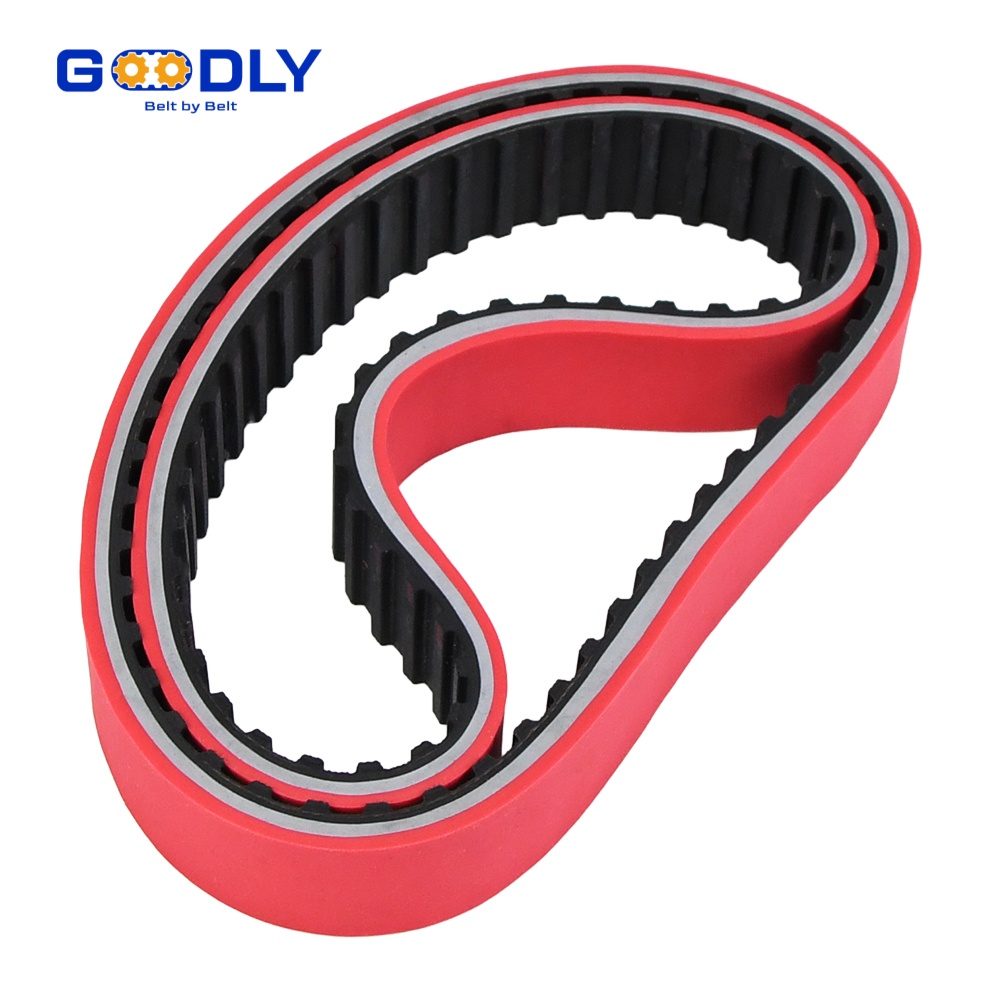
The common thread is that every duty converts belt geometry directly into dose volume, sample position or analysis timing. A precision timing belt with a moulded, glass-cord construction holds its pitch length for the life of the calibration interval; a stretched or worn belt silently moves every result. For engineers converting between profiles when sourcing a second supply, our tooth profile and pitch guide explains GT2, T and HTD compatibility in detail.
Low-Noise, Low-Particulate Timing Belts for Lab and Diagnostic Machines
Two environment constraints shape belt selection inside a laboratory or clinical instrument. The first is acoustic: analysers run for hours in shared labs and patient-adjacent rooms, and a whining belt drive is a product complaint. The second is particulate: rubber dust from a wearing belt becomes contamination on optics, pipette tips and sample surfaces. A low noise timing belt addresses both with the same construction choices:
- Fine pitch, rounded teeth. A GT2 timing belt engages pulleys gradually instead of with a tooth-slap impact, cutting the dominant high-frequency noise in compact drives.
- Low-friction tooth facings. Nylon or PU facings reduce mesh friction, which lowers both heat and the squeal that develops on dry runs.
- Low-shedding compounds. Polyurethane and sealed rubber bodies produce minimal dust — the same logic that governs cleanroom pharma lines, covered in our pharmaceutical belt guide.
- Stable cords. Glass and aramid cords hold span tension without re-tensioning visits, so the drive stays quiet across its whole service life.
Miniature Timing Belt Drives for Syringe Pumps and Liquid Handling
Miniature drives are where medical belt engineering gets hardest. Centre distances shrink to a few centimetres, pulley diameters drop below 10 mm, and the belt must flex around tight radii millions of times without cord fatigue. A miniature GT2 timing belt or T2.5 construction with a thin, flexible tension member solves the geometry; the specification that matters most is backlash — the free play between tooth and groove — because backlash at the pulley becomes dose error at the plunger. For OEM builds, order miniature belts as moulded endless loops rather than cut-and-spliced versions: a splice joint is a stiffness discontinuity that shows up as periodic error in every stroke.
Materials Compliance for Medical Device Belt Components
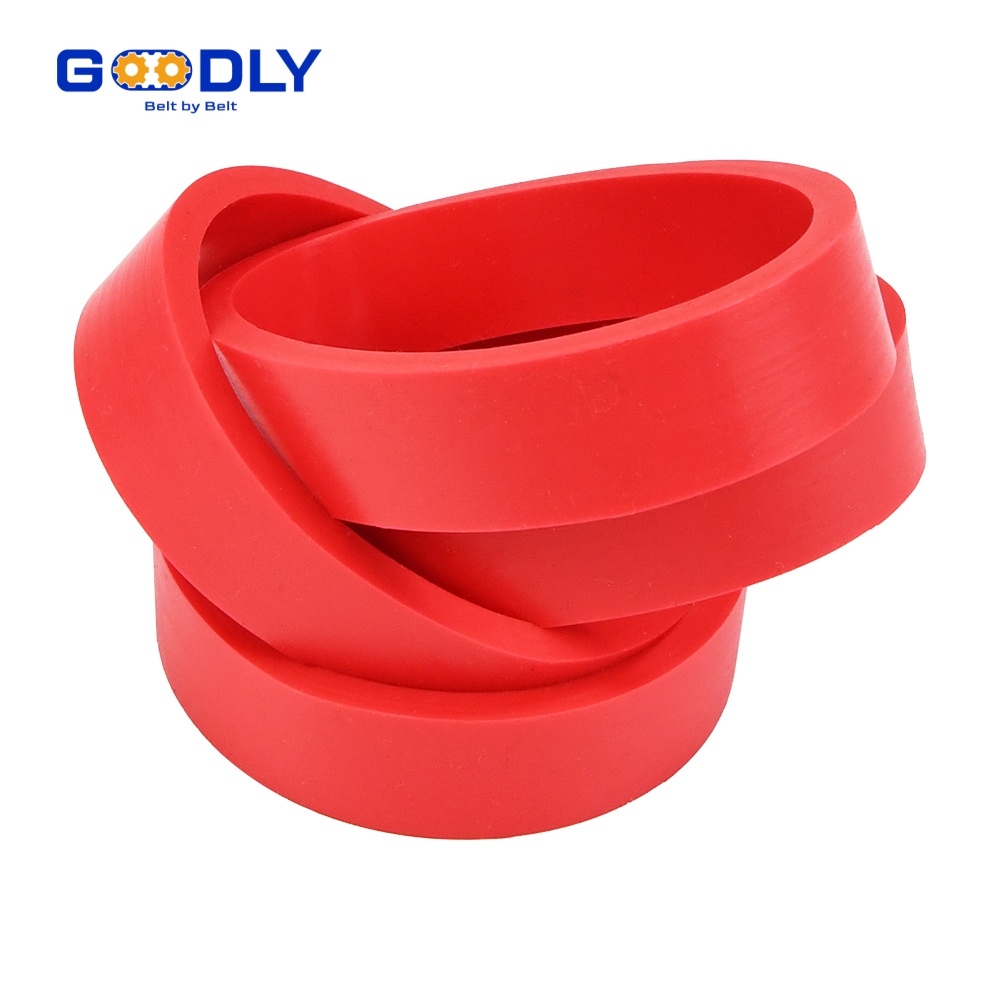
Medical device manufacturers carry the regulatory burden for every component inside their machine, and a timing belt is no exception. What separates a medical-grade supplier from an industrial one is not the belt itself but the paperwork behind it. A complete belt file should name every component of the finished product — compound, cord, tooth facing and adhesive — with declarations against the relevant frameworks such as FDA food-contact listings and EU 10/2011 where incidental contact is plausible, following the same documentation logic our food-grade compliance guide sets out for processing machinery.
- Material declaration for the finished belt, not just the raw polymer — auditors ask what is in the part they can touch.
- Biocompatibility-relevant information on compounds used near product or patient-adjacent zones, so your risk assessment has real data.
- Batch consistency records, because a validated device cannot absorb silent construction changes between service belts.
- RoHS and REACH statements covering cord and adhesive systems.
For machines that also run cleanroom or pharma-line duty — fill-finish, labelling, packaging of sterile product — antistatic and low-shedding requirements join the list, and the pharmaceutical transmission belt solution page covers those station-by-station options.
Prototyping Custom Timing Belts for Medical Equipment OEMs
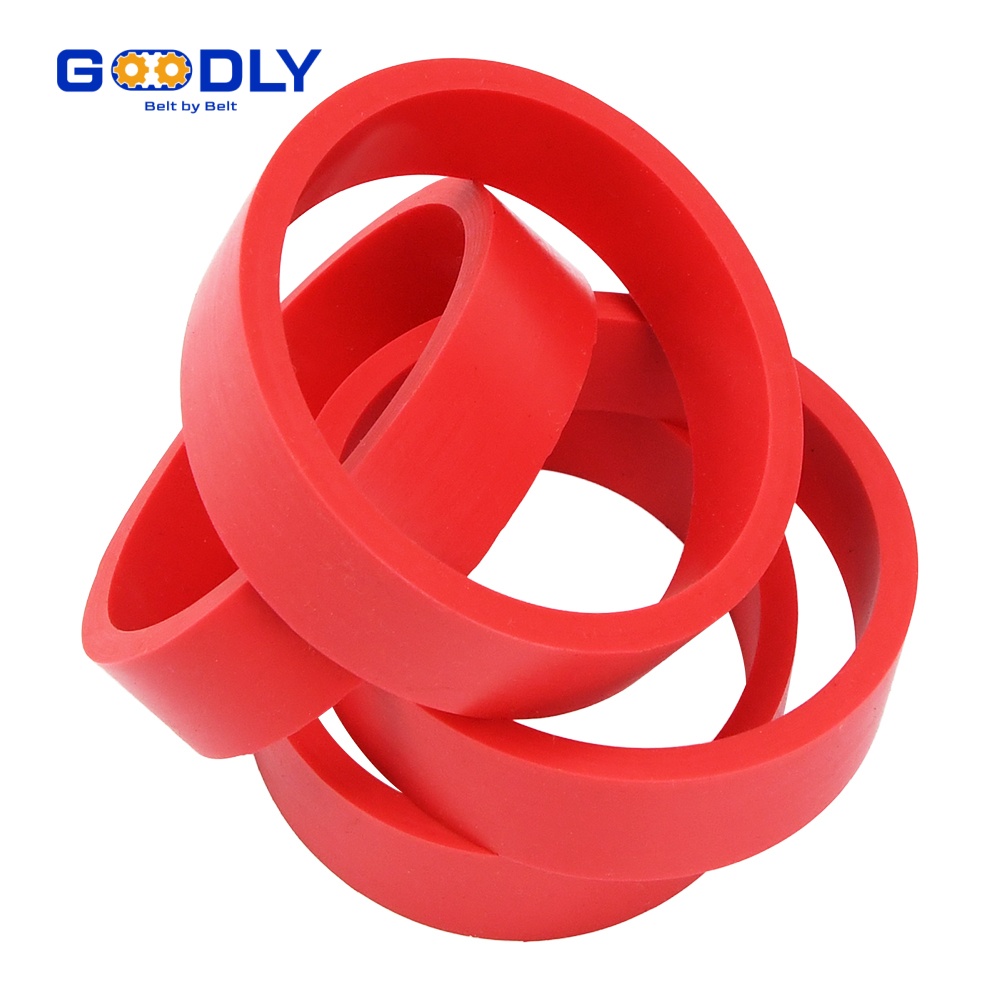
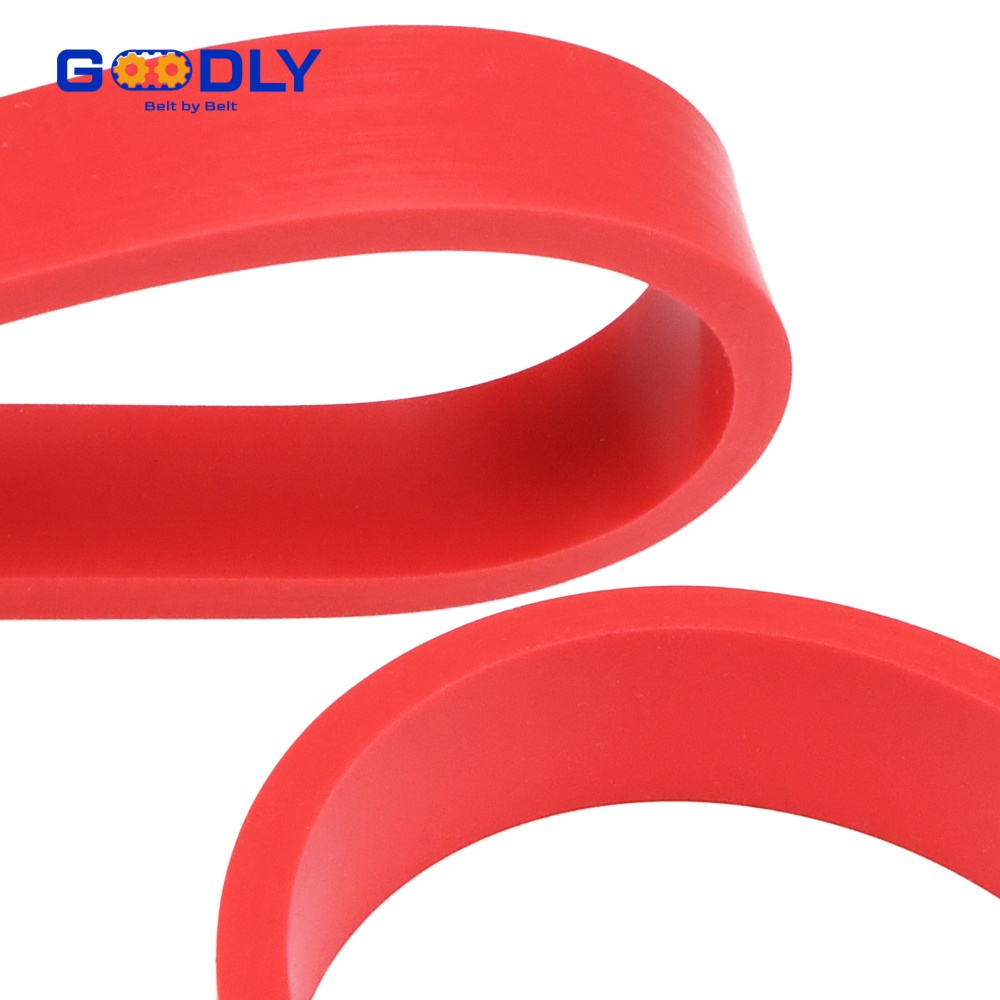
Medical equipment is built around compact enclosures and calibration procedures, which makes custom timing belts the norm rather than the exception: the drive fits the housing, not the catalogue. Prototyping is fast when the supplier controls the whole process in one plant. Four dimensions define a typical OEM enquiry:
- Pitch and profile. GT2, T2.5, T5 and HTD profiles in miniature widths, cut from moulded sleeves so short prototype runs carry no tooling cost.
- Cord selection. Glass for dimensional stability and calibration intervals, aramid where acceleration shocks the carriage.
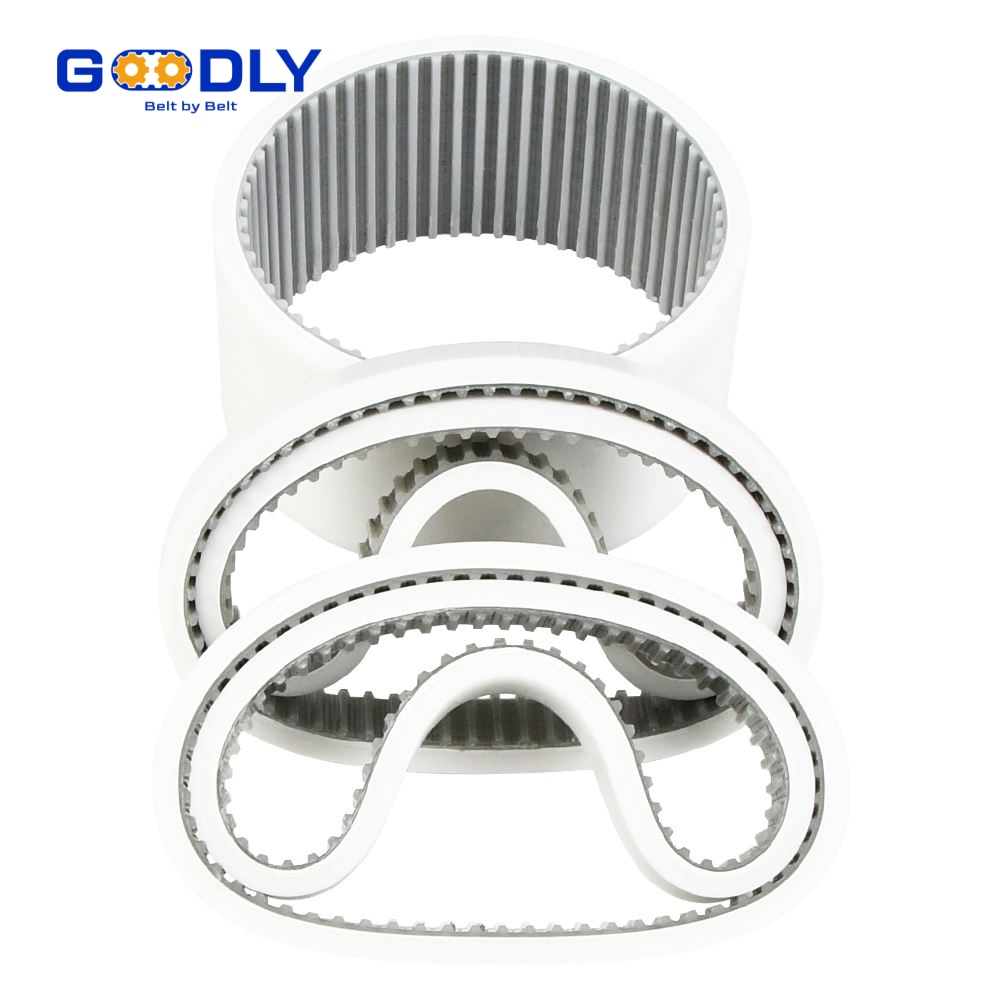
- Cover and colour. Low-shedding PU or silicone covers; white or detectable compounds where instrument hygiene programmes require them.
- Features. Cleats, guides and machined profiles bonded in-house, so one supplier owns the entire construction and its declaration.
The prototype loop that works: send the machine drawing or a worn belt, receive a confirmed specification within 48 hours, and trial belts in 3-5 working days. Reverse-engineering legacy analysers still in clinical service is routine work — profile, pitch length and cord are measured from the sample before anything is moulded.
Ask GOODLY About Medical-Grade Timing Belt Development
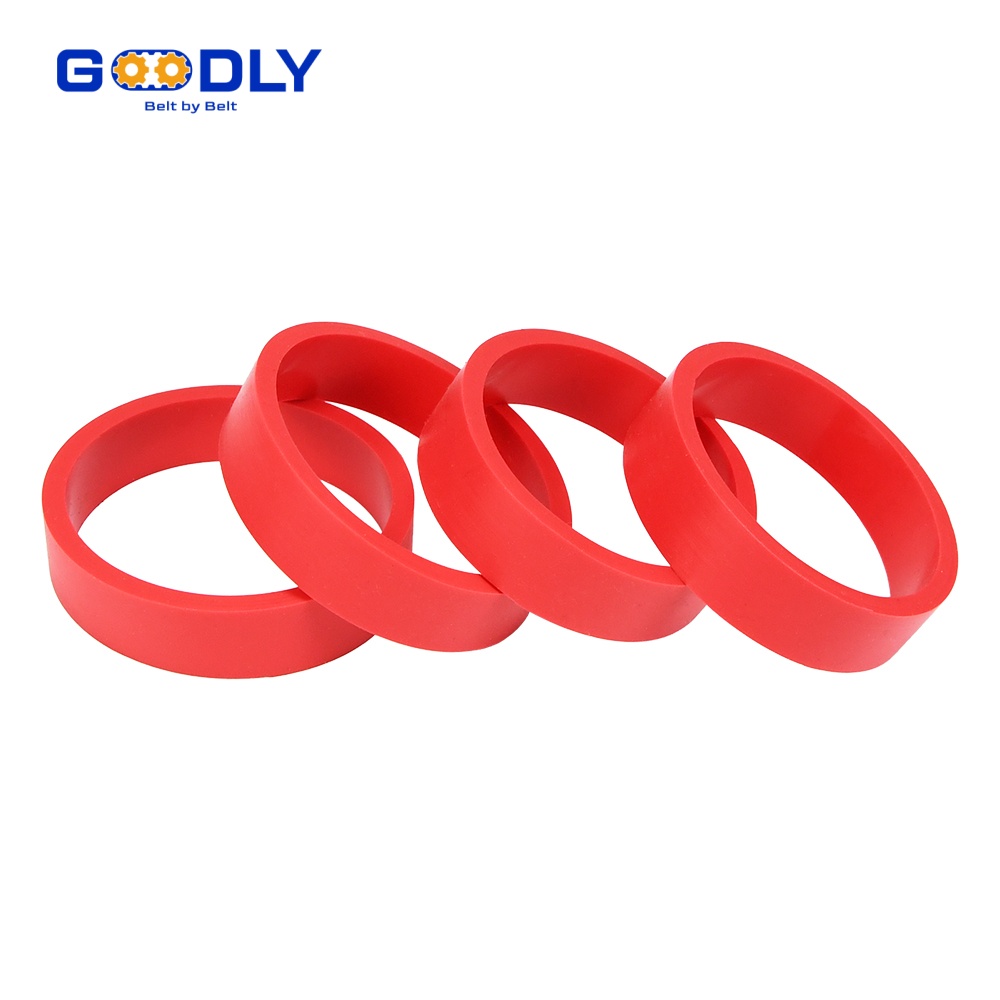
GOODLY manufactures timing belts for the medical industry as a documented product line: miniature precision loops with glass and aramid cords, low-noise and low-particulate constructions for lab environments, and batch-consistent builds that survive device validation. Moulding, coating and jointing happen in one plant, so a custom medical timing belt moves from drawing to sample in 3-5 working days — and the construction stays frozen across every following batch, which is what a design-history file actually requires. Learn more about our factory and quality system, then send us the drive drawing.
Miniature precision
GT2 and T2.5 fine-pitch loops for pumps, analysers and liquid handling, pitch-verified before packing.
Quiet by construction
Rounded teeth, low-friction facings and stable cords for patient-adjacent noise limits.
Documentation-ready
Finished-belt material declarations naming compound, cord and adhesive for device files.
Frozen batches
First-article approved constructions reproduced identically across service life.
What makes a timing belt suitable for medical devices rather than general industry?
Three things: geometry precision, so belt pitch error does not become dose or sampling error; environment fit, meaning low noise and low particulate generation; and documentation, with a material declaration for the finished belt. An industrial belt may physically fit the pulleys yet fail on all three.
Why is GT2 pitch so common in medical timing belt drives?
The 2 mm GT profile offers a large tooth count on small pulleys, gradual engagement that lowers noise, and good positioning accuracy in compact drives. It suits syringe pumps, analysers and liquid-handling carriages where space is tight and repeatability is the specification.
Can you supply low-noise timing belts for laboratory automation?
Yes. Low noise comes from fine pitch, rounded or configured teeth, low-friction tooth facings and stable cord tension rather than from a single magic compound. We select the combination against your duty cycle, speed and acoustic target.
How do we qualify a new belt supplier for a validated medical device?
Ask for the finished-belt material declaration, batch consistency records and a sample for your own dimensional and acoustic testing. GOODLY holds constructions frozen after first-article approval, so the belt you qualify is the belt you receive for the life of the device.
Specifying a Timing Belt for a Medical Device?
Send GOODLY the drive drawing, the duty cycle and the environment requirements. We confirm pitch, cord and compound within 48 hours, ship prototype belts in 3-5 days, and hold the construction frozen with full material documentation for your device file.
Request a Medical Belt Specification