
Can a PU timing belt run on backside idlers or reverse bends?
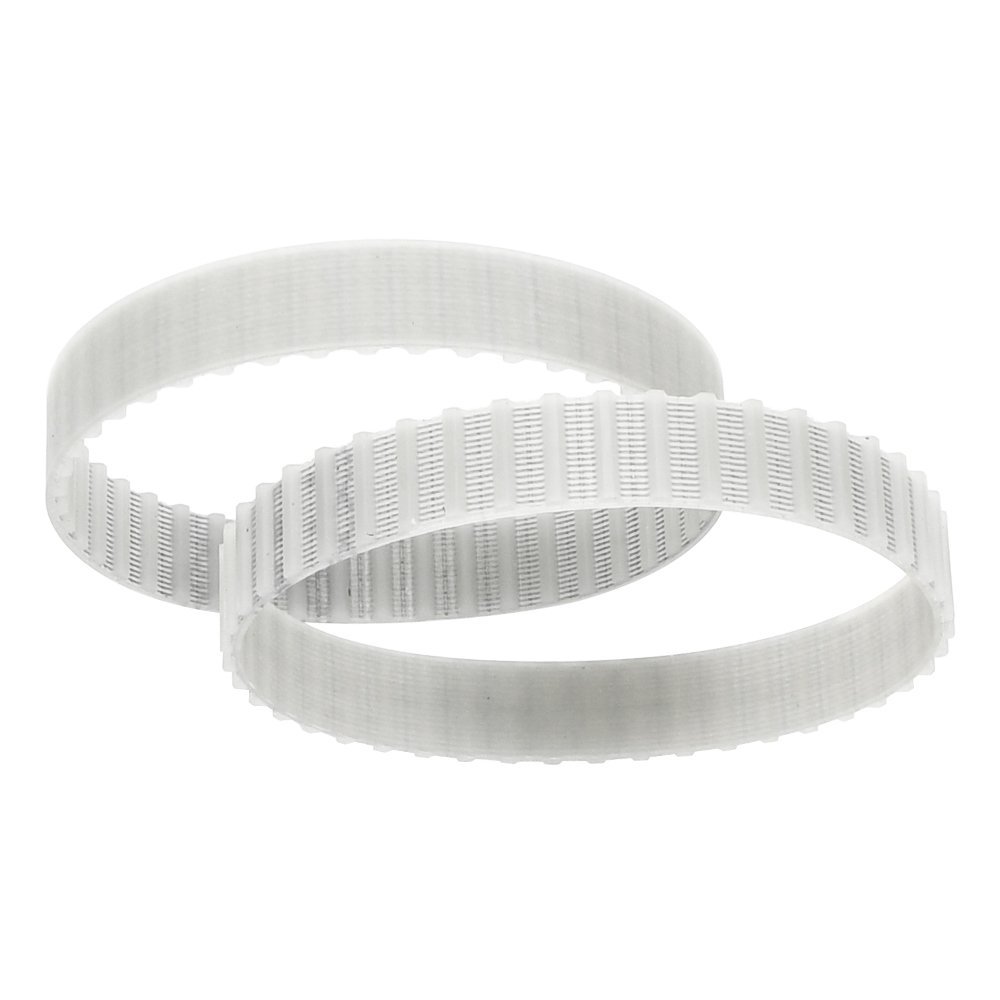
Direct answer: Yes, provided the layout respects two limits. PU timing belts can be back-bent over flat idlers, and S-wrap or reverse-bend layouts are used regularly on conveyors and tensioning stations. The back idler must be large enough for the belt section so the cords are not bent too sharply, and the back should be fabric-backed or ground, because bare PU running on a steel idler polishes, slips and wears.
Rules for running on the back
- Back idler diameter: keep it at roughly 1.5 to 2 times the minimum toothed pulley diameter for the same profile. Below that, the cords bend too sharply and the back can crack.
- Number of reverse bends: every back bend adds bending cycles. Two are common, four in one layout is a life-shortening design.
- Back surface: fabric backing protects the PU and gives a stable running surface. Bare PU on polished steel is the worst combination for grip and wear.
- Idler condition: the idler must spin freely. A seized or dragging idler will destroy a belt back within hours, not weeks.
- Tension: back-bend layouts need enough tension to keep teeth seated on the toothed pulleys. Check wrap on the drive pulley, not only on the idlers.
- Debris: reverse bends tend to collect product residue on the back. Keep scrapers and brushes off the tooth side and clean the back idlers.
Typical layouts and what to watch
| Layout | Back idler guidance | Main risk |
|---|---|---|
| Single back idler for take-up | At least 1.5 times the minimum toothed diameter | Idler seizing or running dry |
| S-wrap with two reverse bends | At least 2 times, with generous spacing | Too few teeth in mesh on the drive pulley |
| Back-side drive on a flat pulley | Crowned flat pulley, larger diameter | Friction drive needs more tension and slips when wet |
| Snub idler on the tooth side | Toothed idler only | A flat idler on the tooth side crushes the teeth |
When back-side running is the wrong choice
If the layout needs a back idler smaller than the minimum, if the environment is abrasive and the back cannot be cleaned, or if the drive already runs close to its torque limit, keep the belt on the tooth side and change the layout instead. A small change in idler position is usually cheaper than a belt that fails every few months.
Send your layout sketch
Email sales@goodlybelts.com a sketch with pulley and idler diameters, centre distances and which side runs on each idler, or use the enquiry form. We will confirm the back-bend diameters, backing choice and teeth in mesh for your drive.
Review my layout
Are you looking for a reliable manufacturer of conveyor belt products?
We can quickly provide customers with market analysis, technical support and customized services.- Name
- Phone
- *Title
- *Content