
How fast can a PU timing belt run, and what limits belt speed?
Direct answer: Most industrial PU timing belt drives run comfortably at belt speeds of about 20 to 40 m/s. Above roughly 50 m/s, heat build-up at the tooth flank, wear and noise all rise quickly and the drive needs a dedicated check rather than a catalogue pick. On a real machine the binding limit is usually the smallest pulley: its rpm, not the belt, decides whether the speed is achievable.
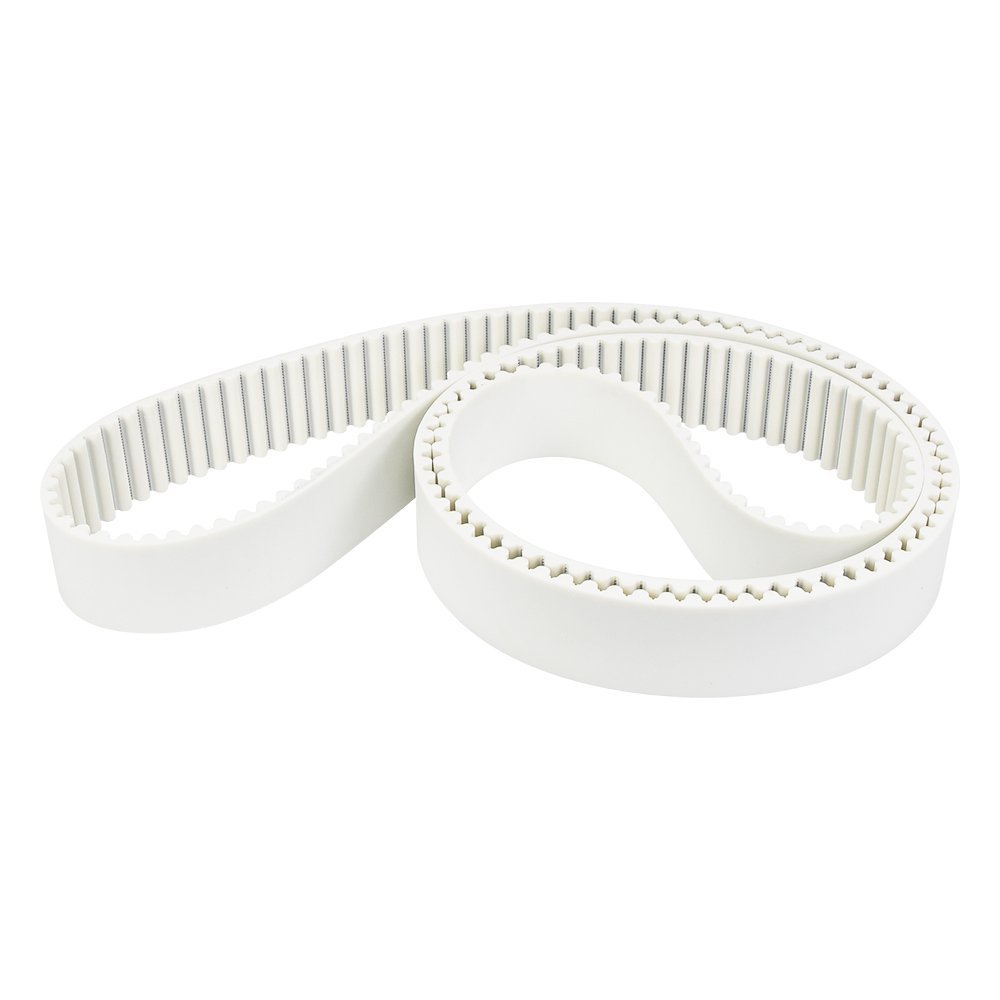
Convert belt speed to pulley rpm before you choose
Belt speed and pulley rpm are linked by the pitch diameter: v = pi x D x n / 60, where v is belt speed in m/s, D is pitch diameter in metres and n is rpm. Rearranged, the maximum rpm a pulley can turn at a given belt speed is n = 60 x v / (pi x D). Run the small pulley through this before you fix the profile.
| Pulley pitch diameter | Max rpm at 30 m/s | Max rpm at 40 m/s |
|---|---|---|
| 30 mm | about 19,100 | about 25,400 |
| 50 mm | about 11,450 | about 15,280 |
| 80 mm | about 7,160 | about 9,550 |
| 120 mm | about 4,770 | about 6,360 |
| 200 mm | about 2,860 | about 3,820 |
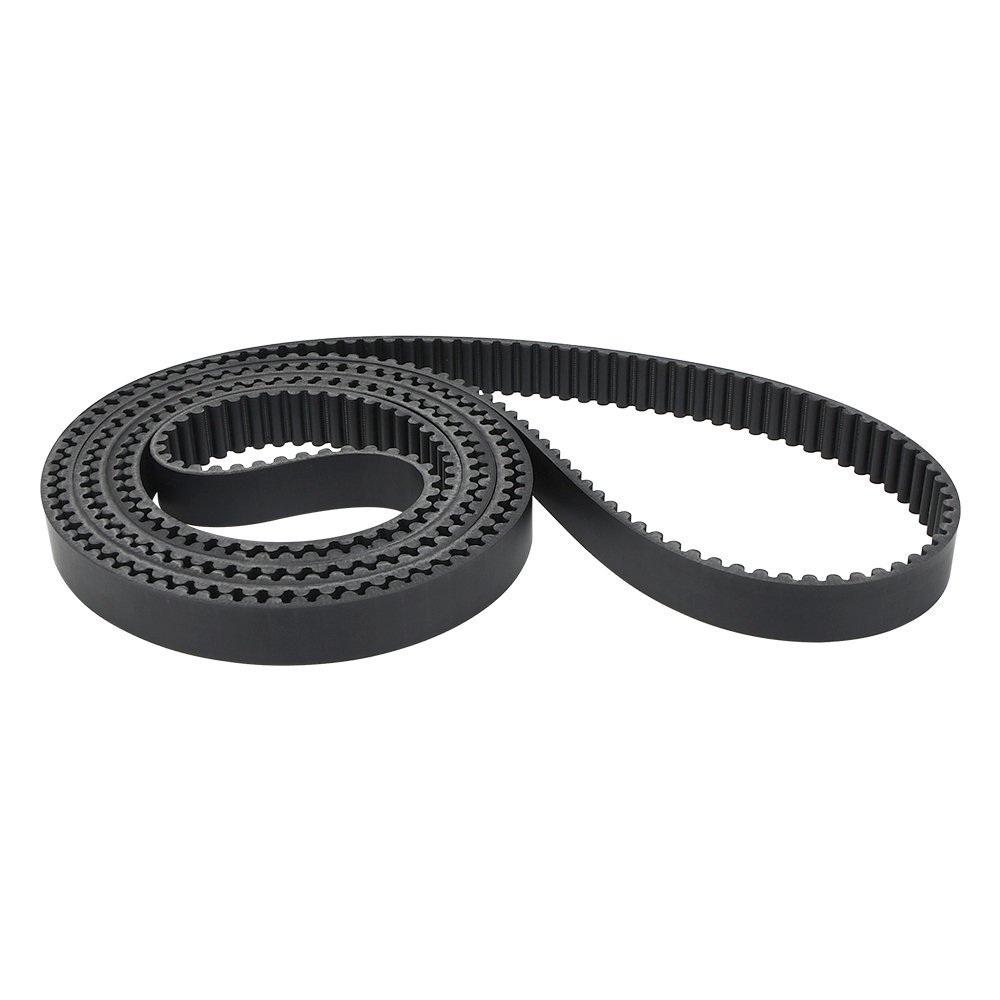
What actually limits speed
Tooth mesh rate
Teeth per second equals tooth count times rpm divided by 60. A small pulley meshing thousands of teeth per second heats the flank and dominates noise, even when the belt itself is fine.
Heat
PU softens as temperature rises. Continuous running with a hot tooth flank accelerates wear and can polish or glaze the tooth tips.
Load and width
Speed does not remove torque. Power rises with speed, so a narrow belt that works at low speed may be marginal at high speed with the same load.
Pulley quality
Above a few thousand rpm, pulley balance, bore runout and tooth concentricity matter more than the belt specification.
Symptoms of running beyond the limit
- Polished or glazed tooth flanks and a shiny, flattened tooth tip, usually worst on the small pulley.
- Black dust around the drive, which is PU wear rather than dirt from the product.
- Rising noise that changes with speed but not with load.
- Cord shadowing or a visible line along the belt back, a sign of repeated bending fatigue.
- Belt climb or ratcheting under starting torque even though tension is correct.
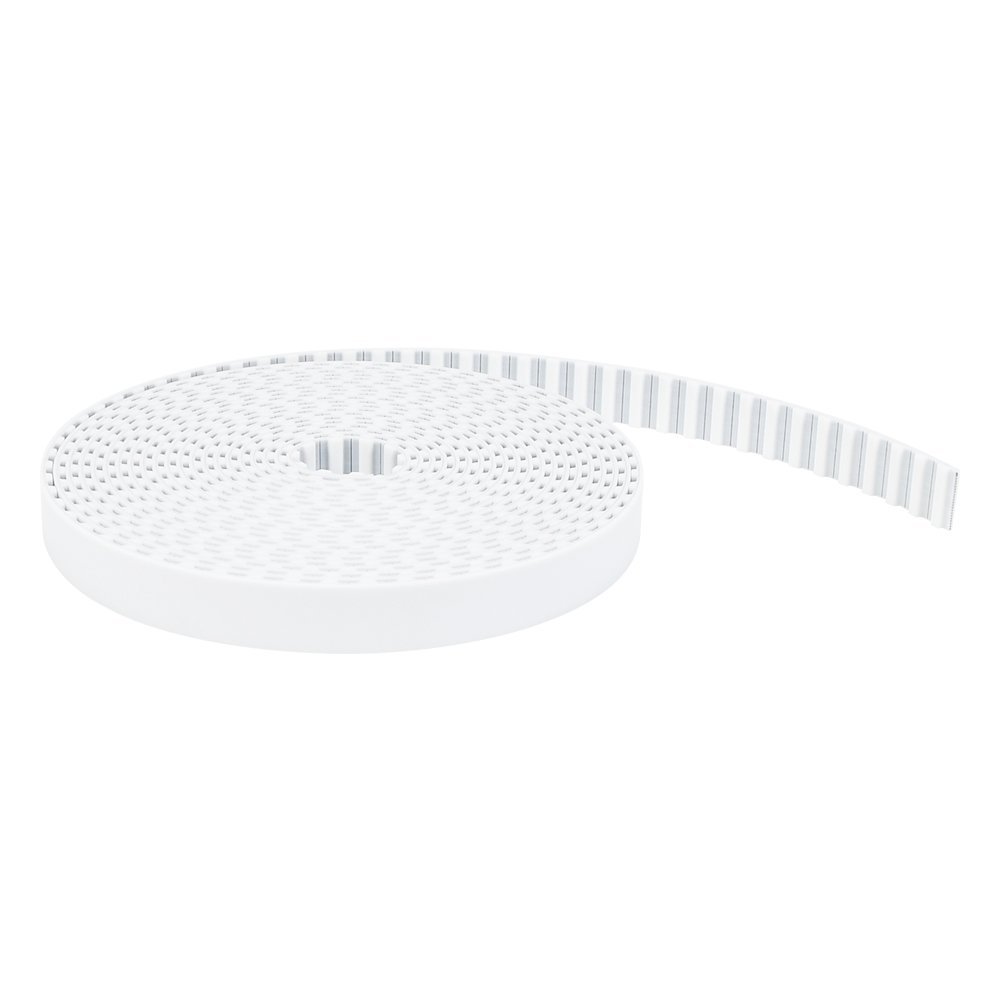
Check your drive speed before you order
Email sales@goodlybelts.com with pulley pitch diameters, motor rpm, belt width and load, or use the enquiry form. We will calculate belt speed and tooth load and tell you whether your profile is suitable or a wider belt is needed.
Check my belt speed
Are you looking for a reliable manufacturer of conveyor belt products?
We can quickly provide customers with market analysis, technical support and customized services.- Name
- Phone
- *Title
- *Content