Timing Belt vs Serpentine Belt vs V-Belt: Which Drive Belt Fits Your Machine?
Serpentine Belt vs Timing Belt: What Is the Difference in Function and Design?
Two families, two jobs — synchronous tooth drive versus friction belt drive
The question serpentine belt vs timing belt comes up whenever a machine is being specified, converted or repaired. The short answer: a timing belt drives in positive engagement and keeps shafts synchronised, while a serpentine or V-belt drives by friction and tolerates shock but allows a little slip. Choosing the wrong family shows up as missed registration, overheating or premature wear. This guide compares all three drive belt types on function, slip, noise, speed and total cost, and gives you a selection flow you can apply to any machine.
Timing Belt vs Serpentine Belt: Synchronous vs Friction Power Transmission
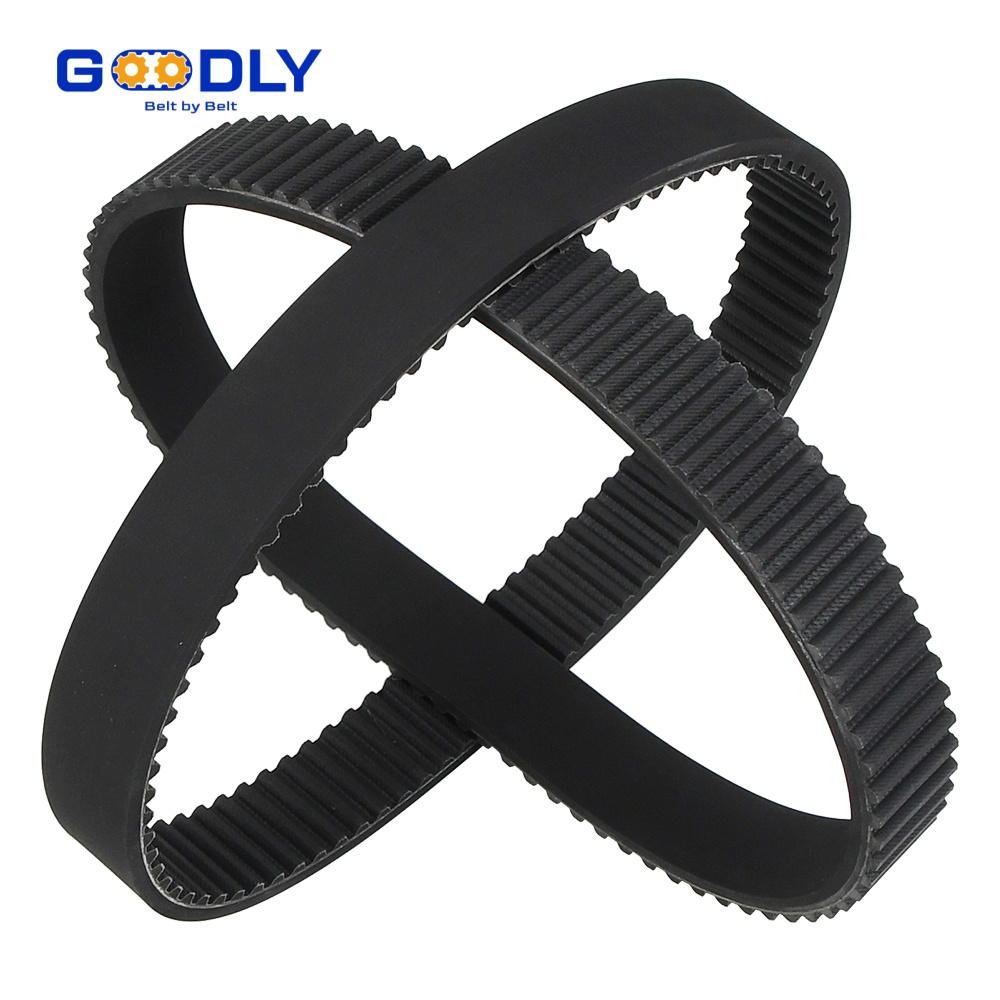
A timing belt vs serpentine belt comparison really starts with the transmission principle. The timing belt’s teeth drop into matching pulley grooves, so torque passes through the tooth flanks — there is no relative motion and therefore no slip. A serpentine belt (also called a poly-V or ribbed belt) wraps a smooth pulley under tension and transmits torque through friction, which is why it can quietly absorb shock loads but cannot guarantee position.
| Criterion | Timing belt (synchronous) | Serpentine / poly-V belt | V-belt |
|---|---|---|---|
| Transmission | Positive tooth mesh | Multi-rib friction | Wedge friction |
| Slip | None | Slight under overload | Possible |
| Position accuracy | Excellent | Poor | Poor |
| Typical use | Indexing, synchronisation | Accessory / fan drives | Legacy machinery |
| Pre-tension | Low | High | High |
If your machine feeds a web at a fixed registration, fills a pouch on a fixed cycle or moves a tool to a defined coordinate, only the synchronous option will repeat. Our what is a timing belt guide covers the mechanics in more depth.
V-Belt vs Timing Belt: When Friction Drives Beat Positive Engagement
A V-belt vs timing belt decision usually goes the other way. V-belts are cheap, forgiving and easy to replace, and their slight slip protects an overloaded motor from shock. On slow, non-critical, high-shock drives — an old fan, a mixer, a pump — a friction belt is often the sensible engineering choice. The moment the process needs a ratio that must not drift, the friction belt becomes a liability.
Poly V-Belt vs Timing Belt in High-Speed Industrial Equipment
A poly V-belt vs timing belt comparison is common on high-speed packaging and textile lines. Poly-V belts run smoothly at high surface speeds and handle small pulley diameters well, but they still slip and stretch. Where a machine runs at high speed and needs phase accuracy — a rotary knife, a print cylinder or a servo-driven axis — the timing belt remains the safer specification. A related question is toothed belt vs timing belt: in practice they are the same product, and ‘toothed’ is simply the descriptive name for the synchronised design.
How to Choose the Right Drive Belt Type for Your Application
Work through these four questions in order. Most selection mistakes happen because engineers start from the belt they already stock rather than from the task.
1. Does the process need synchronisation? If two shafts must stay locked together, or position must repeat, choose a synchronous timing belt and stop here.
2. What are the loads and duty cycle? Sum the peak torque and add a service factor for shock. This sets belt pitch and width.
3. What is the environment? Heat, oil, washdown and food contact drive the material choice: neoprene, rubber, PU or silicone.
4. What is the speed and pulley size? High speed with small pulleys favours fine-pitch poly chains or a well-specified fine-pitch timing belt.
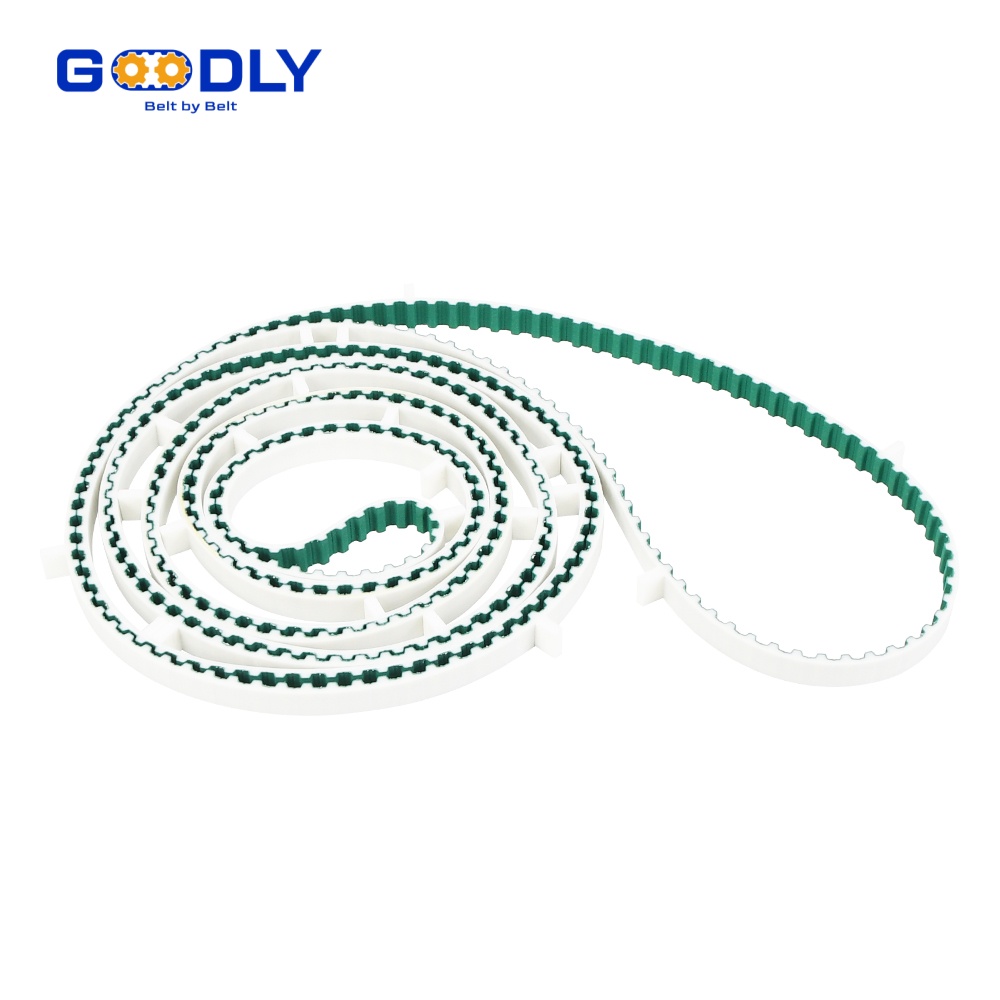
GOODLY stocks and manufactures timing belts, PU timing belts and coated variants, and can cross-reference an existing friction-belt drive to a synchronous solution. For the underlying selection theory, see how to choose the right industrial belt.
Service Life, Noise and Total Cost of Ownership
Friction belts are cheaper at the counter but can cost more over a machine’s life: they need higher pre-tension, which loads bearings, and they drift as they wear, which means re-tensioning and re-registration. A synchronous timing belt runs at low tension, holds its phase for the whole service interval and usually needs no re-tensioning — so the total cost of ownership often favours the timing belt even when its ticket price is higher.
Is a timing belt the same as a toothed belt?
Yes. ‘Toothed belt’ and ‘synchronous belt’ are descriptive names for the same positive-drive product; ‘timing belt’ is the common industrial term.
Can I replace a V-belt with a timing belt directly?
Not usually. The pulleys differ, so a conversion means new pulleys and re-checking centre distances. GOODLY can quote belt and pulley together.
Which is quieter, timing or serpentine belt?
A correctly tensioned timing belt runs very quietly because the teeth engage smoothly; noise usually points to misalignment or over-tensioning.
Not sure which drive belt your machine needs?
Send us a photo of the drive, the pulley diameters and the duty cycle. GOODLY engineers will recommend the right belt family, pitch and material and confirm a ±0.05 mm tolerance on the drawing.
Get a Free Drive Belt RecommendationComparison reflects typical industrial practice; actual selection depends on load, speed and environment. GOODLY supplies timing belts to ISO 5296 geometry with full dimensional verification.