Timing Belt Materials Explained: Rubber, Neoprene, Silicone, PU and Reinforcements
What Timing Belt Materials Are Available and How Do They Compare?
Elastomer, reinforcement and coating — the three choices behind every belt
Choosing timing belt materials is really three decisions in sequence: which elastomer, which tension member, and which surface finish. The elastomer sets temperature, chemical and food-contact limits; the tension member sets strength and stretch; the finish sets grip and wear. Get the sequence right and the belt lasts its full interval; get it wrong and it fails early in a way that is easy to misdiagnose. This guide compares the common materials and ends with a checklist design engineers can use directly.
What Timing Belt Materials Are Available and How Do They Compare?
The five elastomers below cover the vast majority of industrial timing belts. There is no single best material — each wins on a different axis, and the machine’s dominant condition should drive the choice.
| Material | Temp. range | Oil | Abrasion | Food contact | Typical use |
|---|---|---|---|---|---|
| Natural rubber | to ~80°C | Poor | Excellent | Grade-dep. | Grip, shock, general drives |
| Neoprene (CR) | to ~100°C | Good | Good | Grade-dep. | Industrial all-rounder |
| EPDM | to ~120°C | Poor | Good | Grade-dep. | Outdoor, wet, ozone |
| Silicone (VMQ) | to ~200°C | Moderate | Moderate | Excellent | Heat, food, pharma |
| Polyurethane (PU) | to ~80°C | Very good | Excellent | Grade-dep. | Precision, conveying |
For the fundamentals that apply to every material, start with what is a timing belt.
Rubber and Neoprene Timing Belts: Workhorse Compounds for Industrial Drives
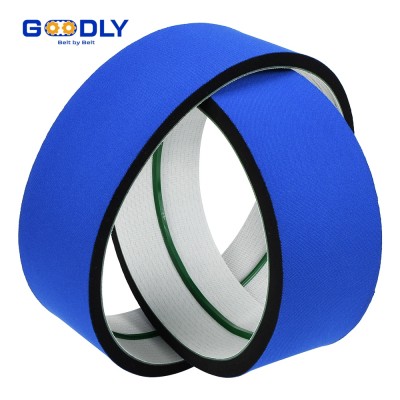
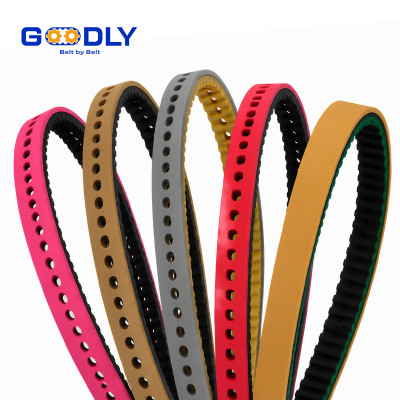
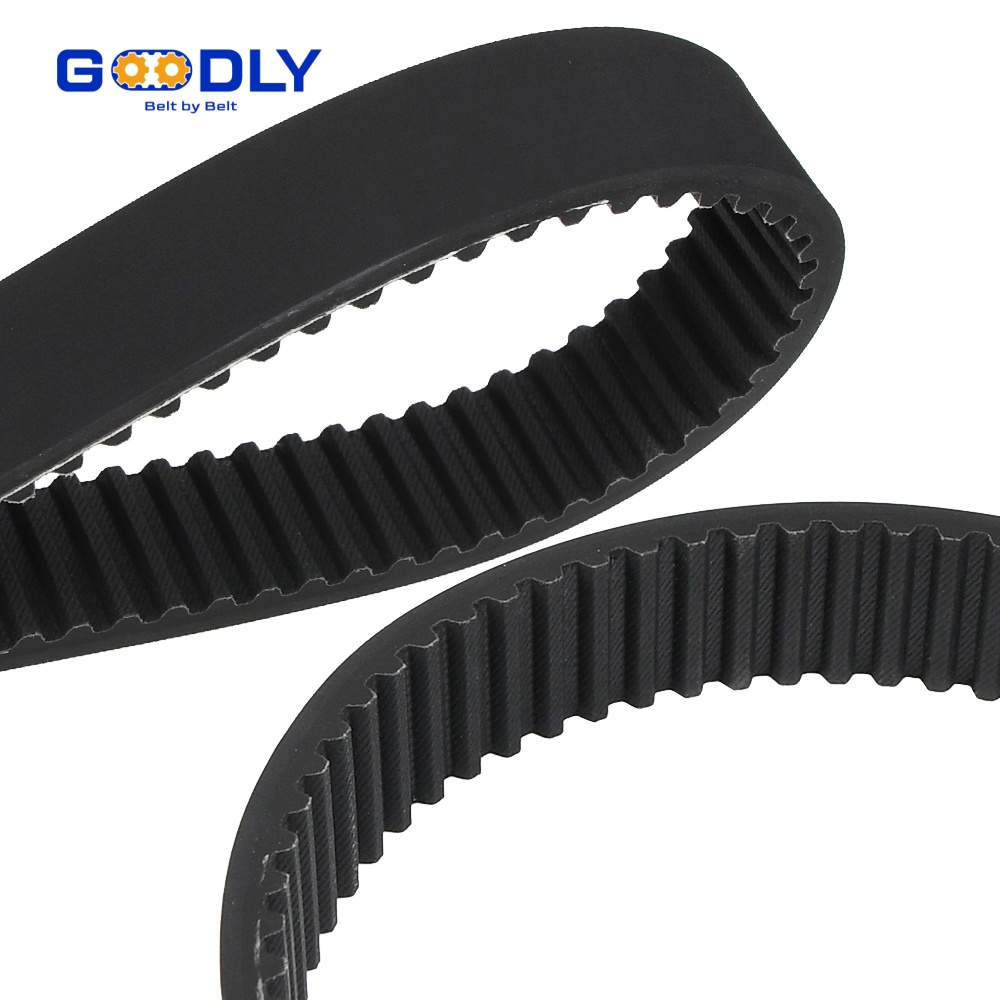
Rubber and neoprene cover the largest share of industrial drives because they balance strength, cost and life. A neoprene timing belt resists oil moderately, tolerates heat to about 100°C and wears predictably — the safe default for packaging, printing and general machinery. Where grip and shock absorption matter more than oil resistance, a natural rubber grade is used; where weather and water dominate, EPDM replaces neoprene.
Kevlar Timing Belt and Kevlar-Reinforced Construction for High Loads
A kevlar timing belt uses aramid cord instead of glass, and the difference is dramatic: much higher tensile strength with far less stretch, so a drive can carry heavy or shock loads without losing pitch. Kevlar-reinforced construction is the standard answer for crushers, mixers, heavy conveyors and any drive with a high service factor. On lighter drives the premium is hard to justify — glass cord is sufficient and cheaper.
Silicone Timing Belts: When Heat Release and Hygiene Drive the Choice
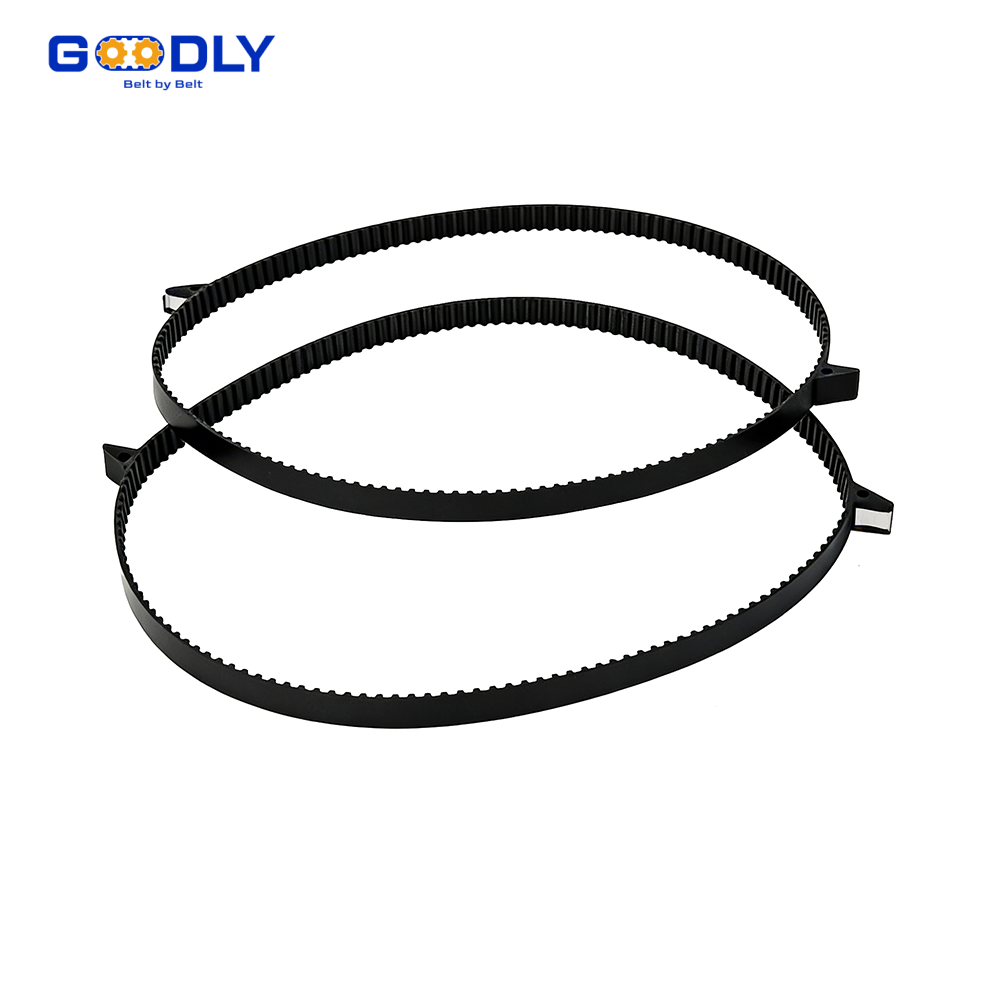
A silicone timing belt is chosen when temperature or hygiene dominates. Silicone holds properties to around 200°C, releases sticky product cleanly and can be compounded for direct food contact, which makes it standard on sealing, wrapping, bakery and pharmaceutical machinery. Its weakness is tear strength, so it is not the material for heavy, abrasive drives — but where heat and cleanliness rule, nothing else performs as well. See the full Silicone Timing Belt range.
Polyurethane Timing Belts and Carbon Fiber Timing Belts: Precision and Life
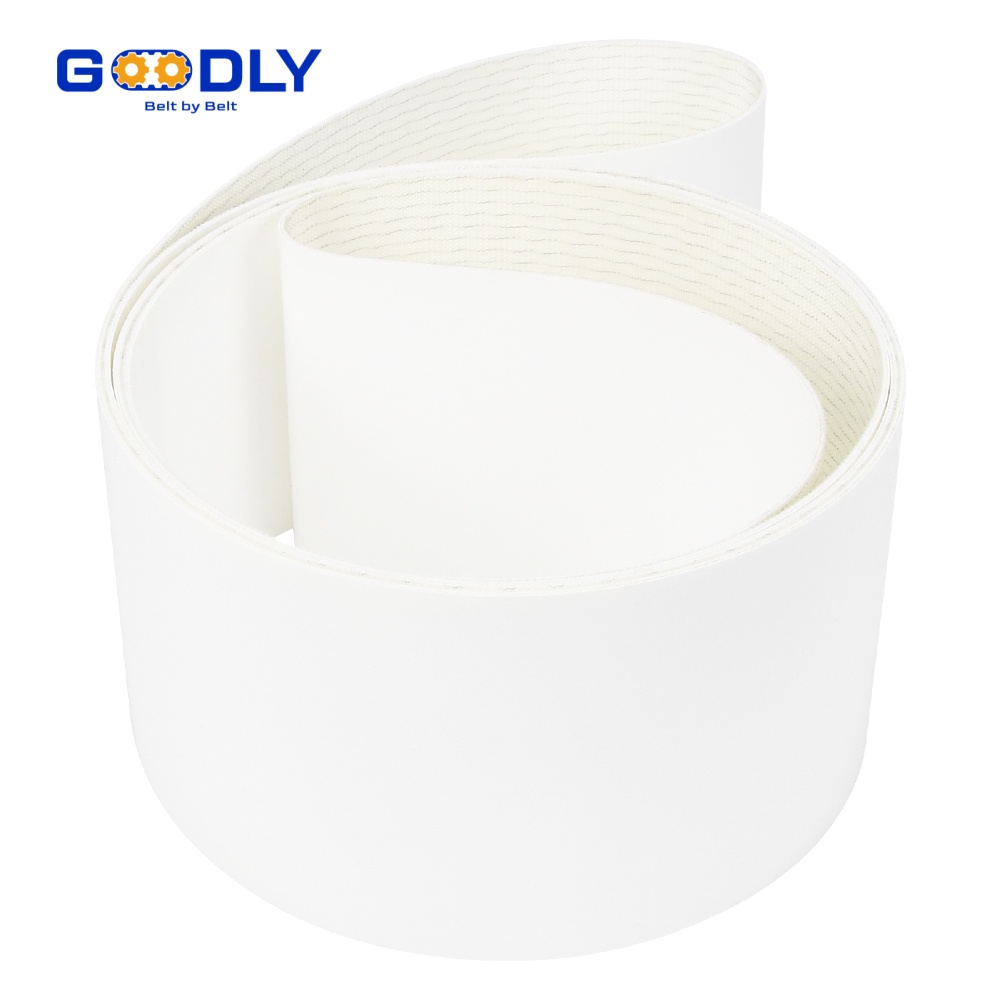
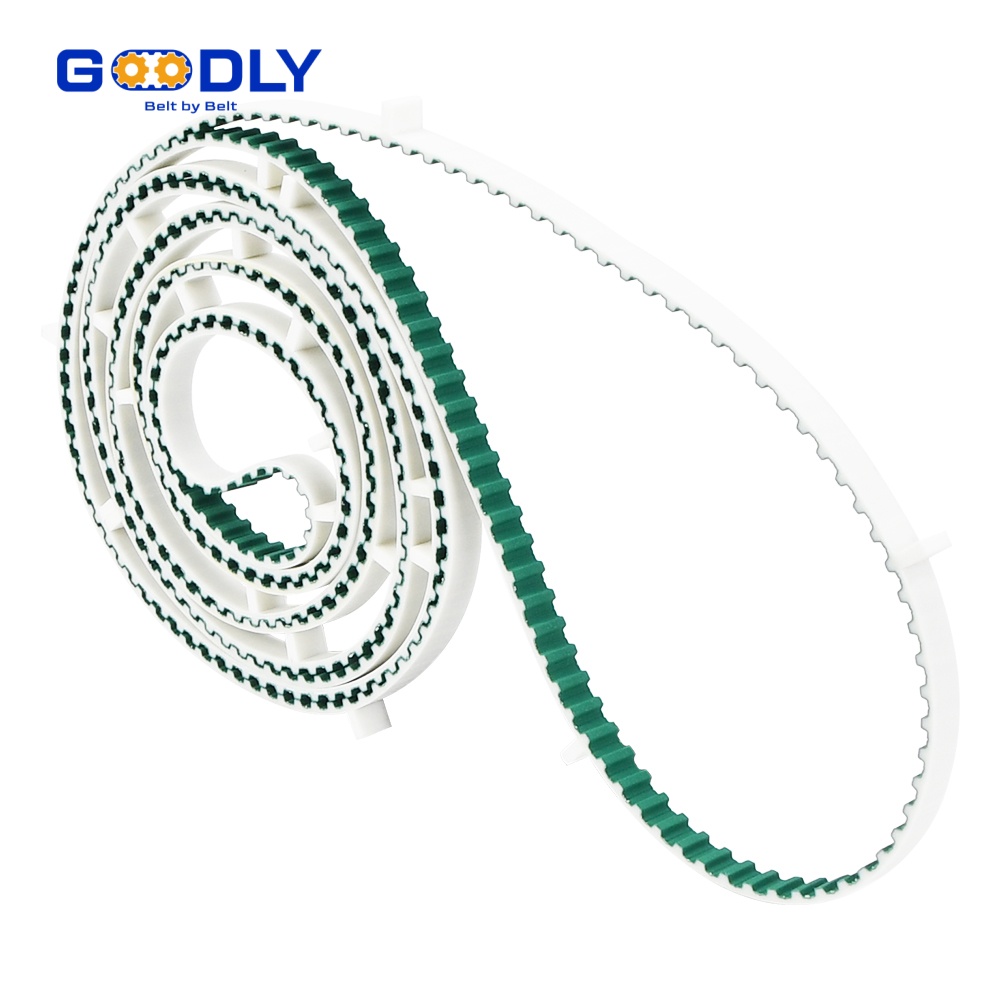
Polyurethane timing belts are cast, giving a stable pitch, excellent abrasion resistance and good oil and chemical resistance, which is why they dominate precision automation, 3D printers and CNC machines. Add a carbon fiber timing belts tension member and you get very high stiffness with very low stretch — useful where a long span must stay precise. A nylon facing, meanwhile, is sometimes specified to reduce friction and noise on a controlled surface. Together, PU plus a stiff cord is the go-to recipe for high-accuracy motion.
Compare PU applications in our article on uses of polyurethane timing belts.
Timing Belt Material Selection Checklist for Design Engineers
Work top-down. Each answer narrows the material before the next question is asked.
- Temperature: peak and continuous — above 100°C points to silicone.
- Chemicals: oil, solvents or washdown — oil favours PU or neoprene.
- Product contact: if yes, choose a food-contact grade (silicone or compliant rubber).
- Load and shock: heavy or shock-loaded → aramid (Kevlar) cord.
- Precision: tight registration → PU with a stiff cord.
- Speed and pulley size: high speed with small pulleys → fine pitch.
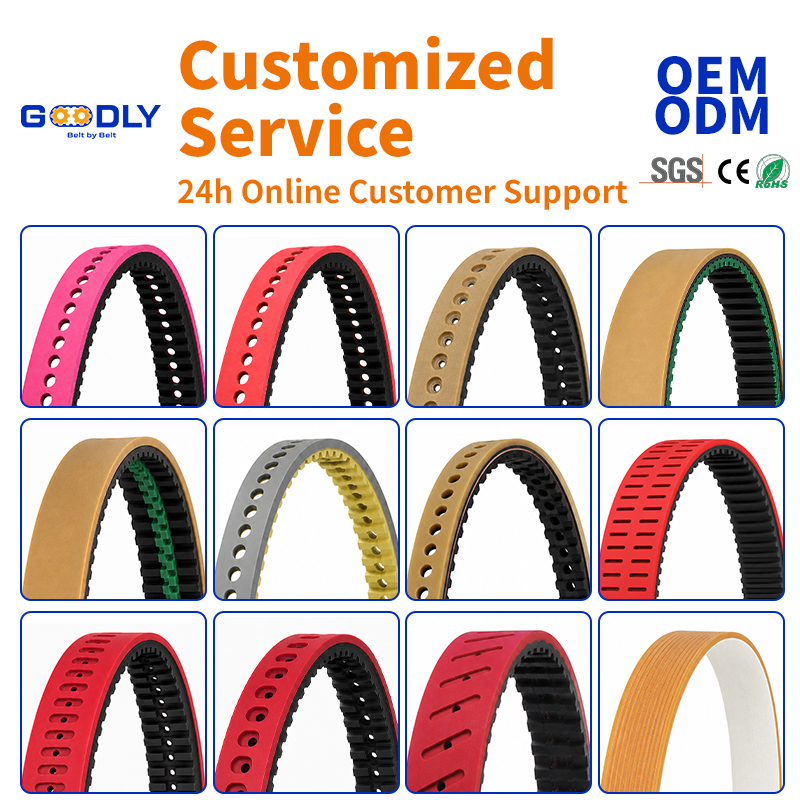
- Finish: grip, cushion or clean release decides the backing.
Vulcanisation sits across these choices: where strength and heat stability both matter, a vulcanised body is worth specifying. See our guide to vulcanized synchronous belts and compare grades on the Timing Belt range.
Send GOODLY Your Operating Conditions for a Material Recommendation
What is the best material for a timing belt?
There is no single best material. Choose from the dominant condition: silicone for heat and food, PU for precision and oil, neoprene for general industrial drives, EPDM for outdoor use.
What is the difference between Kevlar and glass cord?
Kevlar (aramid) cord is much stronger and stretches far less than glass, so it suits heavy and shock-loaded drives; glass is lighter, cheaper and fine for moderate loads.
Are carbon fibre timing belts worth it?
For long spans that must stay precise, yes — carbon cord is very stiff. For most drives a glass or aramid cord is more cost-effective.
Can you recommend a material from our machine data?
Yes. Send temperature, chemicals, load, speed and product contact and GOODLY engineers will recommend the elastomer, cord and finish and quote accordingly.
Send GOODLY your operating conditions for a material recommendation
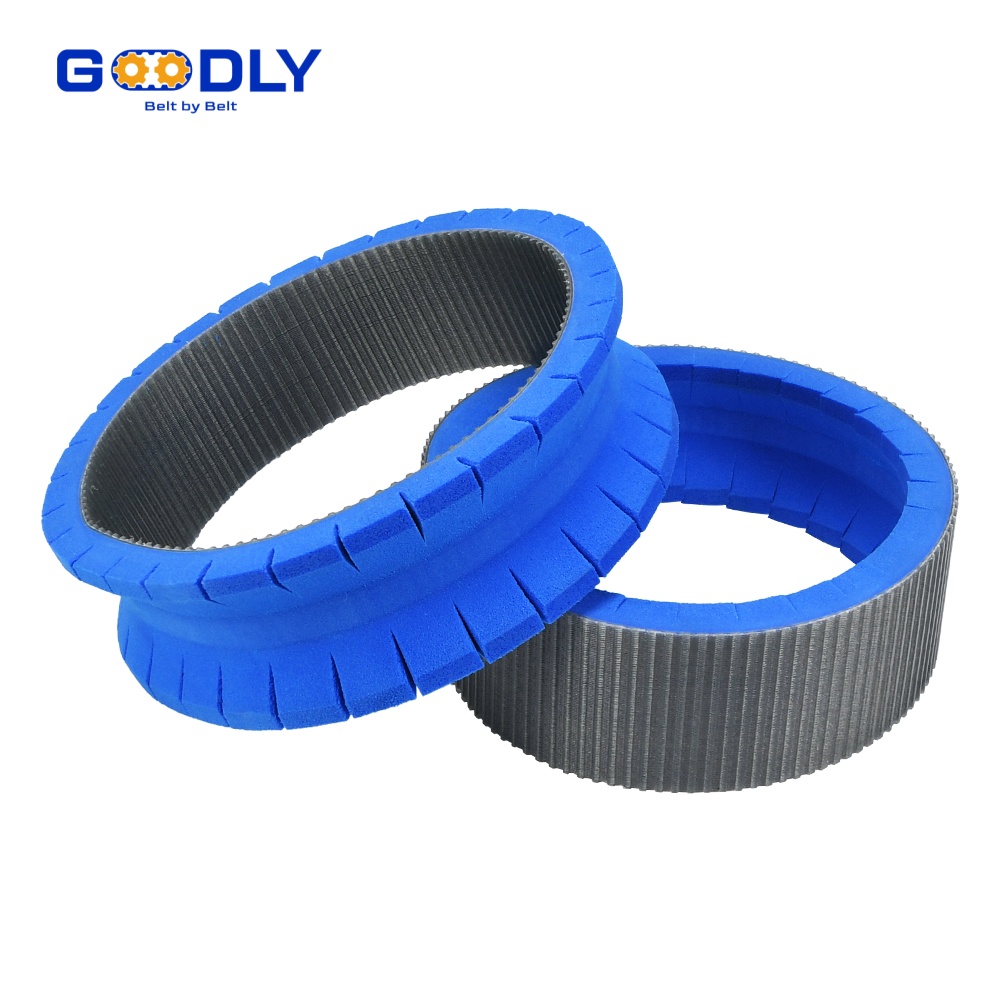
Give us the temperature, chemicals, load and product contact and we will specify the elastomer, cord and backing — then confirm a ±0.05 mm tolerance and deliver samples in 3–5 days.
Get a Material RecommendationMaterial properties are typical values for standard grades and vary by compound and supplier; compliance is declared per order.