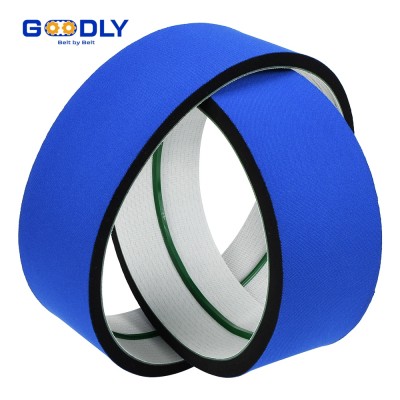
Beginner's Guide to Custom Rubber Coated Belt Solutions
As manufacturers, we know that reliable conveying systems are the backbone of efficient operations. When the going gets tough—with oils, chemicals, extreme temperatures, or constant washing—standard conveyor belts often struggle to keep up. They can degrade, cause unexpected shutdowns, and silently drain your profits.
This guide is for you if you're looking to understand how custom rubber coated belt solutions can overcome these challenges, boost your productivity, and save you money in the long run. We'll dive deep into the materials, features, and selection processes that empower you to move beyond one-size-fits-all answers and invest in operational excellence.
Key Takeaways
For readers looking for a quick summary, here are the essential takeaways from this guide. Understanding these points is the first step toward optimizing your conveyor systems and reducing long-term costs.
- Standard Belts Have Critical Weaknesses: Conventional rubber belts, often made from materials like Styrene-Butadiene Rubber (SBR), are not designed for harsh environments. Exposure to oils causes them to swell, soften, and lose strength. Heat accelerates aging, leading to cracks and brittleness, while moisture can cause the internal fabric layers to rot (hydrolysis), resulting in delamination and complete failure.
- Hidden Costs Are Significant: The price of a replacement belt is just the tip of the iceberg. The true cost of belt failure includes massive losses from production downtime, labor expenses for cleanup and installation, wasted or contaminated products, and potential damage to other expensive conveyor components like pulleys and motors.
- Specialized Materials Offer Targeted Solutions: The core of a custom solution lies in choosing the right material.
- Nitrile (NBR): The go-to choice for oily applications, such as in metal stamping, recycling facilities, and certain food processing areas. Its chemical structure resists swelling and degradation from petroleum-based and animal fats.
- EPDM: Ideal for outdoor applications or when dealing with extreme temperatures and chemicals like acids and alkalis, offering excellent resistance to ozone and weathering.
- Vulcanized Splicing: This process creates a seamless, "endless" belt by chemically bonding the ends together with heat and pressure. A vulcanized splice is significantly stronger and more durable than a mechanical fastener, eliminating weak points, preventing snagging, and ensuring a smoother, longer-lasting operation.
- Customization Goes Beyond Material: True optimization involves tailoring every aspect of the belt to your specific needs. This includes selecting the right surface texture for grip or release, adding cleats or sidewalls for incline conveying, and ensuring the belt's construction meets precise thickness and hardness (durometer) specifications for consistent performance.
- Compliance is Non-Negotiable in Sensitive Industries: In food and pharmaceutical production, belts must be made from FDA-compliant materials that won't leach harmful substances into products. These belts are designed to be non-porous, easy to clean, and resistant to harsh sanitizing agents to prevent microbial growth and ensure consumer safety.
- Focus on Total Cost of Ownership (TCO): Investing in a higher-upfront-cost custom belt delivers substantial long-term savings. By drastically reducing the frequency of replacements, minimizing downtime, and protecting product quality, a custom rubber coated belt offers a far lower TCO compared to repeatedly replacing cheaper, standard belts.
By moving from a reactive "replace-when-it-breaks" mindset to a proactive strategy of application-specific selection, you can transform your conveyor system from a recurring problem into a reliable, high-performing asset.
Why Your Standard Rubber Coated Belt Fails in Tough Environments
Many operations begin with a standard, general-purpose conveyor belt, hoping it will be a versatile workhorse. However, when these belts are placed in environments with demanding conditions, they often become a primary source of failure and inefficiency. Understanding why they fail is the first step toward finding a lasting solution.
The Impact of Oil, Moisture, and Heat on Conventional Coatings
The rubber on a standard conveyor belt is typically a Styrene-Butadiene Rubber (SBR) compound, prized for its abrasion resistance and cost-effectiveness in simple applications. Unfortunately, its molecular structure makes it highly vulnerable to common industrial stressors.
- Oil and Grease: When a standard rubber belt comes into contact with petroleum-based oils, machine lubricants, or animal fats, the rubber acts like a sponge. It absorbs the oils, causing it to swell, soften, and lose its tensile strength. This leads to a mushy, weakened belt that can no longer grip pulleys effectively, stretches unevenly, and is easily gouged or torn.
- Moisture and Steam: Water exposure, especially when combined with heat, is detrimental to the belt's core—the carcass. The fabric plies, often made of polyester or nylon, can undergo a process called hydrolysis. This chemical breakdown severs the polymer chains in the fabric, drastically reducing its strength and leading to delamination, where the rubber cover separates from the fabric layers.
- Extreme Temperatures: Both high and low temperatures can cripple a conventional belt. High heat accelerates the aging of the rubber, causing it to become hard, brittle, and covered in cracks. This loss of elasticity prevents it from flexing properly around pulleys, leading to surface fractures and eventual breakage. Conversely, in cold environments, standard rubber can stiffen dramatically, making it difficult to track and prone to cracking.
 Alt text: A cracked and degraded standard rubber coated belt.
The Hidden Costs of Belt Degradation and Unexpected Downtime
The failure of a conveyor belt is never just about the cost of the belt itself. The ripple effects of an unexpected shutdown can be financially devastating and reveal the true cost of using an inadequate component.
A study on production downtime highlights that unplanned stoppages are a major source of financial loss for manufacturing plants. These costs can be broken down into several categories:
| Cost Category | Description |
|---|---|
| Lost Production | Every minute the conveyor is down, your facility is not producing. This translates directly to lost revenue and missed production targets. |
| Labor Costs | You are paying your team to stand by while a specialized maintenance crew works to diagnose the issue, remove the failed belt, and install a new one. |
| Product Contamination | A degrading belt can shed pieces of rubber into your product stream. In food, pharma, or electronics, this can lead to entire batches being scrapped. |
| Wasted Materials | When a belt stops suddenly, materials can pile up, spill, or become damaged, requiring costly cleanup and disposal. |
| Damage to Equipment | A snapping or mis-tracking belt can damage expensive components like pulleys, bearings, and motors, compounding the repair costs. |
| Safety Hazards | Sudden belt failures can create dangerous situations for employees, leading to potential injuries and associated liabilities. |
Ultimately, relying on a standard belt in a tough environment is a reactive and expensive strategy. The frequent replacements and constant threat of downtime erode profitability and create unnecessary operational stress.
Exploring Specialized Rubber Coated Belt Materials for Enhanced Performance
To combat the failures of standard belts, engineers have developed a range of specialized rubber compounds designed to thrive in specific harsh conditions. Choosing the right material is the foundation of a reliable custom belt solution.
Oil-Resistant Rubber Coated Belts: Essential for Greasy Operations
For applications involving constant exposure to oils, fats, and greases, Nitrile rubber (NBR) is the industry standard. Nitrile's unique chemical composition makes it inherently resistant to swelling and degradation when exposed to hydrocarbons.
This makes it the perfect choice for a variety of challenging industries:
- Metal Stamping and Machining: Where parts are often coated in cutting fluids and lubricants.
- Recycling Facilities: Handling materials contaminated with various oils and greases.
- Food Processing: Especially in meat, poultry, and snack food production where animal and vegetable fats are prevalent.
While standard belts will quickly turn soft and fail in these settings, a Nitrile-coated belt maintains its structural integrity, ensuring consistent grip, proper tracking, and a significantly longer service life. For applications with moderate oil exposure combined with heat, Neoprene is another excellent option, offering a balanced profile of resistance properties.
 Alt text: An oil-resistant Nitrile rubber coated belt in a manufacturing plant.
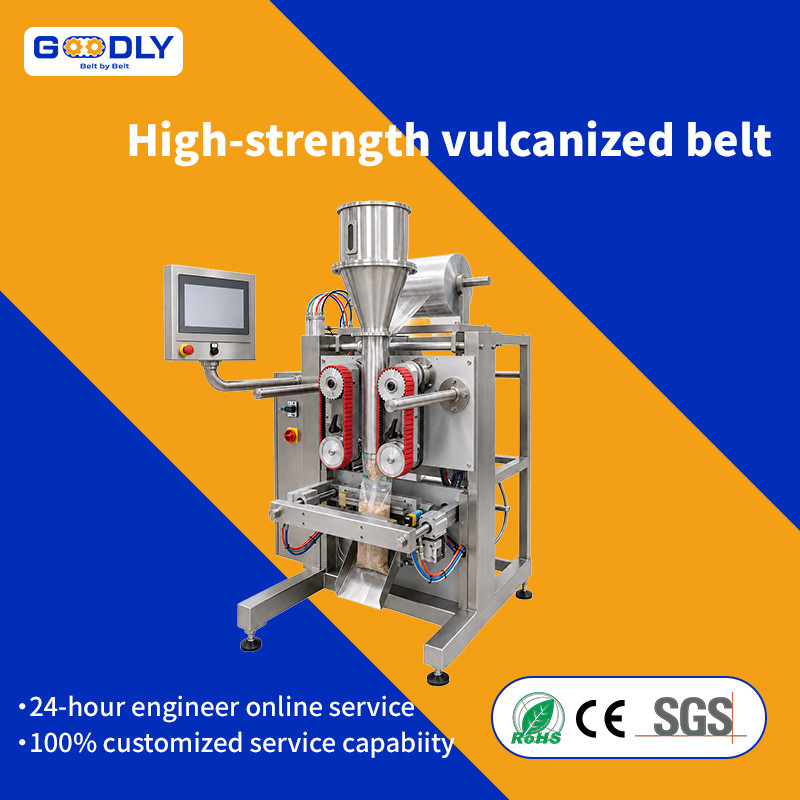
Vulcanized Rubber Coated Belts: The Durable Choice for Critical Applications
The way a conveyor belt is joined into a continuous loop is just as critical as the rubber it's made from. While mechanical fasteners (metal clips) are a quick fix, they are the weakest point of the belt. For ultimate durability, a vulcanized splice is superior.
Vulcanization is a process that uses heat and pressure to chemically bond the two ends of the belt together, creating a seamless, endless loop. The splice becomes an integral part of the belt itself, rather than a mechanical connection.
Advantages of Vulcanization Over Mechanical Fasteners:
- Superior Strength: A properly executed vulcanized splice can retain up to 90-100% of the belt's original strength, whereas mechanical fasteners create a significant weak point.
- No Snag Points: The smooth, seamless surface of a vulcanized belt eliminates points where products or cleaning equipment can snag, reducing damage and contamination.
- Longer Lifespan: By distributing tension evenly across the splice area, vulcanized belts last much longer under heavy loads and continuous operation.
- Improved Cleanability: The absence of crevices and hardware makes vulcanized belts far easier to clean and sanitize, a critical feature in food and pharmaceutical industries.
While the upfront process of vulcanization is more involved than installing mechanical fasteners, the investment pays for itself through dramatically increased reliability and longevity, especially in critical, high-tension applications.
Key Features to Demand in Your Custom Rubber Coated Belt Solution
When you commission a custom belt, you're investing in a solution tailored to your exact needs. Beyond choosing the base material, several key features distinguish a high-performance belt from a standard one. Demanding these features ensures you receive a product that delivers on its promises of longevity and reliability.
Superior Material Integrity and Chemical Resistance
A truly custom solution involves selecting a compound that can withstand the specific chemical profile of your environment. While Nitrile is excellent for oils, other challenges require different materials.
- EPDM (Ethylene Propylene Diene Monomer): This rubber offers exceptional resistance to heat, ozone, steam, and a wide range of chemicals, including acids and alkalis. It's an ideal choice for outdoor conveyors or those in chemical processing plants.
- Silicone: When extreme temperatures are the primary concern, silicone belts can operate in conditions from -60°C to over 200°C (-76°F to 392°F). They are also inherently non-stick, which is beneficial for handling sticky products.
- FDA-Compliant Compounds: For any application involving direct contact with food or pharmaceuticals, the belt's rubber coating must be made from materials compliant with FDA regulations (such as 21 CFR 177.2600). These compounds are guaranteed to be non-toxic and will not leach harmful substances into the product.
Always request a chemical compatibility chart from your supplier to verify that the chosen material can stand up to the specific chemicals, cleaning agents, and temperatures in your facility.
Precision Manufacturing and Consistent Performance
The performance of a conveyor belt is heavily dependent on the quality of its manufacturing. Even the best materials will fail if the belt is not made to precise specifications. Key indicators of precision manufacturing include:
- Uniform Thickness: A consistent thickness across the entire length and width of the belt is crucial for smooth operation and even wear. Variations in thickness can cause tracking problems and vibrations.
- Consistent Durometer: The hardness of the rubber (measured in durometer) should be uniform. This ensures predictable grip and release characteristics along the entire belt surface.
- Straightness and Camber Control: A well-made belt will run straight without the need for constant tracking adjustments. Poor manufacturing can result in a "cambered" or curved belt that will persistently try to run off one side of the conveyor, causing edge wear and potential damage.
A reputable manufacturer uses advanced quality control measures to ensure every belt meets tight tolerances, guaranteeing that the belt you install will perform as expected from day one.
Meeting Stringent Food-Grade and Safety Compliance Standards
In regulated industries, compliance is not optional. A custom belt solution must be designed from the ground up to meet all relevant standards.
- Food Safety: Beyond using FDA-compliant materials, food-grade belts should be designed for hygiene. This often means they are non-porous to prevent microbial absorption, feature sealed edges to protect the internal fabric from contamination, and are compatible with high-pressure washing and aggressive sanitizing chemicals.
- Fire Resistance: In environments with a risk of ignition, such as grain handling or underground mining, belts must be flame-retardant. These belts are often rated FRAS (Fire-Resistant and Anti-Static) to prevent the buildup of static electricity that could cause a spark.
- OSHA and General Safety: A reliable, well-tracked belt is inherently safer. It reduces the risk of entanglement, material spillage that can cause slip-and-fall hazards, and unexpected stops that could injure workers.
When discussing your needs with a supplier, be explicit about all safety and regulatory standards your operation must adhere to. A knowledgeable partner will guide you to a compliant solution. You can explore a variety of compliant options at GOODLY BELT.
Tailoring Your Rubber Coated Belt: A Guide to Application-Specific Selection
The most effective custom rubber coated belt is one that is perfectly matched to its operational environment. This requires a thorough assessment of your needs and a clear understanding of how different customization options can solve specific industry challenges.
How to Assess Your Operational Environment and Material Needs
Before you can specify a custom belt, you must first gather critical data about your application. Use the following checklist to conduct a comprehensive audit of your conveyor system's environment. This information will be invaluable when consulting with a belt specialist.
Application Audit Checklist:
| Parameter | Questions to Answer | Why It Matters |
|---|---|---|
| Product Conveyed | What is the material? (e.g., sharp metal parts, oily food products, abrasive rock) What is its size, weight, and shape? | Determines the required abrasion resistance, cut resistance, and surface texture (grip vs. release). |
| Temperature | What is the constant operating temperature? Are there extreme peaks or lows? (e.g., entering an oven or freezer) | Dictates the rubber compound. Standard rubber fails at high/low temps; Silicone or EPDM may be needed. |
| Chemical Exposure | Is the belt exposed to oils, greases, solvents, acids, or cleaning agents? Be specific about the chemicals and concentrations. | This is the most critical factor for material selection (e.g., Nitrile for oils, EPDM for chemicals). |
| Operational Speed & Load | How fast does the belt run (feet per minute)? What is the maximum load (pounds per square foot)? | Determines the required tensile strength and number of fabric plies in the belt's carcass. |
| Conveyor Design | What are the pulley diameters? Is it a troughed or flat system? Are there inclines or declines? | Small pulleys require a more flexible belt. Inclines may necessitate a textured surface or cleats. |
| Cleaning Protocol | How is the belt cleaned? (e.g., high-pressure spray, chemical foam, manual scraping) | The belt's cover and splice must withstand the cleaning method without degrading. |
Armed with this data, you can have a highly productive conversation with a belt supplier to engineer a solution that addresses every one of your specific challenges.
Customizing Your Rubber Coated Belt for Industry-Specific Challenges
With the assessment complete, you can now explore specific customizations that solve common problems in various industries.
-
Food Processing Industry:
- Challenge: Preventing bacterial growth and ensuring easy sanitation.
- Solution: Specify an FDA-compliant belt with sealed edges to prevent moisture from wicking into the fabric core. A non-porous, smooth surface finish allows for easy cleaning and prevents food particles from becoming trapped. Consider blue-colored belts, which make it easier to spot contamination.
-
Recycling and Waste Management:
- Challenge: Extreme abrasion, cuts, and tears from sharp materials like glass and metal.
- Solution: A thick, high-durometer rubber cover provides maximum protection against gouging. The belt carcass should be a high-strength fabric weave designed to resist tearing and punctures.
-
Logistics and Package Handling:
- Challenge: Moving packages up steep inclines without slippage.
- Solution: A belt with a molded high-grip surface, such as a "rough top" or "chevron" pattern. For very steep angles, custom-molded cleats can be added at specific intervals to hold packages in place.
-
Agriculture and Grain Handling:
- Challenge: Fire and explosion risk from grain dust, plus exposure to agricultural oils.
- Solution: A belt that is both oil-resistant (often a nitrile blend) and meets FRAS (Fire-Resistant, Anti-Static) safety standards is essential to mitigate these risks.
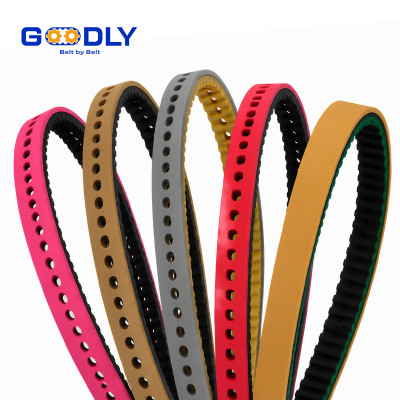
Alt text: Custom rubber coated belt profiles including cleated, V-guide, and textured surfaces.
By thinking beyond a simple flat belt, you can add features that fundamentally improve your process efficiency and safety. These tailored solutions are available by consulting with experts at GOODLY BELT.
The Long-Term Advantages of Investing in Advanced Rubber Coated Belt Technology
Choosing a custom rubber coated belt is not an expense; it's a strategic investment in the long-term health and efficiency of your operation. While the initial cost may be higher than a standard belt, the downstream benefits in uptime, product quality, and total cost of ownership provide a compelling return on investment.
Maximizing Uptime and Operational Efficiency with Custom Belts
The single greatest benefit of a correctly specified custom belt is reliability. By engineering a belt that is immune to the specific challenges of your environment, you move from a reactive maintenance model (fixing things when they break) to a proactive one.
- Reduced Unplanned Downtime: A belt designed to handle the oils, chemicals, and temperatures of your line will not fail prematurely. This virtually eliminates costly unplanned shutdowns, allowing your facility to maintain consistent throughput and meet production schedules.
- Predictable Maintenance Cycles: Durable, long-lasting belts enable you to plan for replacements on your own schedule, such as during planned facility-wide shutdowns, rather than in a state of emergency.
- Improved Energy Efficiency: A properly tracked belt that interfaces smoothly with pulleys requires less energy to drive, offering marginal but measurable energy savings over the life of the belt. A degraded, swollen, or mistracking belt creates drag and forces the drive motor to work harder.
Ensuring Product Quality, Safety, and Reduced Contamination Risks
In many industries, the integrity of the product is paramount. A failing conveyor belt poses a direct threat to product quality and safety.
- Elimination of Contamination: A custom belt made from the correct material will not degrade, crack, or fray. This prevents pieces of rubber from falling into the product stream, a critical issue in food, pharmaceutical, and electronics manufacturing.
- Preservation of Product Integrity: Belts can be designed with specific surface properties—such as non-stick silicone for confectionery or soft, cushioned rubber for delicate electronic components—to prevent product damage during transit.
- Enhanced Worker Safety: Reliability is a cornerstone of safety. A belt that runs true and doesn't fail unexpectedly eliminates many of the most common conveyor-related safety hazards, such as the need for workers to reach near a moving system to adjust tracking or clear jams caused by a failing belt.
Realizing Significant Cost Savings Through Enhanced Belt Longevity
To understand the financial benefit, you must look beyond the purchase price and consider the Total Cost of Ownership (TCO). This calculation includes the initial cost plus all associated costs over the belt's lifespan, including replacement labor, downtime losses, and maintenance.
Simplified TCO Comparison: Standard Belt vs. Custom Belt (Example Scenario)
| Cost Factor | Standard Belt (Fails every 6 months) | Custom Oil-Resistant Belt (Lasts 36 months) |
|---|---|---|
| Belt Unit Price | $800 | $2,500 |
| Number of Belts over 3 Years | 6 | 1 |
| Total Belt Cost | $4,800 | $2,500 |
| Downtime per Replacement | 4 hours | 4 hours |
| Total Downtime over 3 Years | 24 hours | 4 hours |
| Cost of Downtime (@ $5,000/hr) | $120,000 | $20,000 |
| Labor for 6 Replacements vs. 1 | $4,800 | $800 |
| Total Cost of Ownership (3 Years) | $129,600 | $23,300 |
As this simplified example illustrates, the initial savings from a cheaper belt are quickly erased by the enormous costs associated with frequent failure. The custom solution, despite its higher upfront price, delivers massive long-term savings by providing stability and longevity.
Conclusion
Ultimately, selecting the right custom rubber coated belt isn't just about a component; it's about optimizing your entire operation for longevity, safety, and efficiency. By moving away from a one-size-fits-all approach and embracing a solution tailored to your unique operational environment, you are making a strategic decision to reduce downtime, protect product quality, and lower your total cost of ownership.
We encourage you to assess your specific challenges, using the framework provided in this guide to analyze your material handling needs. Explore how a tailored rubber coated belt solution can transform your productivity and provide invaluable peace of mind. By investing in the right technology today, you fortify your operations for a more profitable and predictable future. Don't hesitate to share this article with colleagues who may be facing similar challenges, and begin the conversation about upgrading your most critical production assets.
Frequently Asked Questions (FAQ)
1. What is the main difference between a standard SBR rubber belt and a specialized one like Nitrile or EPDM? The primary difference lies in their chemical structure and resulting resistance properties. A standard Styrene-Butadiene Rubber (SBR) belt offers good abrasion resistance in neutral, dry conditions but is highly susceptible to degradation from oils, chemicals, and extreme heat. Nitrile (NBR) rubber is specifically engineered to resist swelling and softening when exposed to oils and greases, making it ideal for machine shops or food processing. EPDM rubber, on the other hand, is designed to withstand weathering, ozone, and a wide range of chemicals like acids and alkalis, making it perfect for outdoor applications or chemical plants. The choice depends entirely on the specific hazards in your belt's environment.
2. How long can I expect a custom rubber coated belt to last compared to a standard one? There's no single answer, as lifespan depends on the application's severity, but the difference is significant. In a challenging environment (e.g., with moderate oil exposure), a standard belt might fail in as little as 3-6 months. A properly specified custom Nitrile belt in the same application could last 2-5 years or even longer. The goal of a custom belt is to extend its life by a factor of 5-10x by neutralizing the elements that cause premature failure. The investment pays for itself through fewer replacements and drastically reduced downtime.
3. Is a vulcanized splice always a better option than mechanical fasteners? For most critical and high-tension applications, yes. A vulcanized splice creates a seamless, durable bond that is often as strong as the belt itself. This eliminates the weak points and snagging hazards associated with mechanical fasteners. However, mechanical fasteners have their place. They are much faster to install, making them a good option for temporary emergency repairs to get a line running again quickly. They may also be sufficient for non-critical, low-tension applications where a long-term shutdown for vulcanization is not feasible. For maximum longevity and reliability, vulcanization is the superior choice.
4. Are food-grade rubber belts really necessary if the food only touches the belt for a few seconds? Absolutely. Any surface that comes into direct contact with food, no matter how brief, must comply with food safety regulations like those from the FDA. These regulations exist to prevent the leaching of harmful chemicals from the belt material into the food, which could pose a health risk to consumers. Furthermore, food-grade belts are designed to be non-porous and easy to clean, preventing the buildup of bacteria and allergens. Using a non-compliant belt is a significant risk that can lead to product recalls, legal liability, and loss of brand reputation.
5. How do I start the process of choosing a custom belt? It seems complicated.
The process begins with a simple audit of your application. Use the checklist provided in this guide under "How to Assess Your Operational Environment and Material Needs." Gather as much information as you can about the product being conveyed, temperature, chemical exposure, and conveyor design. Once you have this data, contact a reputable belt supplier or specialist, like those at [our shop]. A knowledgeable partner will review your data, ask further questions, and guide you to the optimal material, construction, and features for your specific needs. You don't have to be the expert—you just need to provide the right information to the people who are.