
Seamless or welded PU timing belts: which construction do I need?
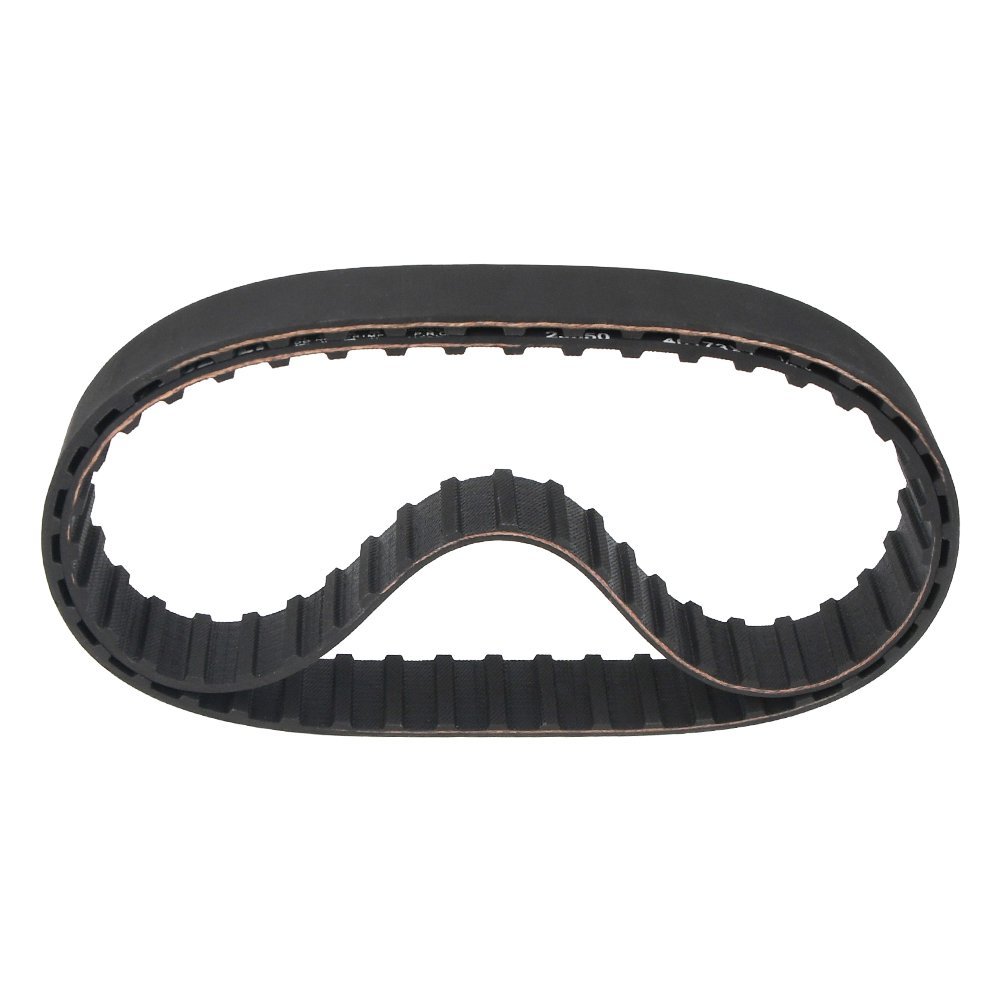
Short answer: seamless (truly endless) PU timing belts are extruded with no joint and offer the most uniform running and best fatigue life — the usual choice for high-speed or precision drives. Welded belts are made from open-end PU strip whose steel or aramid cords are joined with a connector or thermally welded loop; they are quicker to obtain in long or non-standard lengths and convenient for on-site fitting, but the joint area is the weak point relative to a seamless body. Choose seamless when performance matters most; choose welded/joined when length, lead time or installation access dictates.
Seamless vs welded at a glance
| Aspect | Seamless (endless molded) | Welded / joined from open end |
|---|---|---|
| Construction | Extruded and cured as one loop, no splice | Open-end strip joined with connector or welded loop |
| Joint strength | No joint — uniform strength around the belt | Joint area is lower than the base belt; quality depends on workmanship |
| Running smoothness | Very uniform — best for high speed and positioning | Slight pulse possible at the joint in some designs |
| Length freedom | Limited to available molds / extruded lengths | Almost any pitch length can be made or joined on site |
| Lead time | Tooling-bound; standard pitches fast | Often faster for odd lengths and small quantities |
| Typical use | High-speed drives, robotics, precision indexing | Long conveyors, retrofit installations, maintenance spares |
Choose seamless when…
- The drive runs fast, indexes precisely, or cannot tolerate a weak point in the loop.
- Your pitch length matches an existing seamless production range.
- Belt-change intervals are costly — maximum fatigue life pays back the price difference.
Choose welded / joined when…
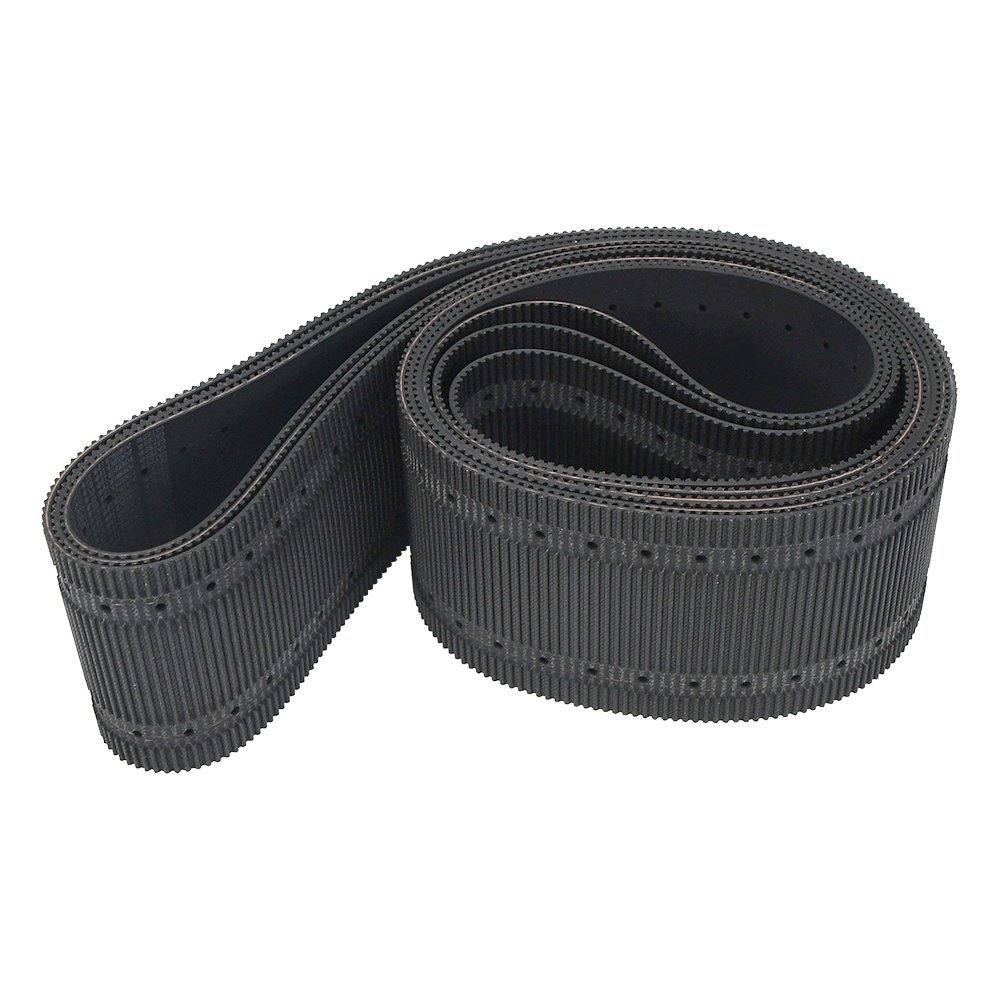
- The required length is non-standard, very long, or needed faster than tooling allows.
- Machine design forces threading the belt around shafts — open-end strip joined in place solves this.
- You want to keep maintenance spares as strip and join on site.
Practical advice before ordering
- Measure the exact pitch length, tooth count and width — a 1–2 tooth error is the most common ordering mistake.
- If the application previously ran a molded endless belt, ask whether a welded replacement is acceptable for your duty cycle.
- For joined belts, ask how the joint is made and what strength reduction to expect; better suppliers state it openly.
- Confirm cord type together with the construction choice — steel for precision, aramid for shock and small pulleys.
Which construction fits your machine?
Send the pitch length, tooth profile and duty data — we will confirm whether seamless stock exists for your size or propose a joined solution with an honest statement of its limits.
Check Seamless Availability
Are you looking for a reliable manufacturer of conveyor belt products?
We can quickly provide customers with market analysis, technical support and customized services.- Name
- Phone
- *Title
- *Content