PU vs rubber timing belts: which one should I choose?
Update Time:2026/10/16
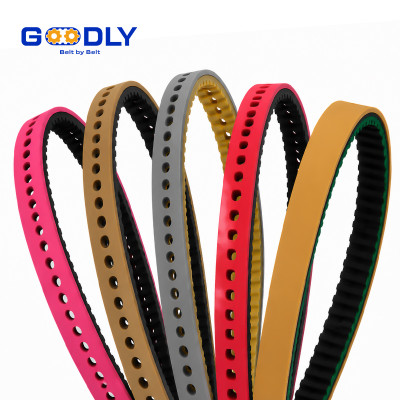
Short answer: PU timing belts offer higher wear resistance, oil resistance and cleanliness; rubber timing belts offer better vibration damping, lower cost and wider temperature tolerance at both extremes. Choose PU for clean, oily, precise or hygienic drives (packaging, food handling, robotics, small conveyors); choose rubber for general power transmission, high torque and harsher environments.
The drive runs in food, pharmaceutical, packaging or electronics environments where cleanliness matters.
Oil or coolants are present around the belt path.
Precise positioning and low backlash matter (robotics, linear drives, small conveyors).
Steel or aramid (Kevlar-type) cords are wanted for minimal elongation.
Choose rubber when…
The drive transmits significant torque (compressors, machine tools, heavy conveyors).
Ambient conditions are hot, cold, or dusty beyond typical PU limits.
Budget is the deciding factor and damping/noise comfort matters.
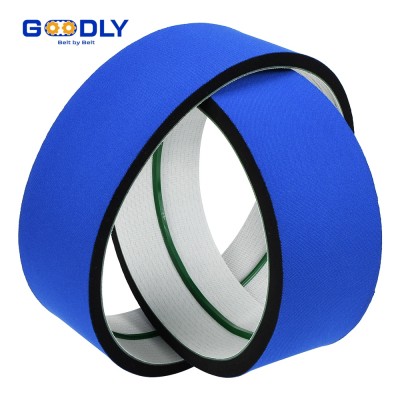
Food and packaging lines are the classic PU timing belt territory.PU belts can be welded into endless loops or finished with guides and cleats.
Note on temperature: PU bodies typically serve moderate ambient ranges, while rubber compounds (CR, HNBR) can be formulated for wider ranges. If your application approaches temperature limits, tell us the actual conditions before ordering — we will recommend the right construction.
Not sure which body material fits?
Describe your machine, load and environment — our engineers will recommend PU or rubber construction and quote both where relevant.