What Are Rubber Coated Belts? A Key to Synchronized Power Transmission
Understanding the Mechanics of Rubber Coated Belts: How They Deliver Synchronized Power
To truly appreciate the role of rubber coated belts, we must first understand the engineering principles that make them so effective. Their design allows for the seamless and synchronized transfer of power, a feat accomplished through a unique combination of materials and mechanics that sets them apart from other power transmission methods like gears, chains, or V-belts. At its core, a rubber coated belt is not just a loop of rubber; it is a highly engineered composite component designed for positive, non-slip power transmission.
What Defines a Rubber Coated Synchronous Belt?
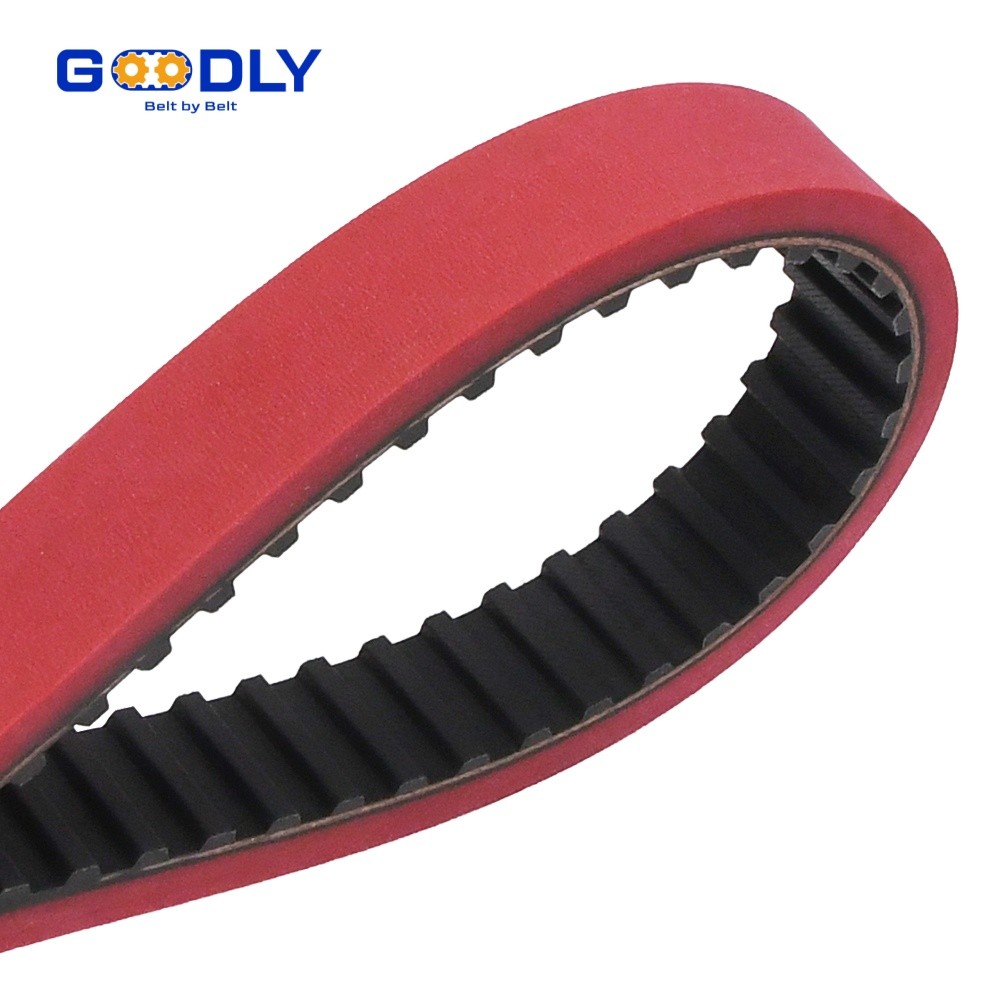
A rubber coated synchronous belt, also known as a timing belt, is a flexible belt with teeth molded onto its inner surface. These teeth are designed to engage with matching grooves on a pulley, or sprocket. This interlocking action is the key to its function. Unlike a standard flat or V-belt that transmits power through friction, a synchronous belt functions like a flexible gear, ensuring that the driving and driven pulleys remain perfectly synchronized without any slippage.
The construction of these belts is a multi-layered science:
- Tensile Cord: This is the backbone of the belt, providing its strength and preventing it from stretching under load. These cords are typically made from high-strength materials like fiberglass, aramid (e.g., Kevlar), or steel, which are wound continuously and embedded within the rubber. The choice of material depends on the required load capacity, shock resistance, and flexibility.
- Elastomer Body: The main body of the belt is made from a durable, flexible rubber compound. Historically, neoprene (chloroprene) was common, but modern high-performance belts overwhelmingly use Hydrogenated Nitrile Butadiene Rubber (HNBR) for its superior heat and oil resistance. This material holds the tensile cords in place and forms the shape of the teeth.
- Nylon Tooth Facing: The surface of the teeth is usually covered with a durable nylon fabric. This layer acts as a wear-resistant surface, reducing friction as the teeth engage and disengage with the pulley grooves. This greatly contributes to the belt's long service life and low-noise operation.
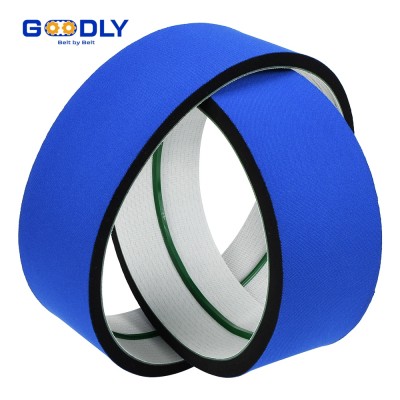
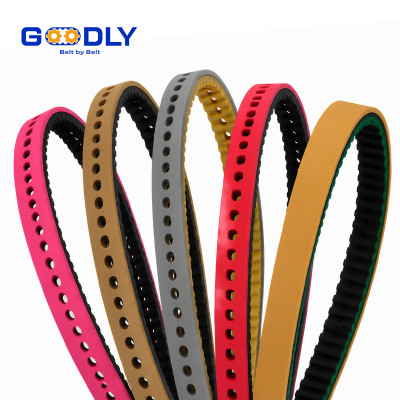
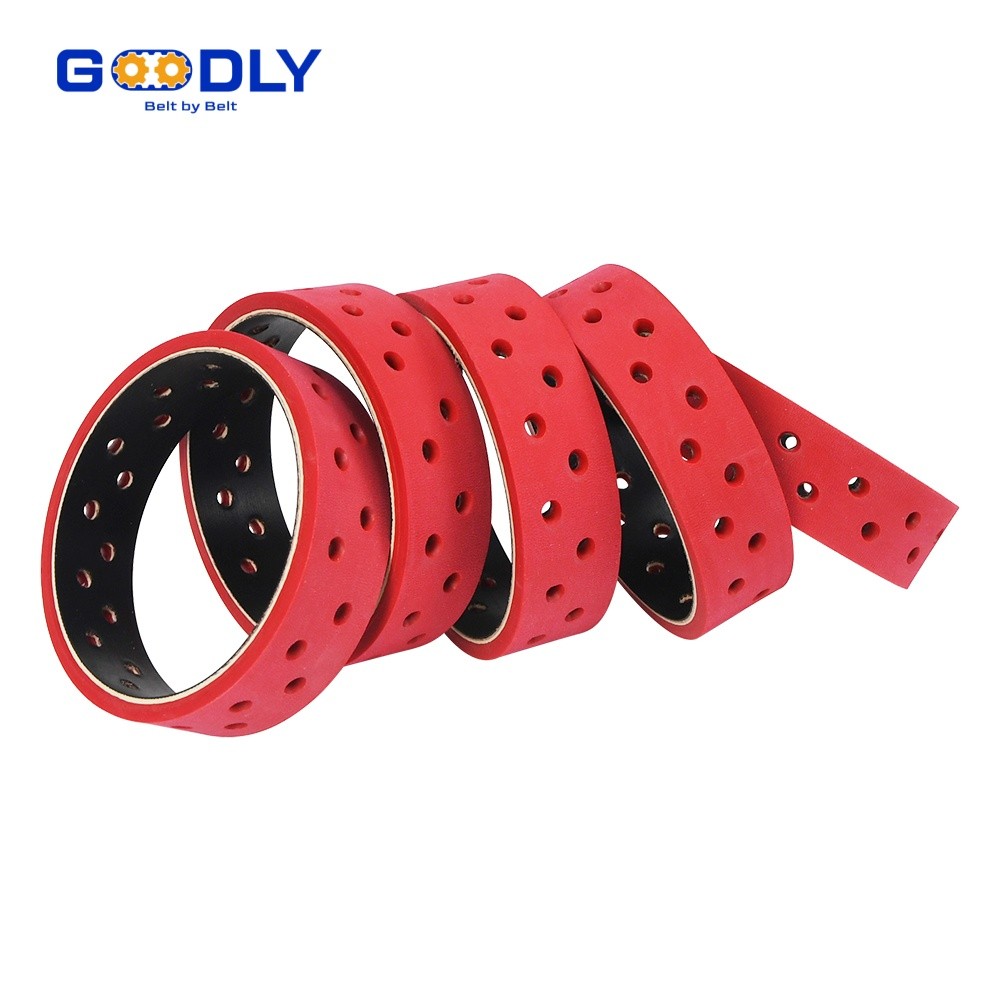
- Rubber Coating: The "rubber coated" aspect refers to either the base elastomer material itself or an additional layer applied to the back of the belt. These coatings can be engineered for specific purposes, such as increasing friction for conveying applications (a "double-sided" function), adding chemical resistance, or improving durability in harsh environments.
The Principle of Positive Engagement with Rubber Coated Belts
The defining characteristic of synchronous belts is "positive engagement." This term describes the physical meshing of the belt's teeth with the grooves of the pulley. This mechanical lock prevents the slippage that can occur with friction-based drive systems, especially under changing loads or in oily conditions.
Here’s how it works in contrast to friction belts:
| Feature | Rubber Coated Synchronous Belt | Conventional V-Belt (Friction Belt) |
|---|---|---|
| Power Transfer | Positive Engagement (Teeth meshing with pulley grooves) | Friction (Wedging action of belt sides against pulley walls) |
| Slippage | Virtually zero slip under normal operating conditions. | Prone to slipping (creep), especially under high torque or with wear. |
| Synchronism | Maintains precise timing and angular position between shafts. | Cannot guarantee perfect synchronism due to inevitable slip. |
| Tension Required | Requires only enough tension to keep teeth engaged and prevent backlash. | Requires high tension to generate sufficient friction for power transfer. |
| Efficiency | Very high (typically >98%) due to minimal frictional loss. | Lower (typically 95-98%) due to energy lost from friction and slippage. |
| Bearing Load | Lower load on shaft bearings due to lower tension requirements. | Higher load on bearings, potentially leading to faster wear. |
This principle is what makes rubber coated belts indispensable for applications where timing is critical. In an engine, for instance, the belt ensures the valves open and close in perfect harmony with the pistons' movement. In a 3D printer, it guarantees the print head moves to the exact coordinates required for each layer. Without positive engagement, this level of precision would be impossible.
Essential Terminology for Rubber Coated Belt Systems
To work with synchronous belt drives effectively, it's important to understand their specific terminology. This language allows engineers and technicians to precisely describe, select, and install these components.
Here is a glossary of fundamental terms:
| Term | Definition | Importance |
|---|---|---|
| Pitch | The distance between the centers of two adjacent teeth, measured along the pitch line of the belt. | This is the most critical dimension. The belt pitch must exactly match the pulley pitch for proper meshing. |
| Pitch Length | The total length of the belt as measured along its pitch line. | Determines the exact center distance between pulleys. |
| Pitch Circle | An imaginary circle on a pulley that corresponds to the belt's pitch line when engaged. The diameter of this circle is the pitch diameter. | Used in all calculations for speed ratios and center distances. |
| Tooth Profile | The geometric shape of the belt's teeth. Common profiles include trapezoidal (e.g., L, H, XH), curvilinear/rounded (e.g., HTD), and modified curvilinear (e.g., GT, GT2, GT3). | The profile affects torque capacity, backlash, noise level, and registration accuracy. Curvilinear profiles generally offer higher capacity and smoother operation. |
| Backlash | The small amount of clearance or "play" between the belt tooth and the pulley groove as the drive reverses direction. | Critical for precision positioning applications. Modified curvilinear profiles (like GT) are designed to minimize backlash. |
| Tension | The force applied to the belt to keep it taut on the pulleys. | Unlike friction belts, synchronous belts need just enough tension to ensure tooth engagement, not to transmit torque. Improper tension is a leading cause of premature failure. |
Understanding these terms is the first step toward mastering the design and maintenance of any synchronized drive system.
The Indispensable Role of Rubber Coated Belts in Modern Applications
The unique properties of rubber coated synchronous belts—precision, reliability, and low maintenance—have made them essential components in a vast array of modern technologies. From the car you drive to the products you buy, these belts are often working silently behind the scenes. Their ability to deliver synchronized power without slip is a key enabler of performance and automation across multiple sectors.
Automotive Performance Enhanced by Rubber Coated Belts
In the automotive industry, the timing belt is one of the most critical components of an internal combustion engine. Its primary job is to synchronize the rotation of the crankshaft (connected to the pistons) and the camshaft(s) (which control the engine's valves). This synchronization is non-negotiable; it ensures that the intake and exhaust valves open and close at the precise moments in the combustion cycle.
- Precision Timing: If the timing is off by even a few degrees, engine performance will suffer, leading to reduced power, poor fuel economy, and increased emissions. In an "interference engine," a failed or slipped timing belt can be catastrophic, causing the pistons to strike the open valves, resulting in severe and expensive engine damage.
- Material Demands: Automotive timing belts operate in a harsh environment, exposed to high temperatures, engine oil, and constant stress. This is why materials like HNBR are the standard, offering the required durability and resistance to heat and chemical degradation.
- Quiet and Efficient Operation: Compared to the timing chains they often replace, rubber belts are significantly quieter, lighter, and do not require lubrication, contributing to a more efficient and pleasant driving experience.
Beyond the main engine timing, rubber belts are also used in other automotive systems, such as driving balance shafts that reduce engine vibration.
Precision and Automation Powered by Rubber Coated Belts
The world of automation and precision machinery relies heavily on the exact positioning and repeatable movements that synchronous belts provide. Their zero-slip nature is fundamental to the operation of many high-tech devices.
- Robotics: In robotic arms, belts are used to translate the rotation of stepper or servo motors into linear or rotational movement of the arm's joints. The belt's precision ensures the robotic gripper moves to the exact programmed coordinates every time, which is essential for tasks like assembly, welding, or pick-and-place operations.
- 3D Printers and CNC Machines: These machines build objects or carve materials layer by layer, based on a digital model. Rubber coated timing belts are the go-to choice for driving the movement of the print head (on a 3D printer) or the cutting tool (on a CNC machine) along the X, Y, and Z axes. The accuracy of the final product is directly dependent on the belt's ability to execute these movements without any positioning error. Belts with modified curvilinear tooth profiles (like GT2) are especially popular in 3D printing for their ability to minimize backlash and improve print resolution.
- Automated Manufacturing: In assembly lines, synchronous belts are used in positioning systems, indexing tables, and automated test equipment. They guarantee that parts are moved, placed, and processed with the consistent accuracy required for mass production.
Diverse Industrial Uses for Rubber Coated Belts
The application of rubber coated belts extends far beyond automotive and high-tech automation. Their versatility, reliability, and cleanliness make them suitable for a wide range of general industrial machinery.
- Conveying and Material Handling: While many conveyor belts are friction-driven, synchronous belts are used when the movement of items must be paced or positioned accurately. Special rubber coatings can be applied to the back of the belt to increase friction for carrying products, combining the precision of a timing belt with the function of a conveyor belt. They are also used in sorting systems where items need to be diverted or spaced at precise intervals.
- Packaging Machinery: The fast-paced world of packaging requires machines that can wrap, fill, seal, and label products at high speeds with perfect consistency. Timing belts are used to drive all sorts of mechanisms within these machines, ensuring that every bag is sealed at the right spot and every label is applied straight.
- Food Processing Equipment: In the food industry, hygiene is paramount. Rubber belts are an excellent choice because they require no lubrication, which eliminates a potential source of contamination. Specialized food-grade belt materials are available that comply with FDA regulations, making them safe for direct contact with food products in applications like cutting, portioning, and transport.
From heavy-duty lumber mills to delicate electronics assembly, the fundamental need for synchronized power transmission makes rubber coated belts a cornerstone of modern industrial technology.