
How is a vulcanized belt joint made, and how strong is it?
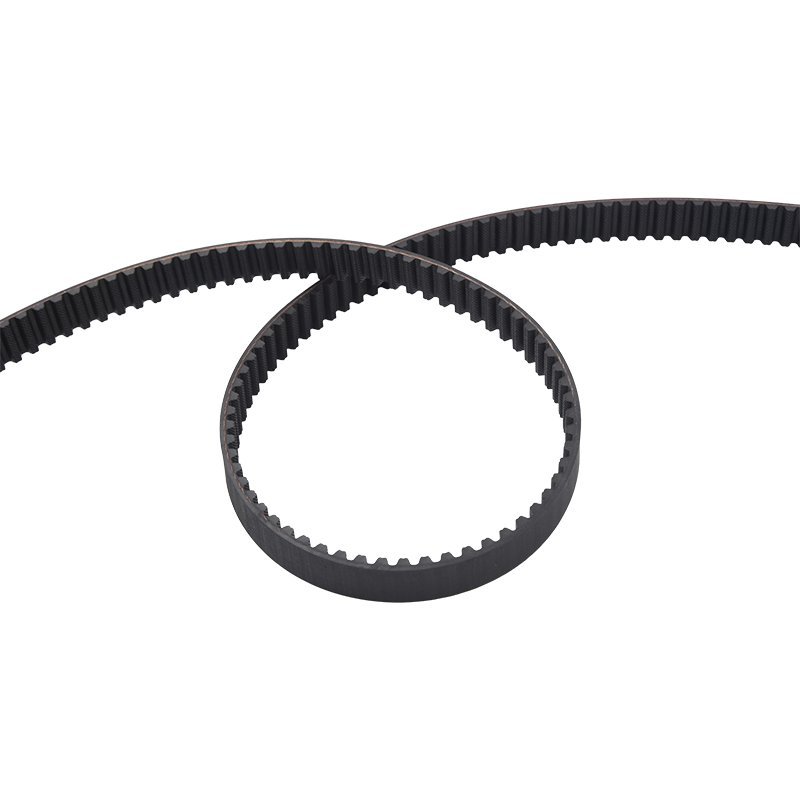
Short answer: a vulcanized joint is made by cutting and preparing the two belt ends, applying the matching rubber or PU compound, then bonding them under controlled heat and pressure so the joint cures into a continuous belt body. A properly made hot-vulcanized splice typically recovers a high share of the base belt's tensile strength — commonly cited in the region of 70–90% depending on construction and workmanship — far more than mechanical fasteners.
How the vulcanizing process works
1. Prepare the ends
The two belt ends are cut to a matching pattern — stepped or finger-cut for timing and flat belts, or angled plies for conveyor belting — and cleaned of dust and release agents.
2. Apply the compound
Uncured rubber or PU material matching the belt body is applied between the prepared ends, including cord or fabric reinforcement where the design requires it.
3. Heat, pressure, time
A vulcanizing press applies controlled temperature and pressure for a defined curing cycle. The compound cross-links and fuses the ends into one continuous body.
What joint strength depends on
- Belt construction: joint efficiency differs between fabric-reinforced rubber belting, steel-cord belts and PU timing belts — thicker, multi-ply constructions need more careful preparation.
- Cut pattern and alignment: a precise finger or step cut with correct cord alignment carries load smoothly; a sloppy cut concentrates stress and starts early failure.
- Curing control: temperature, pressure and time must match the compound spec. Under-cured joints creep apart; overheated joints char the material.
- Environment: dust, moisture or oil contamination at the joint area weakens bonding — splicing should be done clean and dry.
Vulcanized joint vs mechanical fastener
| Aspect | Vulcanized joint | Mechanical fastener |
|---|---|---|
| Joint strength | High — typically the strongest option | Lower, limited by fastener punching holes |
| Surface continuity | Smooth, quiet, scraper-friendly | Bumps cause noise and wear |
| Installation | Needs press / tooling and skill | Fast, simple hand tools |
| Best use | Permanent installations, long service life | Temporary repairs, emergency restarts |

Need belts joined to your exact length?
Send us the required length and belt type — we supply open-end belt and vulcanizing guidance, or deliver ready-made endless belts for you.
Request a Jointing Quote
Are you looking for a reliable manufacturer of conveyor belt products?
We can quickly provide customers with market analysis, technical support and customized services.- Name
- Phone
- *Title
- *Content