
What is a sponge timing belt and where is it commonly used?
KEY TAKEAWAY
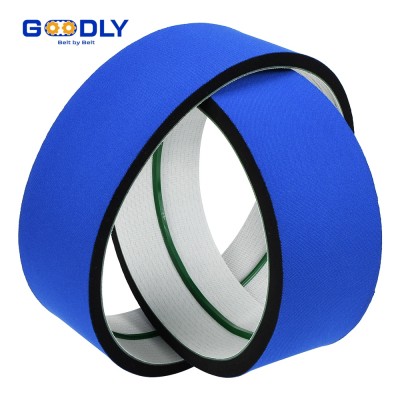
A sponge timing belt is a synchronous belt with a foam layer bonded to its outer surface, designed to provide cushioning, grip, and noise absorption for transporting delicate or irregularly shaped products without damage.
Sponge timing belts combine the precision of synchronous drive with the protective cushioning of a foam surface. The foam layer — typically PU, silicone, or rubber sponge — provides a compliant interface that conforms to product surfaces, absorbs impact, and distributes contact pressure evenly.
Sponge Layer Types
| Sponge Type | Cell Structure | Density (kg/m3) | Temp Range | Key Benefit |
|---|---|---|---|---|
| PU Open-Cell | Interconnected | 250-400 | -10 to 80°C | High friction grip |
| PU Closed-Cell | Independent | 200-350 | -10 to 80°C | Liquid resistant |
| Silicone Closed-Cell | Independent | 300-500 | -60 to 200°C | High temp + non-stick |
| Rubber Sponge | Mixed cell | 350-600 | -40 to 100°C | Best shock absorption |
Primary Applications
- Glass handling: Float glass lines use sponge belts with friction coefficient (mu) of 0.8-1.2 to transport glass sheets without scratching
- Electronics assembly: PCB conveyors use anti-static sponge belts (surface resistivity 10⁶-10⁹ ohm) to protect ESD-sensitive components
- Printing & packaging: Grip unevenly shaped products like bottles, cans, and cartons
- Wood processing: Veneer handling lines feed thin, fragile wood sheets through sanding and cutting stations
CASE STUDY: Printing Press Infeed
A printing machinery OEM using GOODLY Belts 5 mm PU sponge timing belts on their sheet-fed printing press infeed:
GOODLY Belts Customization
GOODLY Belts offers sponge timing belts with foam thicknesses from 1 mm to 15 mm, customizable to specific cushioning requirements. Available with anti-static treatments, FDA-compliant foam materials, and custom density profiles for specialized applications.
Related Questions
- What are the differences between PU foam timing belts and rubber foam timing belts?
- What is a timing belt and how does it work in power transmission systems?
- How to choose the right PU timing belt for packaging machines?
- What are the advantages of rubber timing belts over other belt types?

Are you looking for a reliable manufacturer of conveyor belt products?
We can quickly provide customers with market analysis, technical support and customized services.- Name
- Phone
- *Title
- *Content